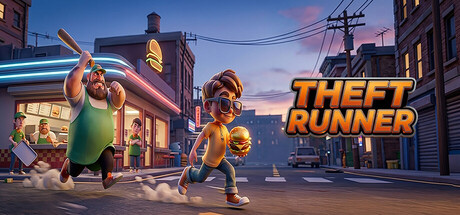
Are you ready? In Theft Runner, take on the role of a mischievous kid who steals a burger and flees from an angry vendor in an endless chase. Dodge various obstacles, collect coins, and use power-ups to boost your run while competing for the highest score in this fast-paced, chaotic adventure.
Modeled estimate, not a reported figure. How we estimate →
Media

About
Theft Runner is a fast-paced runner game focused on pure reflexes and clean gameplay.
Character Selection
Character selection is purely visual.
Running speed, jumping, sliding, and controls are identical for every character, keeping the experience fair and skill-based. Success depends on timing, focus, and player reflexes—not character advantages.
Character Unlock System
Earn coins during your runs to unlock characters with different colors and visual styles. All characters play the same—the difference is purely cosmetic.

Core Gameplay Features
Smooth and continuous runner mechanics
Timing-based obstacles
Fast, reaction-driven escape moments
Short, intense, and highly replayable runs
Theft Runner is easy to learn and hard to master. Every run is a new attempt, and every mistake matters.
Same rules. Same speed. Only skill decides who escapes.
Keep that in your mind! The course of the game will continue to be shaped by your feedback.
Stats
All-time low is the lowest price we've recorded for this game since we started tracking it.
Languages: English
Reviews
Theft Runner, developed and published by Cahit Kemal DOĞAN, is a straightforward endless runner that commits fully to a simple, reflex-driven gameplay loop without attempting to expand into deeper systems or layered progression. The premise is intentionally light and somewhat humorous, casting the player as a runaway kid fleeing after snatching a burger, but this narrative setup quickly fades into the background as the game focuses almost entirely on speed, timing, and survival. It is a title that embraces the core principles of the genre, delivering a clean and accessible experience that prioritizes immediacy over complexity. The gameplay revolves around constant forward movement, with the player navigating a series of obstacles that appear in increasingly dense and unpredictable patterns. Controls are simple, typically limited to jumping, sliding, and shifting position to avoid hazards. This makes the game easy to pick up and understand within moments, but it also places all of the challenge on execution. There are no advanced mechanics or layered systems to rely on, so success depends entirely on the player’s ability to react quickly and maintain focus. As the speed increases and the spacing between obstacles tightens, the experience becomes more demanding, requiring precise timing and consistent input. One of the defining features of Theft Runner is its emphasis on uniformity. While the game includes multiple playable characters, they function purely as cosmetic options, with no differences in speed, abilities, or performance. This design choice ensures that every run is governed by the same rules, reinforcing a sense of fairness and consistency. At the same time, it limits variety, as unlocking new characters does not introduce new ways to play. The experience remains fundamentally unchanged regardless of progression, which can make the game feel static over longer periods. The core loop is built around repetition and incremental improvement. Each run is short, often ending quickly due to the unforgiving nature of the obstacles, but this brevity encourages repeated attempts. Players are motivated to push slightly further with each run, collecting coins and aiming to surpass previous distances. These coins can be used to unlock additional characters, providing a modest sense of progression, but the primary incentive remains self-improvement. The game leans heavily on this arcade-style structure, where mastery comes from familiarity and practice rather than unlocking new mechanics. Visually, Theft Runner adopts a clean and functional style that emphasizes clarity. The environments are designed to be easily readable at high speeds, ensuring that players can quickly identify obstacles and react accordingly. While this approach works well for gameplay, it also results in a lack of visual variety. The environments do not change significantly over time, and the overall aesthetic remains consistent throughout, which can make extended sessions feel repetitive. The presentation is effective but not particularly distinctive, serving its purpose without leaving a strong impression. The audio design supports the fast-paced gameplay with simple sound effects and a steady musical backdrop. Sounds provide immediate feedback for actions such as collecting coins or interacting with obstacles, helping players stay in sync with the rhythm of the game. The music maintains a consistent tone that matches the pace, but it does not evolve or introduce significant variation. Like the visuals, the audio is functional rather than memorable, contributing to the experience without becoming a defining element. One of the most noticeable aspects of Theft Runner is its limited scope. The game offers a single primary mode with minimal variation, and there are few additional systems to extend its longevity. While this makes it highly accessible and easy to engage with in short bursts, it also means that the experience can become repetitive relatively quickly. Without new mechanics, environments, or gameplay twists, the game relies entirely on its core loop to sustain interest, which may not be enough for players seeking a more dynamic experience. Despite these limitations, the game succeeds in delivering a focused and consistent arcade experience. It understands its goals and executes them clearly, providing a gameplay loop that is easy to grasp and occasionally satisfying to master. For players who enjoy endless runners and appreciate the challenge of improving their performance through repetition, it offers a straightforward and accessible option. In the end, Theft Runner is best viewed as a minimalistic take on the endless runner genre, offering quick, reflex-based gameplay without the distractions of complex systems or progression mechanics. It provides a functional and occasionally engaging experience, particularly in short sessions, but its lack of variety and depth prevents it from maintaining long-term appeal for most players. Rating: 7/10
Beklediğimden çok daha keyifli bir deneyim oldu. Mekanikler akıcı ve oynanış hiç sıkmıyor. Ufak tefek geliştirilmesi gereken yerler var ama potansiyeli inanılmaz. Şimdiden tebrik ediyorum, güncellemeleri de merakla bekliyorum. Elinize sağlık, oyunun geleceğini merakla bekliyorum!
Kontroller rahat, tempo güzel, sıkmadan oynatıyor. Boş anlarda açıp keyifle takılmalık bir oyun olmuş.
Keyifli bir oyun! Geliştirme önerisi olarak; Toplanan oyun parasıyla mağazadan kıyafet veya aksesuar satın alabileceğimiz bir sistem, Farklı haritalarda oynayabilme seçeneği, Diğer oyuncuların en yüksek skorlarını görebileceğimiz bir liderlik tablosu oyuna eklendiğinde deneyimi çok daha eğlenceli hale getirebilir.
Son güncelleme ile birlikte daha akıcı ve eğlenceli hale geldi oyun. Steam'e her girdiğimde mutlaka keyifle birkaç el atıyorum. Karakter seçiminin artmaya başlaması ve nitro boost özelliklerini çok beğendim. Gelişime açık, potansiyeli yüksek bir oyun. Yeni özellikleri heyecanla bekliyorum.
Related
Related
Trends
Concurrent players on Steam, sampled daily since tracking started.
Momentum
Pace estimated from the game's recent review growth (our daily snapshots) at its own sales-per-review ratio — a momentum signal, not booked sales.
Related
| Glasses and Girls | $315.6 | 51 | 82% | $0.99 |
| Bongo Quest | $315.6 | 51 | 45% | $0.49 |
| Food and Girls | $315.6 | 51 | 86% | $0.99 |
| Dances and Girls | $322 | 52 | 83% | $0.99 |
| Anime Sunset Ride | $334.4 | 54 | 67% | $0.49 |
| Cosmic Journey PC Live Wallpaper | $336.3 | 52 | 71% | $0.49 |
Related
| s&box | $7.4M | 9K | 59% | $19.99 |
| G.O.P.O.T.A | $1.5M | 1.7K | 81% | $29.99 |
| Super Battle Golf | $1.4M | 10.6K | 93% | $5.59 |
| MAVRIX by Matt Jones | $1.3M | 928 | 80% | $39.99 |
| The Karters 2: Turbo Charged | $1.1M | 1.1K | 92% | $29.99 |
| Driftwood | $897.2K | 1.3K | 93% | $19.99 |