The Twilight Witch, developed and published by Tyoumage, is a free-to-play 2D pixel art action RPG that blends classic top-down exploration with fast-paced magical combat. Framed within a familiar but earnest fantasy narrative, the game follows Mael, a young villager whose quiet life in New Larton is abruptly shattered by the arrival of a mysterious hooded figure. The destruction of his home and the fall of its guardian set the stage for a journey that moves beyond simple revenge or rescue, gradually unfolding into a broader struggle involving magic, corruption, and the balance of light and darkness. While the story leans into recognizable fantasy tropes, it provides enough emotional grounding to motivate the player’s progression through the world.
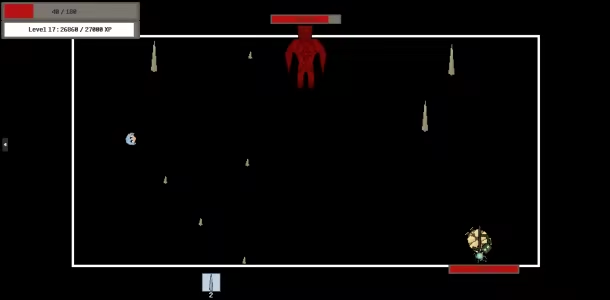
Gameplay forms the heart of The Twilight Witch, and it is here that the game distinguishes itself most clearly. Combat unfolds in real time and often adopts a rhythm reminiscent of light bullet-hell encounters. Enemies attack in patterns that require attentive movement, dodging, and strategic positioning rather than simple button mashing. Mael has access to multiple magical styles, each offering distinct abilities that shape his approach to battle. Whether focusing on direct offensive spells, defensive magic, or more specialized techniques, players can experiment with different combinations to suit their preferred playstyle. This flexibility gives combat encounters variety, even if the underlying mechanics remain relatively straightforward.
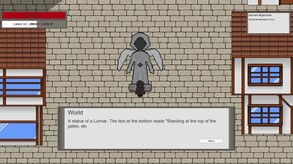
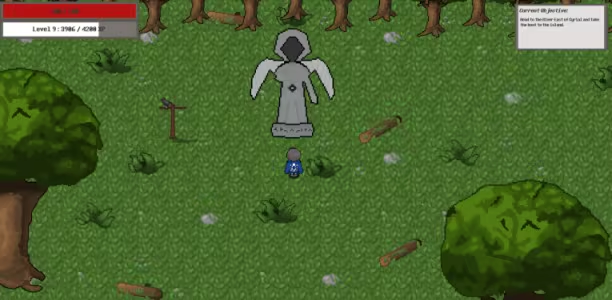
Exploration complements the combat loop by encouraging players to venture beyond the initial village setting into forests, ruins, and other fantastical landscapes. The world is structured in a way that rewards curiosity, with hidden items, optional encounters, and environmental details scattered throughout. While the map design does not approach the scale of larger commercial RPGs, it provides enough interconnected areas to foster a sense of journey and discovery. Encounters occur both through visible enemies on the map and more direct confrontations, keeping the pacing brisk and action-oriented.
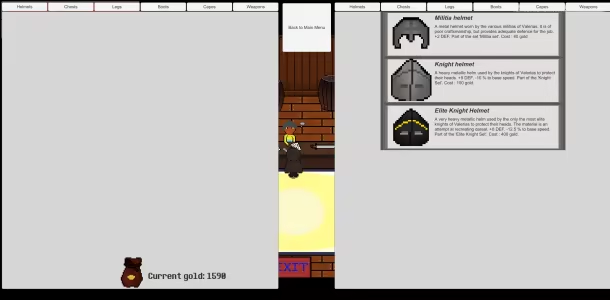
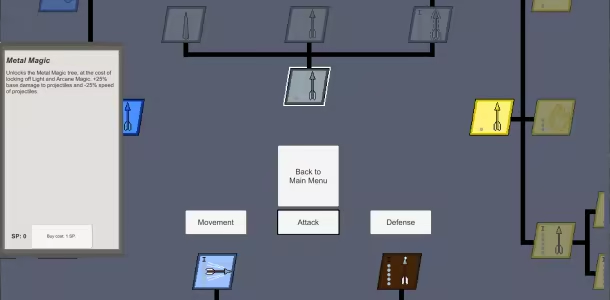
Progression in The Twilight Witch is tied to both character development and the restoration of magical balance. As Mael defeats enemies and uncovers key locations, he restores fragments of lost light, which grant additional skill points and enhance his abilities. The skill system allows for incremental customization, enabling players to prioritize certain magical paths or combat styles. Equipment also plays a role in character growth, with new weapons and armor altering both statistics and visual appearance. This visual evolution reinforces the sense of advancement, even if the overall system remains more compact than in larger RPGs.
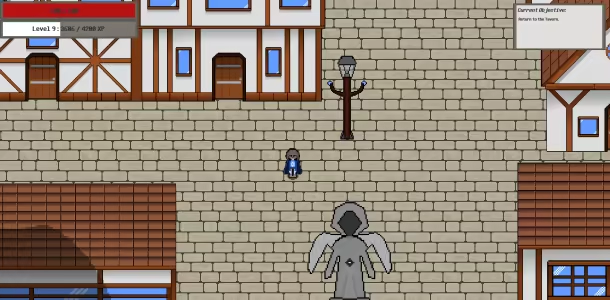
Visually, the game embraces a retro-inspired pixel aesthetic that recalls 16-bit era action RPGs. Character sprites are expressive within their limitations, and environments are crafted with clarity in mind. The pixel art is not overly elaborate but is cohesive and functional, ensuring that enemies, projectiles, and interactive elements remain easy to identify during hectic combat. The soundtrack and sound effects follow a similar philosophy, providing atmospheric support without overwhelming the action. The presentation feels consistent and thoughtfully aligned with the game’s nostalgic ambitions.
One of the most notable aspects of The Twilight Witch is its accessibility as a free title. By removing a financial barrier to entry, the game invites a broad audience to experience its blend of action and exploration. This accessibility also frames expectations appropriately; while the game may not offer the depth, length, or cinematic storytelling of larger-budget RPGs, it delivers a cohesive and engaging experience within its scope. Occasional technical quirks or balancing inconsistencies are present, but they rarely detract significantly from the overall flow.
Ultimately, The Twilight Witch stands as a passionate indie project that successfully channels the spirit of classic action RPGs. Its combination of responsive combat, magical customization, and retro presentation creates a focused adventure that feels both familiar and energetic. While it may not redefine the genre or offer extensive narrative complexity, it provides a satisfying journey filled with fast-paced encounters and steady character growth. For players drawn to pixel-art fantasy adventures and real-time magical combat, it offers a rewarding and accessible experience that reflects a clear creative vision.
Rating: 6/10