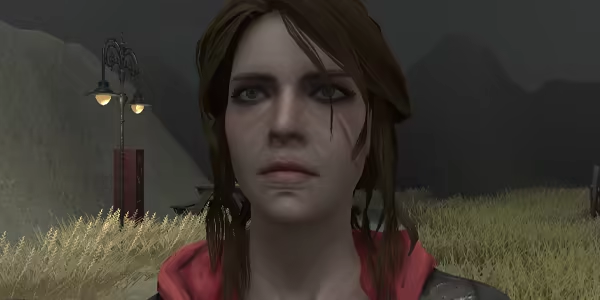
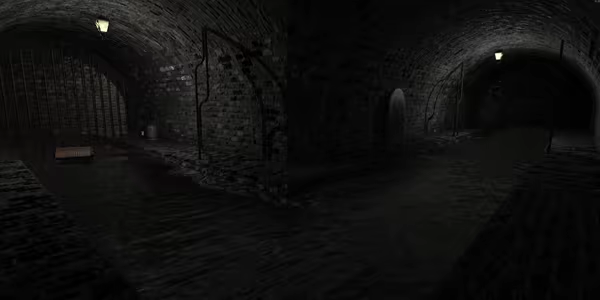
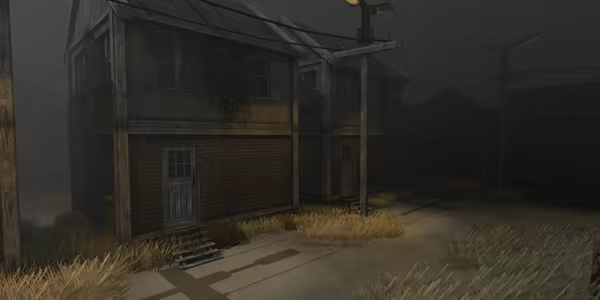
The Telephone is a first-person psychological horror game that will transport you to a world governed by anxiety. You will have to explore the house in which you are locked and the mysterious town of Lonely Plain, searching for clues that can help Roberta regain her memory.
Modeled estimate, not a reported figure. How we estimate →
Media

About


Stats
All-time low is the lowest price we've recorded for this game since we started tracking it.
Languages: English, French, Italian*, German, Spanish - Spain*languages with full audio support
Engagement
Hours played at review time, across 40 reviews with recorded playtime.
Reviews
Themes across 40 recent reviews and how positive each mention is. A keyword signal, not full sentiment analysis.
positive critical· bar length = how often the theme comes up
Reviews
国内的主播兄弟们女士们先生们,这游戏的是 lost alone 制作组做的,就是那个胸很大还露点的兔女郎鬼,没错,让我直播间封了7天,所以这游戏我一进去就看到一个小胸脯 所以吓的我立马关上了,给国内的主播家人们留言提个醒
Daniele knocked it out of the park again! Sound design, the different settings, overall feel of dread anytime you aren't in a lit area, and also while have some minimal defense mechanisms! Puzzles were similar to that of Lost Alone where collecting pieces, getting them to the right spot, then resolving the puzzle to move forward is a welcome return and shows evolution in the puzzle types/designs. The jumpscares still play out usually in a sudden/loud/some say "cheap" way, but if you enjoy being scared in games, then you will appreciate them. I think the only thing I didn't enjoy was the steam leaking out of pipes portion of the sewer. Seemed I would be well past the steam and still take damage on occasion. Frustrating, but not game breaking and also not a very long portion at all.
L'unica cosa positiva è che mi è costato solo 10 €.
jeux super surtout pour un indépendant on sent que le DEV c'est appliqué par contre juste une petite parenthèse, les screamer sont fait un peu grossièrement et trop long donc aucune frayeur ni surprise au delà de la normale.
Premessa: qualche settimana fa mentre ero il live (ho un piccolo canale Twitch, lo trovate qua: https://www.twitch.tv/old_fap ), mi stavo giocando Lost Alone Ultimate... a così, a buffo, è passato per la mia live proprio Danieledoesntmatter! E niente, fra una chiacchiera e l'altra, ci siam divertiti a finire in un paio di giorni Lost Alone. E quindi mi son deciso a fare la settimana coi titoli di Daniele, giocando in ordine di uscita i suoi giochi, visto che una persona presente nella mia live e in maniera del tutto inaspettata mi ha regalato proprio questo The Telephone. Quindi, dopo aver giocato anche a Who Knocks (per me il titolo più sottotono dello stesso sviluppatore, ma non per questo non da buttare, anzi! Trovandolo più come una sorta di esperimento, di prova nell'usare caratteristiche assenti in Lost Alone... un passaggio...), durante il weekend mi son sparato e goduto THE TELEPHONE con per qualche ora pure la presenza sempre di Daniele! E siccome sono onesto e non leccachiappe, anche 'sto giro mi son permesso di dire la mia, da semplice giocatore in avanti con gli anni, sul questo titolo: e care lettrici e lettori, è veramente bello! L'inizio è spiazzante, con una storia che pian pianino si apre, ma che per parecchio tempo ti lascia sempre con un bel po' di domande che ti frullano per la testa. L'ambientazione nei luoghi chiusi è ovviamente similare a Lost Alone, gli enigmi sono piacevoli da fare e risolvibili da chiunque, gli ambienti esterni sembrano un omaggio ad un titolone che ha fatto storia (ovviamente non dico quale), jump scares ottimi e non per tirarmela, ma sono abituato a questi titoli... e uno mi ha colto veramente di sorpresa, applausi! :D ; certe critiche su storia e un paio di bug più che accettabili li feci al Daniele stesso, non lo scrivo qua che (bug esclusi, ma roba di poco conto) sarebbero spoiler fastidiosi a chi non l'ha giocato, ma sono semplicemente miei punti di vista. Mi fermo qua, ho già scritto troppo, il titolo mi è piaciuto parecchio, mi ha intrattenuto e non riuscivo a staccarmici, tipo effetto Tetris (sapete cos'è, vero?!), ma volevo anche godermelo... finito in circa 8 ore, magari avessi guardato più in giro non sarei rimasto con una ventina di carte in meno nel mio mazzo!! :D Quindi... consigliatissimo! E Daniele grazie ancora di tutto, sai a cosa mi riferisco <3
Altro gran bel gioco! Anche stavolta ringrazio Daniele per la chiave di accesso anticipato! In ogni gioco continua a metterci nuove idee e nuove meccaniche e The Telephone non fa eccezione. L'ho giocato in live su Twitch e, a parte qualche distrazione da parte mia e qualche morte qua e là, il gioco è filato liscio senza bug o altri problemi. La storia è interessante e ha un buon ritmo. Un'altra grande sorpresa è stato il doppiaggio, che seppur presenti alcune "incertezze" è una cosa apprezzatissima! Come sempre il cardiologo ringrazierà Daniele per i vari salti che mi fa fare...ma fanno giustamente parte dell'esperienza! Gioco consigliatissimo come i precedenti! Run fatta in tranquillità in circa 7 ore! Daje col prossimo!!! Io lo aspetto!
Come al solito Daniele non tradisce mai le aspettative regalandoci un nuovo incredibile capitolo nella sua serie di giochi Horror... non sono riuscito a raccogliere tutte le carte ma e' veramente un bel gioco!
The Telephone, developed by Daniele Doesn’t Matter and published by Doesn’t Matter Games, is a psychological horror adventure that leans heavily into atmosphere, tension, and introspective storytelling rather than fast-paced action or traditional survival mechanics. From the moment the game begins, players are placed into a disorienting and claustrophobic scenario, controlling Roberta, who awakens in an unfamiliar and confined space with fragmented memories and little understanding of how she arrived there. The presence of a silent, seemingly useless telephone and cryptic messages sets the tone immediately, signaling that this experience will revolve around mystery, unease, and the gradual uncovering of hidden truths. The core structure of the game is built around exploration and light puzzle-solving. Players navigate a series of enclosed spaces, including rooms, corridors, abandoned interiors, and later more open yet equally unsettling environments. Movement is deliberate and immersive, with a first-person perspective that intensifies the feeling of vulnerability. Rather than focusing on combat or direct confrontation, the game encourages careful observation. Clues are scattered throughout the environment in the form of notes, objects, and subtle visual details that slowly piece together Roberta’s past and the circumstances of her confinement. Progression often depends on interpreting environmental hints rather than following explicit objectives, reinforcing the sense of isolation and uncertainty. One of the defining elements of The Telephone is its reliance on psychological tension rather than overt horror tropes. While there are moments of sudden disturbance, the game avoids overusing jump scares. Instead, fear is cultivated through ambiguity and atmosphere. The environments are often dimly lit, enveloped in shadow or fog, with muted color palettes that evoke melancholy and dread. The sound design plays a crucial role, using ambient noises—creaking wood, distant echoes, faint distortions—to create a constant sense of unease. Even moments of silence feel intentional, as if the world itself is holding its breath. The narrative unfolds gradually, revealing layers of Roberta’s emotional and psychological state. The story explores themes of memory, anxiety, and control, often blurring the line between reality and hallucination. Flashbacks and fragmented recollections surface intermittently, forcing players to question whether what they are witnessing is truly happening or is a projection of trauma and fear. This narrative ambiguity becomes central to the experience. The game does not provide immediate answers, and much of its impact comes from encouraging players to interpret events and piece together the larger picture themselves. Pacing is intentionally measured. The Telephone does not rush its storytelling or overwhelm players with constant threats. Instead, it allows tension to build gradually. Exploration sequences are punctuated by moments of heightened suspense, but the overall rhythm remains steady and introspective. This deliberate pacing strengthens immersion for those willing to engage with it fully, though players seeking constant action or rapid progression may find it slow. The emphasis remains on mood and psychological immersion rather than mechanical complexity. Mechanically, the game remains relatively simple. Interaction primarily involves examining objects, solving straightforward environmental puzzles, and maintaining forward momentum through exploration. Survival elements, such as finding food or resources in certain segments, add a layer of vulnerability but are not deeply system-driven. These mechanics serve to reinforce atmosphere rather than introduce strategic depth. The absence of combat aligns with the game’s psychological focus, emphasizing helplessness and tension instead of empowerment. Visually, The Telephone relies on subtle environmental storytelling rather than high-end graphical fidelity. The environments are designed to evoke claustrophobia and emotional discomfort, using narrow spaces, confined rooms, and shifting layouts to disorient players. The art direction is cohesive and supports the thematic weight of the story. While not graphically groundbreaking, the consistent aesthetic contributes effectively to the immersive horror atmosphere. The game’s reception has reflected its niche appeal. Players who appreciate slow-burn psychological horror and environmental storytelling tend to praise its mood and narrative ambition. Others note that its relatively short runtime and limited mechanical depth may reduce replay value. However, the presence of achievements and hidden details encourages thorough exploration, offering additional incentives for players to revisit areas and uncover missed elements. Ultimately, The Telephone stands as a focused psychological horror experience that prioritizes atmosphere and narrative introspection over traditional gameplay complexity. It succeeds in creating a lingering sense of dread through sound, environment, and emotional ambiguity. While it may not appeal to those seeking action-heavy horror or elaborate systems, it offers a thoughtful and unsettling journey for players drawn to immersive, character-driven experiences rooted in psychological tension. Rating: 8/10

Dans l'ensemble c'était sympa. On retrouve les éléments de gameplay des autres jeux du développeur, le voice acting en plus ici. https://youtu.be/jmEwwP9awME Les puzzles sont accessibles, la gestion de notre estomac (nourriture à trouver tout au long du jeu pour maintenir la jauge de faim) c'est ok et ça ne vient pas polluer le déroulé de l'histoire. Les ennemis sont un peu chiants et la maniabilité de notre défense plutôt gauche, mais ça passe. L'histoire est quelque peu tirée par les cheveux et je suis un peu restée sur ma faim pour les explications finales. Les persos des jumpscares ne font pas vraiment peur, mais on s'effraye malgré tout sous l'effet de surprise. Jeu sympa en tout cas, j'ai bien aimé !
Conosco i lavori di Daniele per Lost Alone, e aspettavo con ansia questo gioco. Che dire, ammirevole davvero per un ragazzo che sta praticamente "imparando sul campo". In alcuni momenti i brividini dietro la schiena me li ha fatti sentire, e l'avventura è simpatica e ti tiene un pò sulle spine. Un paio di note dolenti ci sono però: - primo fra tutti i "combattimenti": per favore, toglili del tutto o riduci la vita dei nemici di almeno il 75%. - Fa che l'accendino non sia infinito, altrimenti il concetto di "paura" perde significato - Le porte!!!!! Speed up!!!! Non ci si può mettere mezz'ora per entrare in una stanza Tolti questi appunti e qualche imperfezione qua e là in merito a glitch, piccoli bug, texture che si intrecciano un pò male, direi un buonissimo lavoro. Resto in attesa di ulteriori sviluppi, sperando di vedere presto qualcos'altro!!
Related
Related
Trends
Modeled estimate over time, reconstructed from Steam's monthly review histogram.
Momentum
Pace estimated from the game's recent review growth (our daily snapshots) at its own sales-per-review ratio — a momentum signal, not booked sales.
Audience
Estimated from the language of this game's reviews — a proxy for where players are, not official Steam demographics.
Related
| Gods vs Humans | $15.2K | 115 | 57% | $4.99 |
| Ghostland Yard | $15.2K | 98 | 98% | $9.99 |
| Tile Town | $15.2K | 63 | 98% | $9.99 |
| ELDORANTE | $15.2K | 63 | 81% | $10.49 |
| Wormies | $15.2K | 79 | 100% | $9.99 |
| Planetship | $15.2K | 67 | 69% | $8.99 |