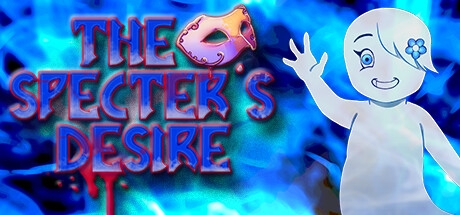
This year's Desire Hierarchy has begun. The stakes are now deadly. Hop into The Specter's Desire, a Visual Novel in which you play against the city's top talents to save your parents. Includes puzzling gameplay that has you tearing down arguments, hatching schemes, and revealing the truth!
Modeled estimate, not a reported figure. How we estimate →
Media
About

Genres
Stats
All-time low is the lowest price we've recorded for this game since we started tracking it.
Languages: English
Engagement
Hours played at review time, across 40 reviews with recorded playtime.
Reviews
Themes across 40 recent reviews and how positive each mention is. A keyword signal, not full sentiment analysis.
positive critical· bar length = how often the theme comes up
Reviews
A little story ... I read "Liar Game" in high school as my first manga. I was absolutely floored by it. The creative games, the unique strategies. It's no joke to say that it had a significant role in my ultimate career path as a researcher (in game theory). There are a few other works like Liar Game out there. For example, Kaiji, One Outs, and some other visual novels out there. But if you're a total addict for this kind of work like I am, you'll know these types of things are few and far in between. They're hard to make and don't have very mainstream appeal. Themisian has made 2 games so far in the "Shuffled Deck" collection (I think three if you count a "minigame" they released off steam called The Crimson Debt). Both are excellent and incredibly high quality. As a huge aficionado of this kind of stuff I can say they are among the best. That's what makes it so surprising that this game is significantly better than those two. Maybe its just the format of wall-to-wall games that appeals to me more than the others but this is truly a very special work. This is less of a recommendation and more of an ask. I don't write reviews often, and I'm not the type of person who gives false praise for something. If you like this kind of thing, you really should buy this game and support this developer. We need more content like this.
[h1] The Specter's Desire is a masterpiece [/h1] The Specter's Desire is an indie visual novel by Themisian (creator of The Zodiac Trial and The Divine Deception, all of his novels tell stories from the same universe). The Specter's Desire tells the story of Colton Hall, a poor young man who moved to the big city in an attempt to fulfill his dream of becoming a filmmaker. Unfortunately, that dream is almost as unattainable for Colton now as it was in his hometown. In the city where Colton has moved to, every year there is an event called the Desire Hierarchy, in which the influential people of the city compete against each other in a variety of games invented by the organizers of the hierarchy, in an attempt to get the title of «Actualized»: the winner of the hierarchy gets the right to fulfill one wish, in which he is helped by the organizers of the Hierarchy and the losers of the competition. Thanks to his luck, Colton becomes a contestant of the Hierarchy, which immediately turns into misfortune. Colton's parents are kidnapped, and the kidnapper wants Colton to win the Hierarchy and fulfill the kidnapper's strange wish: to obtain a strange art piece called The Specter's Desire. In The Specter's Desire you will, on the one side, read a visual novel, and on the other side, participate in the games of the Desire Hierarchy. The Specter's Desire can rightfully be called a game: there are 52 mini-games, each with its own rules. The organizers of the Desire Hierarchy have prepared for contestants strange card games, mathematical puzzles, social deduction games and others. Yes, you heard right. Before us is a visual novel inspired by works in the genre of death games, without the death games! This creates a very interesting dynamic between Colton and the other participants of the Hierarchy. Colton is an excellent protagonist. He is a kind, truly kind, but not a weak-willed man. He's smart and talented and has a lot of untapped potential. You admire his successes, you sympathize with his failures, you cry and rejoice with him. And Colton is able to prove himself as a superb protagonist precisely because of the foundation of the story. His parents have been kidnapped and he's forced into a bizarre competition with the most powerful people in city. Except the other participants aren't risking lives, unlike Colton. If Colton loses in the Desire Hierarchy, his parents will be killed. If the other participants lose in the hierarchy, they will go back to their old lives and no one will be killed. Colton's desire to save his parents forces him to give 110% where others give 100%. But the desire to save his parents presents Colton with another challenge: Can he compromise his principles in order to save the lives of others? Is it worth turning to evil to do so? Will unkind acts be justified for the sake of it? Or should one forget about their parents, accept a bribe, and leave the Hierarchy? Colton is a successful player in the Hierarchy, and the other players will repeatedly offer him a way out in exchange for money and help to realize his dream of becoming a filmmaker. The other participants in the Hierarchy are powerful people, and Colton, in an effort to win in the Hierarchy, creates powerful enemies for himself outside of the Hierarchy. The author shows us all the movements of Colton's soul, and the reader can't help but admire this young man who doesn't betray himself by answering these hard questions and dealing with these cruel challenges. There are so many characters in The Specter's Desire, and the author does what some games in the “death game” genre forget to do: author gives them plenty of time to prove themselves. The duration of The Specter's Desire is one hundred hours. Yes, really! It's a fascinating and wonderful one hundred hours in which we experience, along with Colton, every stage of the Desire Hierarchy. Because of the structure of the Desire Hierarchy and the fact that characters don't die and not every loss in the Hierarchy means dropping out of the Hierarchy, readers will get to see the same characters many times in many games. These characters will be Colton's enemies, friends, allies, and adversaries, and these roles will change from one game to the next game. These characters will tell us what winning the Hierarchy means to them, what success means to them and what they are willing to do to achieve it, what boundaries they are willing or not willing to cross for it. These characters, their aspirations and life stories challenge the path Colton takes, and he is always in danger of betraying himself and losing, or winning at the cost of losing respect for himself. These are characters with whom Colton will build sometimes strange, sometimes hostile, sometimes friendly relationships. These are characters on whom meeting Colton will leave a mark. And the length of the novel gives all of these characters a chance to express themselves. And since Hierarchy games don't kill the losers, The Specter's Desire doesn't throw characters out of the narrative after they've lost in Hierarchy. They are still involved in the story, sometimes in a very unexpected roles. The Specter's Desire is divided into five acts. Each act is a separate stage of the Hierarchy with its own rules. And each stage of the Hierarchy includes many separate games with their own rules on top of the rules of that stage. Each stage of the Hierarchy is quite different from the other. The hierarchy never gets boring. Each new stage means more challenging games, more dangerous contestants (because the weaker ones were weeded out in past stages), and a more competent Colton. The way Colton evolves into a full-fledged contender to win the Hierarchy is masterfully done. But the Hierarchy doesn't exist in a vacuum. The Hierarchy takes place in a big city with its own history, politics, and problems. And the participants in the Hierarchy don't exist in a vacuum. They are influential people who are part of this city. In between the stages of the hierarchy, the participants in the hierarchy make their moves using their wealth, charisma, intelligence, and influence. And Colton doesn't just exist within the Hierarchy. Colton has a life outside of the Hierarchy, which is rapidly changing because of his increasing popularity due to his participation in the Hierarchy. Colton's stubborn desire to win also creates enemies for himself in the form of other Hierarchy members who, outside of the Hierarchy, can destroy Colton's life. The Specter's Desire is not an easy novel to read, because it is not only long, but also makes you participate in dozens of mini-games (each such mini-game has its own rules). These mini-games can't always be skipped. Like Colton, you will be challenged. The author has created a novel that is very unlike other visual novels, and has done so uncompromisingly: it is a novel inspired by works in the genre of death games without death games, with many mini-games and a plot without the usual visual novel tropes. I'm sure many visual novel readers are always looking for such uncompromising works. Well, if you are one such reader, then The Specter's Desire is for you.
I've played both of the developer's previous games The Divine Deception and The Zodiac Trial before and had been keeping an eye out for when a further game may come out. I deliberately had not read anything about it but picked it up on day 1 as I've enjoyed their takes on visual novels in the past. I genuinely enjoyed the game. It feels more ambitious - characters, the character art feels sharper, and even features some voice acting for character introductions and key scenes. The whole game isn't voiced - this is a LONG game (though not as long as my playtime may suggest as I left it open on a number of occasions, but I'd definitely say the 40 hour estimate is significantly underneath what I'd expect unless you're rushing through dialogue and playing with a walkthrough) - but I don't feel this particularly loses anything, you get enough of an idea what the characters sound like. The game as a whole feels more polished in a lot of areas, though it could maybe have used another proofread - there are typos which are largely inconsequential, but I'm confident these will be resolved and compared to the huge number of lines in this game it's a relatively small amount. Still, if seeing typos will put you off, I'd implore you to keep going because there's a nice game and character writing in here. As well as reading, there's quite a bit of gameplay of challenges/minigames and a lot more variety than the minigames in The Divine Deception. There is a huge variety here so some you will gel very well with, while others you may find significantly more challenging and no two players will struggle with the same ones/be amazing at the same ones. I particularly enjoyed anything involving maths, for instance, but had two minigames I really, really struggled with. Some you will find quick to complete if you absolutely understand them, on a different puzzle I spent two hours on one specific task (but felt very accomplished at the end). It's clear a lot of thought went into the games, though, and I appreciate that - even the little optional ones that don't tie into the Desire Hierarchy itself.
It’s absolutely criminal how underrated this visual novel is. If you're lucky enough to find yourself upon this Steam page, do yourself a favor and give it a shot. It has consistently great writing and great characters, but what really caught me by surprise was its length. Even at full price, it’s an incredible steal for the sheer amount of content it offers. After finishing the first act, I was blown away to realize I was only 1/5th through the story, with so many more puzzles and games (or "encounters," as the story calls them) still ahead. The playtime you see from me and others isn’t from leaving the game running in the background—it’s genuinely packed with content. Not every "encounter" is a flawless hit, but I find it's ambition utterly endearing. And because *enough* of it works, the whole of it truly shines.
What can I say? Themis does not miss! Another fantastic entry. He's truly a master of game crafting! (A bit *TOO* good, some of them were really damn hard!). If hard games of wit are not your thing, I get it, but if you are mildly interested, give it a shot!
Great game - exciting plot, challenging puzzles, appealing presentation. Easily a 9/10. Came in here, expecting something that would scratch the itch of Danganronpa and Zero escape - surpassed both.
the third game in the shuffled deck collection! and this one is easily my favorite so far. first things first, mechanically this game feels really good to play, something the previous games failed at in some regards. the encounters were challenging but fun, especially the final few. i had to start taking actual notes to work through everything and even then i stumbled at parts, which was easily my favorite part of this game! the ace attorney style encounters really helped with my enjoyment lmao the characters and plot were also fantastic. it's hard to truly explain why without spoiling most of the game, but never did a character feel wasted or did a mystery run dry. everyone mattered in the end, connecting in this long dangling web of characters to form the city that is aurea. tldr, play this game! it's very good ^^
EDIT, post-completion: Changed to negative. Too many of the puzzles require too diverse of a skill set or assume the user isn't colorblind, and of course the author put in another save-bricking trap alongside tricking the user into saving a game with hotkeys that had loaded the game previously. On top of that, they apparently think you should re-solve most of the puzzles in the game to be permitted to see post-game commentary that was "free" in previous games in the series. Not worth the effort, and I wish I had dropped the game the first time I was confronted with a colorblind-unfriendly encounter. --- Unmarked metagame-related spoilers for the series below, though nothing too plot-specific. While I can't bring myself to leave a negative review, I'm enjoying this game less overall than Zodiac Trial or Divine Deception. Its a shame that while the writing keeps getting better in this VN series, the inputs required are getting increasingly off-putting. In the first game, deductive skills were required with a mild dose of riddle solving. At a key point when this process reaches its peak, a player could potentially brick their "New Game+ save" by taking certain action(s) consistent with a player stuck with their progress. In the second game, various minigames were added and the player is given an impression that there's accessibility options related to handling them. Depending on what they choose to do with that information as well as with other choices, they could potentially brick their "New Game+ save". In this game, the third in the series, one that assumes its player has played the previous two games based on plot developments, the player is once again presented accessibility options. Due to how the previous games went, I reasonably assume said options were fake, meaning I now need to survive a battery of puzzles throughout the game without help. And that might be okay. If, for example, there weren't a lot of color-specific puzzles when I'm colorblind, with no alternatives to work around that issue (and this isn't even the only example of a puzzle type ingame I literally can't attempt unassisted.) Or if the game didn't delve heavily into topics like game theory, programming/algebraic logic, and math concepts that I have a decent grounding in but many other players might not. Or if I bought into the series in the first place for its writing, yet I find I spend far more time puzzle solving than reading. I can't use the built-in help system because it might brick the "New Game+ save" the way it could in the first game, just as save-scumming might. And I can't opt-out of the puzzles. So I'm spending a lot of my time doing activities I can't or wouldn't want to do, just to get to the parts I do enjoy. Plot spoiler: [spoiler]"New Game+" referring to "missing elements of the ending", as Zodiac Trial and Divine Deception both inflicted on its players, the former permanently bricked by clicking an ingame hint once, the latter if a player failed to earn a lot of chips.[/spoiler]
This game is amazing. If you like gambling manga or anime, do yourself the favor and try it. If you like Ace Attorney, or any of the other visual novels often recommended together with Ace Attorney, do yourself the favor and try it. Now that this is out of the way: I liked the developers previous work "The Zodiac Trial" (I did not yet play the Divine Deception), so I got this blindly just on the notion of its theme. I am a BIG fan of Kaiji and similar gambling manga. I think Kaiji might even be my most favorite piece of media. And this indie visual novel managed to evoke the exact same feelings. It's thrilling. I felt the lows, I celebrated the highs. I got goosepumps. I felt dread. There's many adrenaline-filled moments. This game has many different kinds of gambles or "encounters" - and instead of just reading about the games, you get to play in most of them. In some you get to deduce and present evidence, find a loophole in the rules or chain logic, in others you directly have to "play the game". There's a social deduction encounters (with werewolf!), there's murder mysteries to solve, escape rooms, puzzles, games where you have to find logical patterns... Some of them go hard. Kaiji level stuff. I didn't like all of them, but the game usually has the option to give hints or spell the solution, if one truly does not want to engage. For example, I straight up skipped some of the poker or math puzzles. This comes at a cost of "stress" of the main character or optional objectives not getting fulfilled, but this has no effect on the ending. The game also has an overarching mystery, which the player can attempt to solve. Sometimes the "in between the encounters" chapters dragged a little too long for me, but that is a matter of taste. They are great to get to know the characters a little better and of course, for hints on the main plot. The characters were enjoyable to me, I liked a lot of them (even if they were not good people). They all have their own agenda and morals they act according to, it's interesting to learn more about them and to root for or against them. So to sum it up: I loved this game a lot. I am so sad it's over and have to say goodbye to the characters. If you're reading this, and are still on the fence, please do try it out. It is love letter for the genre.
If you enjoy detective/mystery visual novels then I could not recommend this game enough. Some games in this genre rely on finding out the solution to the final mystery as the "hook" that keeps you playing, but with The Specter's Desire I was hooked on finding out what happens at the end of each chapter, each game, even each conversation. Which made it all too easy to blast through 100+ hours of the game, even though I normally prefer short games because they usually keep my attention better. I am a massive mystery visual novel fan and I love trying out indie games, and I can confidently say no one is making visual novels quite like this. It is very rare to get this quality of character writing along with a strong mystery, mixing jokes and action with cerebral moments. And I am hooked, I honestly can't wait to see what Themis does next because I will be buying it day one.
Related
Related
Trends
Concurrent players on Steam, sampled daily since tracking started.
Momentum
Pace estimated from the game's recent review growth (our daily snapshots) at its own sales-per-review ratio — a momentum signal, not booked sales.
Audience
Estimated from the language of this game's reviews — a proxy for where players are, not official Steam demographics.
Related
| The Pleasuremancer | $19K | 55 | 93% | $19.99 |
| Super Soccer Blast | $19K | 141 | 72% | $7.99 |
| Platform Builder | $19K | 80 | 81% | $14.99 |
| Fortune Summoners Special Edition | $19K | 72 | 85% | $14.99 |
| Lost in the Dungeon | $19K | 121 | 62% | $5.99 |
| Touhou Kouzougi ~ Flickerframe Shutter Festival | $19K | 50 | 90% | $14.99 |