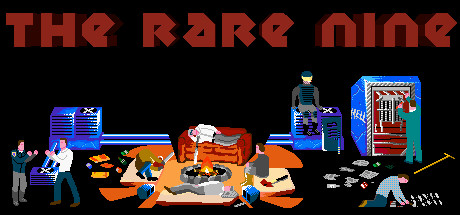
The Rare Nine, developed and published by Agafonoff, is a fast-paced, hyper-stylized action game that embraces chaos with both hands. It is an unapologetic throwback to the arcade era, combining the simplicity of classic beat ’em ups with the relentless pace of modern roguelike-inspired design. The game’s premise is straightforward yet effective—you’re dropped into a towering skyscraper crawling with the undead, and your only objective is to fight your way upward, floor by floor, through waves of monsters, explosions, and unrelenting violence. It’s a concept that doesn’t hide behind complexity; instead, it builds its appeal on pure momentum, skillful reflexes, and an unfiltered love for carnage.
From the first moment of play, The Rare Nine throws the player into the thick of it. There is no slow buildup or tutorialized hand-holding—combat begins almost instantly, and survival depends on adaptability. The game’s controls are tight and responsive, built around speed and aggression. Attacks are fast, movement is fluid, and every dodge or hit feels immediate. The player’s task is simple: keep moving and keep killing. Enemies swarm in massive numbers, and the screen often erupts into an overwhelming mix of projectiles, particle effects, and flying limbs. There is a sense of physicality in the combat that recalls the intensity of early arcade shooters and brawlers—every action feels violent, exaggerated, and satisfying. Yet beneath that surface-level chaos is a surprising layer of strategy, as each run becomes a balance between risk and reward, knowing when to push forward and when to regroup before being swallowed by the horde.
The game’s roguelike structure ensures that no two runs play out the same way. Each attempt at climbing the tower generates new combinations of enemies, artifacts, and upgrades. Artifacts are the backbone of progression, acting as modifiers that grant new powers or alter your attacks. Some enhance mobility or survivability, while others transform your offensive potential into something wildly unpredictable. Choosing the right set of artifacts can turn the tide of battle, and experimentation is encouraged—what feels weak in one run may become devastating in another when paired with the right synergy. The thrill of discovering new combinations keeps the experience fresh, at least in the early hours, as each run can swing from barely surviving to feeling unstoppable depending on what the game’s random systems deliver.
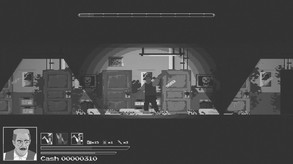
Visually, The Rare Nine thrives on the aesthetics of excess. Its pixel art style leans toward the grittier side of retro gaming, bathed in heavy contrast, saturated reds, and explosive effects. Every fight leaves a trail of destruction: blood spatters coat the screen, enemies disintegrate into gory fragments, and the environment pulses with energy. It’s the kind of visual design that refuses subtlety in favor of raw impact. While this chaotic presentation amplifies the energy, it can also obscure gameplay at times—when the screen fills with explosions, it becomes difficult to distinguish threats from background noise. Yet, even with that flaw, the visual assault matches the game’s tone perfectly. The soundtrack reinforces this intensity with a pounding mix of electronic beats and distorted riffs, driving the action forward and rarely giving the player a moment to breathe.
Progression is handled through a persistent upgrade system, rewarding each failed run with currency or experience that can be spent to unlock new characters or permanent stat boosts. Each of the nine heroes brings unique traits, weapons, and fighting styles to the battlefield, giving players a reason to revisit earlier stages and experiment. Some characters emphasize melee combat with devastating close-range attacks, while others rely on projectiles or mobility. This diversity helps keep the formula engaging, even when the level structure remains largely the same. The game’s design ensures that defeat never feels final; instead, each death serves as a stepping stone toward mastery, reinforcing that sense of old-school persistence where failure is part of the fun.
Despite its strengths, The Rare Nine does show its limitations. The core gameplay loop, while addictive, can become repetitive after extended play sessions. The reliance on randomness means some runs feel exhilarating and perfectly paced, while others can feel unfair or sluggish due to poor artifact synergy. The enemy variety, though respectable, begins to blur together once you’ve spent enough time fighting through the same corridors and stairwells. The minimalist storytelling also means that there’s little to contextualize the violence—no deeper lore or narrative hooks beyond the immediate goal of survival. These aren’t fatal flaws, but they do limit the game’s long-term staying power, especially for players seeking something with more depth or world-building.
Technically, the game performs well even on modest systems, maintaining smooth framerates during heavy combat sequences. The interface is functional if somewhat barebones, prioritizing utility over presentation. What stands out most is how well the game captures the spirit of independent development—there’s a sense of raw enthusiasm in its design, an unfiltered energy that prioritizes gameplay feel above all else. It’s a project that clearly wears its inspirations on its sleeve, echoing the arcade roots of games like Hotline Miami and old-school shooters while injecting a roguelike’s replayability and progression systems.
Ultimately, The Rare Nine is a game built for players who crave adrenaline and chaos. It doesn’t pretend to be deep or philosophical—it’s a distilled shot of pure action, an unrelenting assault that values intensity above complexity. The combination of fast reflex combat, roguelike variety, and visceral presentation makes it an experience that can be both exhilarating and exhausting in equal measure. While its repetition and simplicity may prevent it from reaching broader appeal, those same qualities give it a distinctive identity within the indie action scene. For players who miss the raw, high-speed brutality of old arcade classics but want it filtered through modern roguelike sensibilities, The Rare Nine delivers a furious and satisfying ride that leaves you breathless, bloody, and eager for just one more run.
Rating: 6/10