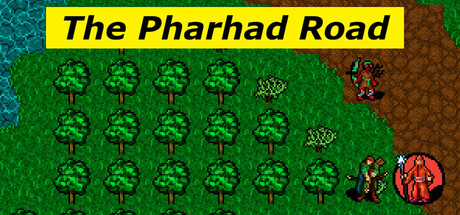
The Pharhad Road
A Persian-inspired tactical RPG where enemies wake when they see you. Lead four pahlavans across one connected road, manage scarce recovery, and try Command Divs, Call Pharhad, Send Dastur Z, or Pahlavan Chess for alternate tactical chaos.
Estimated lifetime revenue
Free-to-play
Revenue comes from in-game items and microtransactions, which our price-based model doesn't estimate. The player count below is how many people own it, not what they spent.
Est. players
43
people who own it
Reviews
1
Review score
100%
10.0/10
Concurrent players
0
read Sep 17, 2026, 15:00 UTC
Followers
About
About the game
"The Greatest Game Ever Made" - Pharhad, May 2026
Survive The Pharhad Road.
The Pharhad Road is a compact turn-based tactical RPG about controlling one dangerous connected battlefield.
Enemies wake when they see you. A careful move can isolate one fight. A careless move can pull half the road into the same battle.
Command four pahlavans with distinct tactical jobs (or pick your own party):
- Pahlavan holds the front line with Gorz Strike, Kaman Bolt, Pahlavan Resolve, and War Drum.
- Rahnavard scouts, marks targets, supports allies, and pressures enemies at range.
- Atash Dastur is a fragile arcane damage dealer with Atash Touch, Atash Bolt, Atash Farr, and Seeking Atash.
- Pari is fast support who can knock enemies down with Pari Kicks, throw a Neyzeh, boost tempo, and mend allies.
Control engagements:
- Move through a continuous route, not isolated rooms.
- Use line of sight to decide when enemy groups join the fight.
- Pull one group at a time or risk a fight that grows faster than you can stabilize.
Survive the run:
- Dice-driven attacks create critical hits, misses, clutch saves, and painful spirals.
- Naan, Simurgh Grace, Nush-Daru, Caravanserai, Pharhad Shrine, Yari, and dropped weapons all matter.
- Downed pahlavans face Bakht trials, so every recovery decision has weight.
- Autosaves let you restart from the last saved run after Game Over when a save exists.
More ways to play (6 Modes):
- Lead Pahlavans: lead the party across the road.
- Command Divs: take the enemy side and turn the ambush around.
- Call Pharhad: intervene from above when the battle needs a miracle.
- Send Dastur Z: start alone, then convert enemies with Mehr and line-of-sight Rasti.
- Pahlavan Chess: jump into a faster tactical board showdown with pahlavans, rivals, and divs.
- 11s mode: add a fast pressure timer to player-controlled turns.
- Manual d20 mode is charming and unusual. It lets players use physical dice without requiring special hardware.
Enemies (Road 1 Only):
- Div Scouts pressure from range.
- Div Sardars hold the fight together.
- Div Sepahdars make the road nastier.
- Nim-Divs punish poor spacing and can knock pahlavans prone.
- The Mountain Div is the heavy wall at the end of a bad plan.
For players who like:
- Turn-based tactics with clear positional consequences.
- Small-party RPG combat.
- Resource pressure across a connected map.
- Runs where one risky step can change everything.
Session length:
- First run: 45-90 minutes.
- Replay runs: 25-45 minutes.
- Pahlavan Chess: shorter tactical sessions.
Control the road, or let the road control the fight.
...
The Pharhad Road is a compact Godot tactical RPG about one connected battlefield where line of sight controls encounter activation. The current build includes a four-pahlavan party, item-based recovery, div-side play, Pharhad intervention, Send Dastur Z, Pahlavan Chess, autosave restart after Game Over, and an optional 11-second player turn mode.
....
About the creator
Why I Made The Pharhad Road
The Pharhad Road is the game I always wanted to play… but nobody ever made. I didn’t want endless cutscenes. I didn’t want ads. I didn’t want giant bloated systems. I just wanted to swing a sword and hit something.
Fast. Simple. Easy to learn. Fun to play. Quick decisions. Cool abilities. Dice rolling. Positioning. BAM.
I wanted to use all those fantasy abilities I grew up reading about without spending hours learning complicated systems before the fun started. So I made a world where the action starts immediately. Enemies wake when they see you. Battles explode fast. One mistake can pull the entire battlefield into chaos. And every pahlavan feels different.
But then something happened while building the game. I started thinking:
“What about the divs?” They’re part of the world too. So I made modes where you can command the divs themselves — turning the road against the pahlavans instead of surviving as them. Then I thought:
“What if I could play as the force ABOVE the battlefield?” So I created ways to play almost like a god — interfering with battles, changing outcomes, influencing the chaos itself. Then I thought:
“What if the pahlavans trained against EACH OTHER?” So yes… Pahlavan Chess happened.
Pahlavans versus rivals. Practice battles. Pure tactical combat. But eventually, after building a world completely focused on fighting, I wanted to ask something different:
“What would it mean to heal this world instead?” A lone figure entering a violent world with:
no party
no allies
no weapons
no attack abilities
Only two powers:
Mehr. (Love-Mercy)
Rasti. (Truth-Honesty)
And somehow… with only those two skills… They may become the strongest character in the entire world.
That idea matters deeply to me. Because underneath all the combat, divs, tactics, dice, and chaos, The Pharhad Road is really about choice. Violence. Survival. Power. Mercy. Control. Healing. And deciding what kind of force you want to become inside the world.
I built this game by myself in Godot Engine through constant experimentation, failures, bugs, rewrites, and late nights learning step by step. Some days I felt like a game developer. Other days I felt like a confused Magi fighting Div. But I kept going because this world felt real to me. And because I wanted to finally create the game I had been waiting for my entire life.
Farhad Teymurian
## Game Strengths
Line-of-sight activation is the mechanical core. The alert radius plus periodic LOS checks creates the tension of "how close can I get?" without feeling arbitrary.
Resource scarcity feels real. Naan restoring only 1 Resolve and 1 focus, with Caravanserai as a full restore tied to the map, creates meaningful between-fight decisions.
Four roads plus small level scaling is easy to understand. The player feels the road getting harder without needing a complicated explanation.
Bakht trials and the 3-success/3-fail stabilization system are tense. A natural 20 revive is a memorable, shareable moment.
Dastur Z is the strongest alternate-mode concept. A pacifist who can win by converting enemies gives the game a hook most tactics games do not have.
Manual d20 mode is charming and unusual. It lets players use physical dice without requiring special hardware.
Six play modes at launch give the game more replay depth than its size suggests.
