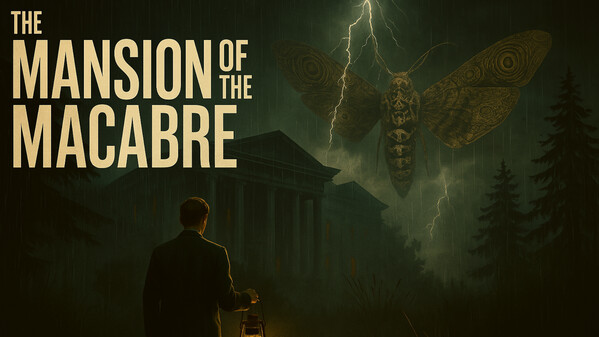
Explore the Crowley Manor and unravel the secrets of the Occult. Inspired by the Works of HP Lovecraft and a love letter to classic 90’s survival horror games.
Modeled estimate, not a reported figure. How we estimate →
Media

About


Stats
All-time low is the lowest price we've recorded for this game since we started tracking it.
Languages: English, French, Spanish - Spain, German, Dutch
Reviews
Okay so, here is the situation as I understand it, and if I am wrong please let me know because admittedly it's a bit confusing. So this game was released as ALONE IN THE DARK REMASTERED, which in the dev's own words is royalty free, and they do not own the license to the IP, naturally. And yet, now the game is called The Mansion of The Macabre and all of a sudden it's okay to charge for it. Not sure if they were acquired, but the point is the same. If I may give a quote from the page : [b] "I paid for this! Have I been ripped off? Yes! We don't charge for the game, and demand a refund as we don't own the IP to Alone in The Dark, and no one should be charging you for royalty free, fan produced software. Although, you can donate for our hard work and dedication." [/b] (former itch page if I am not mistaken) So... I feel like there is a contradiction coming directly from the source - you saying it's not your IP and it's royalty free, but changing the name somehow, makes it different (and I don't know if it's the developer or whoever it is that owns the game now that is responsible for this). On a side note, it seems the game uses some level of assets, I am not sure to what extent, so even the remade material may not be original to this game. Technically speaking the game is not an identical copy of Alone in the Dark, it essentially uses different models and 3D locations to recreate the same game, such as puzzles, similar monsters, same type of progression. On that point, I played a similar Alone in the Dark inspired game called the Padre which also copied many locations, but that one was more like 30 to 70 and voxel based, where this one is almost the same progression, so far anyway. One has to ask, where exactly is that line if you no longer making your own game when you essentially copied every part of the game despite remaking it with new tools, this isn't very different from something like releasing a Resident Evil 1 fan remake and calling it Resident Nice. So ummm. Is it really your game, if your contribution to original game is just new look and changing the name? ............................... So controversy aside, the game is hilariously bad, actually it is so bad I intend on keeping it just for the laughs, it might actually play worse than the original game, and that is saying something. Generally I would not bash a developer for attempting at making a game like this, it's not even the worst survival horror that I played by any means, but here is the thing, is there really anything here that was even worth remaking with this amount of effort, because you copied the good parts, and made them worse, in some ways. One example I can give, you no longer have that nice texture on some of the walls like in original game, there are many flat colors on many objects and walls, sometimes the depth in rooms look worse too, and the few nice things about the game, like the camera angle perspectives are copied, and made worse by a different amount of depth. [h1] Pros: [/h1] (+) Actually, there are some things that I like about this game so far. However... Here is a thing, those things are actually from the original game, and they were better in the original game. Like, take a long shot camera angle of the long trap room, yea it's still a cool look, but you copied it, and made it worse. So yea if this was like original game, you know there are at least some promising ideas, but in this case, the ideas don't belong to this game. [h1] Feedback: [/h1] - my main problem with the game aside from the things that I said, it's very laggy, like it constantly stutters, also just buggy, warps, corrupted saves, you name it. (Update: to be fair to the devs, it seems the last patch mostly fixed the random lag during movement, not so much interactions, just not having constant stutter on walking) - the cool camera angles you copied from the original game are somehow made worse because the depth of rooms changed a lot - obviously this was never finished, and many objects lack a proper texture, as well as many walls, actually walls in original game look a lot better because of those patterns [b] Overall Thoughts: Um I don't know I have a lot of questions, and there are some contradictions, I am not even going to give this a score, you probably should avoid it [/b] I kinda knew it would be bad and I am laughing entire time playing it because it's so shameful, I just didn't expect this hole package with it.What personally confuses me, is that you set to remake Alone in the Dark, and you took all the good parts from it, just to make them worse, locations look worse, it feels even more clunky than original, and like, what do you want me to get from this. Maybe if you finished it, but it does not feel finished either, so many objects lack texture in random places. [code]Niche, obscure and underrated games: http://store.steampowered.com/curator/31294838-Hidden-Gem-Discovery/ [/code]
As a die hard fan of AITD series and even not as a die hard fan I must say this game is an ABOMANATION! Where do I start... First of all it a copycat of AITD 1 so why calling it other name other than AITD 1 remake or collage. The game is atrocious an amateur asset flip with terrible camera angels terrible controls terrible sounds terrible aspect ratio especially on ultrawide monitor. Couldn't bare playing more than 10 min it's that bad, just a bad joke 0/10
I'm going to be a bit of an outlier here and say I appreciate this game for a few specific reasons. I love the original Alone in the Dark. In fact, although this is a modern remake, I prefer the graphical style of the original warts and all. There is a certain charm in the old school graphics, and I would say the house interiors are more detailed in the original. However, the original is clunky to control. I was able to play it with a Steam Controller but that did not take away that every action is basically menu driven. I'm sure back in the day gamepads were not as prevalent as they are today. I don't know how many people are interested enough to play the first Alone in the Dark in the first place, but this version at least streamlines the process. It ironically takes some quality-of-life updates from Resident Evil, which was of course inspired by Alone in the Dark in the first place. Much easier to play. In fact, I played both simultaneously as I encountered a glitch in the first game and by finishing Mansion of the Macabre first, I had an a-ha moment and was able to overcome the glitch and finish the first game. Not saying this is a better version, just an easier version to play. (The original Alone in the Dark works perfectly on Steam OS, which is surprising because a couple of years ago, I struggled to play the Steam Windows version). I guess with the release of the newest game they actually put some work into the old version. Not sure about 2, 3, and Jack in the Box yet. So, basically this version has some merit for anyone who wants to experience Alone in the Dark without the old school struggles. Edit: This game has a wonky camera, but I was able to overcome them by changing Steam Input controls to Cross Gate.
The Mansion of The Macabre is a first-person horror adventure developed by Team Tatou and published by Spacefarer Games Ltd that fully embraces the slow-burning atmosphere and psychological tension of classic haunted house horror games. Instead of relying on constant combat or excessive action sequences, the game builds fear gradually through environmental storytelling, oppressive sound design, unsettling exploration, and the constant sensation that something unnatural is watching from the shadows. The experience revolves around exploring a mysterious mansion filled with hidden secrets, disturbing imagery, supernatural phenomena, and fragmented clues that slowly reveal the horrifying truth hidden within its walls. While the game operates on a relatively modest indie scale, it succeeds at delivering an immersive and consistently uncomfortable horror experience by focusing heavily on mood, isolation, and tension rather than spectacle alone. One of the game’s greatest strengths is the atmosphere created by the mansion itself. From the moment players step inside, the building immediately establishes a suffocating sense of dread through dark hallways, decaying interiors, flickering lights, and eerie environmental details scattered throughout every room. The mansion feels less like a simple location and more like a living entity with its own malicious presence. Every section of the building contributes to the oppressive mood, whether through abandoned furniture, bloodstained corridors, disturbing paintings, or strange noises echoing from unseen locations. The game constantly creates the impression that something terrible happened long before the player arrived, and that the mansion itself is still hiding countless secrets waiting to be uncovered. The pacing is handled particularly well because the game understands that horror becomes far more effective when tension is allowed to develop naturally. Instead of overwhelming players immediately with monsters or nonstop jump scares, The Mansion of The Macabre spends significant time building anticipation and uncertainty. Early exploration sections are relatively quiet, encouraging players to carefully investigate rooms, examine environmental clues, and become familiar with the mansion’s layout. However, that quiet atmosphere never feels safe. Even during slower moments, the game constantly reinforces the feeling that danger could emerge at any second. This gradual escalation allows later horror sequences and supernatural encounters to feel much more impactful because the player has already spent considerable time immersed in the mansion’s oppressive environment. Exploration serves as the core of the gameplay experience. Players spend most of their time navigating interconnected hallways, searching abandoned rooms, unlocking hidden passages, and solving environmental puzzles in order to progress deeper into the mansion. The interconnected layout gives the mansion a believable physical structure while also creating stronger immersion as players gradually memorize pathways and revisit familiar locations that become increasingly unsettling over time. Returning to previously explored areas after supernatural events begin intensifying creates especially effective tension because familiar environments suddenly feel corrupted and dangerous in ways they did not before. The game also handles psychological horror effectively by focusing heavily on uncertainty and environmental manipulation. Strange visual distortions, unexplained sounds, disappearing objects, and disturbing environmental changes constantly undermine the player’s sense of safety and reality. The horror rarely relies entirely on direct confrontation. Instead, much of the fear comes from the suggestion that something is deeply wrong beneath the surface of the mansion. Players are often left questioning whether they actually saw movement in the darkness or imagined strange noises echoing through distant corridors. This approach works extremely well because it forces players to remain tense even during moments where nothing explicitly threatening is happening. The sound design deserves enormous praise because it is arguably one of the game’s most important strengths. Ambient noises such as creaking floors, distant footsteps, whispering voices, slamming doors, and faint mechanical sounds constantly reinforce the feeling that the mansion is alive and unpredictable. Silence is also used masterfully throughout the experience. Certain sections become almost unbearably tense simply because the game removes music entirely and leaves players alone with only faint environmental sounds and their own anxiety. Sudden audio changes or distant unexplained noises become genuinely frightening because the game conditions players to expect danger without constantly revealing its source. The visual design complements the horror atmosphere effectively despite the game’s relatively modest technical scale. Lighting plays a massive role in maintaining tension, with many areas intentionally obscured by darkness, shadows, or limited visibility. Players are often forced to navigate dimly lit hallways or rooms where environmental details only become visible at close range, increasing the fear of unexpected encounters. The decaying architecture, cluttered interiors, and disturbing decorative elements all contribute to the sense that the mansion has become corrupted by something unnatural over time. Although the graphics themselves are not groundbreaking compared to larger horror titles, the art direction succeeds because it consistently prioritizes mood and immersion over graphical spectacle. The puzzle design is relatively traditional but works well enough within the context of the game. Players regularly search for keys, hidden objects, symbols, and clues needed to unlock new sections of the mansion or solve environmental mysteries. Most puzzles focus more on observation and exploration than complicated logic, which helps maintain pacing without interrupting the horror atmosphere too heavily. Certain puzzle sequences become particularly tense because players must search dangerous environments while fully aware that supernatural threats may appear unexpectedly at any moment. While the puzzles are not especially difficult, they succeed at slowing progression enough to allow the atmosphere and tension to continue building naturally. The Mansion of The Macabre is ultimately a tense and atmospheric indie horror adventure that combines psychological horror, environmental storytelling, and immersive exploration into a memorable haunted house experience. While repetitive gameplay structure, relatively simple puzzles, and limited technical polish prevent it from reaching the heights of larger survival horror franchises, the game’s oppressive atmosphere and strong sense of dread still make it highly enjoyable for fans of slower and mood-driven horror games. For players who appreciate exploration-heavy horror built around tension, mystery, and psychological discomfort rather than nonstop combat, The Mansion of The Macabre delivers a consistently unsettling journey through one deeply cursed mansion. Rating: 7/10
played for about 20 mins for really poor performance and bugs one biggest issue is that when holding the knife at the zombies you become immune to any damage as they will not attack you making the knife super overpowered shame I was hyped to try this as I loved the original alone in the dark and that game needs a update but yeah this isn't it unfortunately
This is a difficult one to review. But I'll give it a thumbs up, because I got a lot of good laughs out of it, and some nostalgia alongside those laughs.
Like, Literally, How is this legal on Steam? If i remade Super Mario and just changed the sprites... that's what this is. It's an almost 1:1 clone of Alone in the Dark. There's inspired by and then there's just stealing. This is just theft.
Shameless game. Stay away from this crap. I could hear the devs laugh even after I pay 1.50$ on discount.
Got the game for $2 and still not worth it.
This one is wild for me, I grew up on the original AITD series, seeing a fan made remake of the original seemed like it would be fun. But I'm shocked that the controls are WORSE than the original one from 1992! Which is wild, I appreciate the effort of trying to make it one for one remake, but this is tough if you enjoyed the original at all.
Related
Related
Trends
Modeled estimate over time, reconstructed from Steam's monthly review histogram.
Momentum
Pace estimated from the game's recent review growth (our daily snapshots) at its own sales-per-review ratio — a momentum signal, not booked sales.
Related
| Forest and Girls | $340.5 | 55 | 82% | $0.99 |
| Girls and Dragons | $340.5 | 55 | 76% | $0.99 |
| Cosmic Journey PC Live Wallpaper | $336.3 | 52 | 71% | $0.49 |
| Carnival and Girls | $334.4 | 53 | 85% | $0.99 |
| Anime Sunset Ride | $334.4 | 54 | 67% | $0.49 |
| Work And Girls | $346.9 | 56 | 86% | $0.99 |