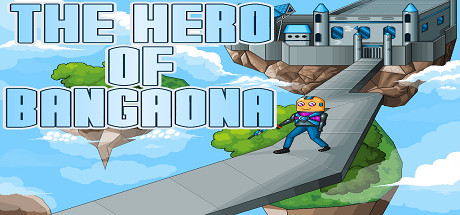
The Hero of Bangaona is a retro-styled action platformer that proudly embraces the design philosophy of classic arcade shooters while delivering a surprisingly ambitious adventure built around military conflict, science-fiction themes, and nonstop side-scrolling combat. Developed and published by Anamik Majumdar, the game immediately gives the impression of being a passion-driven indie project inspired by the golden era of 2D action games. Rather than attempting to compete with massive modern platformers through cinematic storytelling or highly detailed graphics, the game instead focuses on straightforward action, challenging enemy encounters, arcade-style progression, and a nostalgic visual identity that feels rooted in older PC and console gaming traditions. The result is an experience that may appear simplistic on the surface but gradually reveals itself to be a dedicated tribute to retro action design filled with charm, energy, and clear creative enthusiasm.
The story centers around the Kingdom of Bangaona, a nation trapped in a prolonged territorial conflict with the hostile Weins Territory over control of a strategically valuable island region. Tensions between the two powers escalate dramatically when the Princess of Bangaona, known for her advanced technological research and military intelligence work, is abducted by enemy forces during the war. With the kingdom facing disaster and military defeat looming closer, the King sends the legendary Hero of Bangaona deep into enemy territory to rescue the Princess, weaken the opposing forces, and reclaim control of the contested regions. The premise feels intentionally old-school, almost like the setup for an arcade cabinet game from decades ago where a lone warrior is tasked with saving both the kingdom and humanity through pure combat skill and determination. The narrative itself is not especially complex, but it serves its purpose effectively by creating a constant sense of urgency and progression throughout the campaign.
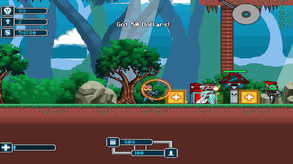
One of the game’s strongest qualities is its commitment to retro presentation. The pixel-art visuals instantly establish the tone of the experience, drawing heavy inspiration from classic side-scrolling shooters and arcade platformers from earlier generations. Character sprites, enemy soldiers, explosions, and environmental hazards all carry a colorful and exaggerated arcade aesthetic that complements the fast-paced gameplay. The environments feature military installations, industrial complexes, enemy bunkers, forests, underground facilities, and futuristic combat zones filled with traps and hostile defenses. While the graphics are clearly limited by budget and scope, there is still a strong sense of consistency in the visual design. The game understands exactly what kind of atmosphere it wants to create, and the retro art direction helps reinforce its identity as a nostalgic action platformer focused entirely on gameplay momentum rather than visual realism.
Gameplay revolves around traditional side-scrolling combat mixed with platforming, exploration, and territory-conquering mechanics. Players control the Hero through a series of dangerous stages packed with enemy soldiers, mechanical defenses, environmental hazards, and heavily fortified structures. Combat is straightforward but satisfying, relying on responsive shooting mechanics, movement timing, and resource management. The Hero gains access to multiple weapons and attack styles that help vary encounters throughout the campaign. Standard firearms are useful against weaker enemies, while stronger weapons and explosive attacks become necessary against heavily armored enemies and bosses later in the game. Combat encounters often feel chaotic in a positive way, especially during moments where players are dodging incoming fire while simultaneously destroying turrets and enemy groups.
One mechanic that helps distinguish The Hero of Bangaona from more generic retro shooters is the territory conversion system. Throughout levels, players can capture enemy-controlled structures and transform them into allied positions using the Hero’s supernatural or advanced technological abilities. This creates a subtle strategic layer beneath the standard run-and-gun gameplay because progression is not solely about surviving combat encounters but also about gradually dismantling enemy control over the battlefield. Capturing towers and military installations gives players a tangible sense of advancement through each stage, making the war feel more interactive rather than simply decorative background storytelling. It is a surprisingly creative addition for a smaller indie action game and helps the gameplay stand apart from many other retro-inspired shooters.
The level design also demonstrates more ambition than initially expected. The campaign spans multiple stages with increasingly dangerous enemy encounters, environmental hazards, and combat scenarios designed to test the player’s reflexes and adaptability. Certain stages emphasize aggressive firefights against large enemy groups, while others introduce more platforming-focused sections filled with moving hazards, laser traps, collapsing platforms, and defensive fortifications. This variation helps maintain momentum and prevents the game from becoming too repetitive too quickly. Players are also encouraged to search for supplies, including health packs, money, and ammunition, which adds a light exploration component to the otherwise action-heavy structure.
Enemy variety contributes significantly to the game’s pacing. While standard enemy soldiers form the foundation of most combat encounters, later stages introduce stronger units, robotic enemies, armored turrets, flying machines, and giant boss opponents that require different strategies to defeat. Boss fights are especially important because they provide some of the game’s most memorable moments. These encounters often rely on timing, positioning, and pattern recognition rather than simple brute force, giving the experience a satisfying arcade-style difficulty curve. Defeating larger enemies after surviving intense firefights creates a strong sense of accomplishment that fits perfectly within the game’s old-school design philosophy.
The soundtrack and audio presentation also support the action effectively. Fast-paced electronic music and retro-inspired combat themes help maintain energy throughout the campaign, especially during intense firefights and boss encounters. Weapon sounds, explosions, and environmental effects may not be highly sophisticated, but they are loud and exaggerated enough to complement the arcade atmosphere. The sound design overall captures the spirit of older action games where every explosion and gunshot was designed to feel impactful and energetic rather than realistic.
For players who appreciate retro-inspired action games, indie platform shooters, and arcade-style combat experiences, The Hero of Bangaona offers an enjoyable adventure filled with explosions, enemy invasions, platforming challenges, and nostalgic energy. Its rough edges, repetitive mechanics, and limited polish prevent it from reaching the highest level of indie action platformers, but its creativity, ambition, and passion-driven design still make it a worthwhile experience for fans of old-school side-scrolling shooters. It feels less like a commercial product chasing trends and more like a genuine tribute to the classic arcade games that inspired an entire generation of action titles.
Rating: 6/10