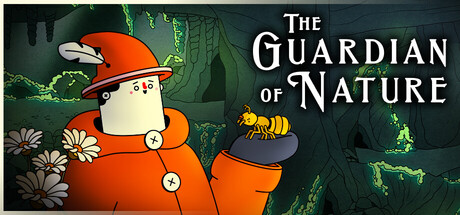
«The Guardian of Nature» is a hand-drawn, size-changing adventure. Embark on a magical journey with botanist Henry, use your size-changing ability to explore nature in big and small and solve solarpunk puzzles to put nature back in order.
Modeled estimate, not a reported figure. How we estimate →
Media

About

«The Guardian of Nature» is a wholesome puzzle adventure game about the interconnectedness of nature, created in a wonderful hand-drawn and hand-animation style. You play as Henry, a Guardian of Nature who needs to go on a magical journey to save nature and The Tree of Life.

✨ Change size to explore nature large and small. ✨ Explore environments above and below ground. ✨ Find and use inventory items. ✨ Find out how nature is interconnected and fill up the Book of Nature with discoveries you make along the way. ✨ Solve nature-inspired and solarpunk puzzles and learn about the intricate inventions of the Guardians. ✨ A wonderful blend of wholesome experience and a modern twist on point-and-click adventures. Cozy gamers and old-school adventure gamers will feel right at home!

A key feature of the game is that Henry can change in size to access game environments large and small, above and below ground. This allows you not only to wonder through forests and gardens but access ant hills or even fly on birds.

The game and story consist of three episodes, told in a linear order. Each act consists of different game environments. To continue your journey, you must explore how these environments are connected and solve various puzzles.

In order to continue your journey towards the Tree of Life, you need to find and use inventory items. They are stored in you backpack and are crucial for connecting the dots.

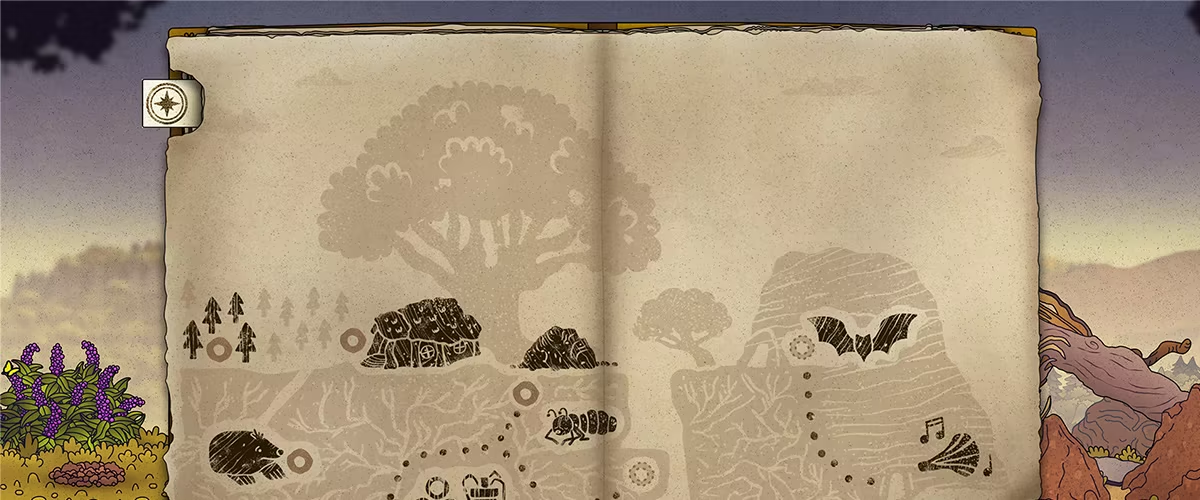
The story of «The Guardian of Nature» is told through a wonderful fairytale-inpired narration, filling the Book of Nature step-by-step. Throughout the game you will regularly find and collect “Nature Cards” which reveal new pages in the book. They tell you more about the ancient wisdom of the Guardians of Nature, the interconnectedness of nature and give you hints on how to continue your journey.


The Guardians of Nature have learnt how to use the magical energy flow of mycelial networks underground - which are vital for all trees, plants and living beings - and have built solarpunk devices. You need to solve solarpunk puzzles to use the magical power of nature.
Stats
All-time low is the lowest price we've recorded for this game since we started tracking it.
Languages: English*, German, Japanese, Simplified Chinese, Portuguese - Brazil, French, Russian*languages with full audio support
Engagement
Hours played at review time, across 40 reviews with recorded playtime.
Reviews
Themes across 40 recent reviews and how positive each mention is. A keyword signal, not full sentiment analysis.
positive critical· bar length = how often the theme comes up
Reviews
Jeu cosy, l'ambiance est douce et agréable. Je recommande.
This was a really cute puzzle game. Very different to other games I have played so it took me a while work out how to do things. It's short and sweet and a lovely message of cooperation and redemption.
很好,画风真不错,各种植物的前景和远景非常棒,大部分迷题还行,但个别的确实难解,没看攻略搞了6个小时才通关。。。。
Very wholesome vibes and enjoyable puzzles! Also very lovely environments and soundscape!
Absolutely beautiful, relentlessly cozy, and full of pitch-perfect puzzle design that nudges you along (ever so gently) at just the right pace. This game's artistic style, soundtrack and themes are perfectly paired. Can't wait for more episodes.
好玩的,休闲益智,难度不大,有引导,美术和剧情都很好,就是目前篇幅很短,也不清楚后续是要独立成DLC还是直接更新
The Guardian of Nature, developed by Inlusio Interactive and published by Inlusio Interactive in collaboration with Nexting (Japan), is a story-rich adventure that blends environmental themes with classic point-and-click puzzle design. From its opening moments, the game establishes a gentle, almost storybook-like tone, inviting players into a lush, hand-drawn world where nature is both setting and central character. Rather than relying on high-intensity action or complex mechanical systems, it focuses on atmosphere, exploration, and thoughtful problem-solving. The result is an experience that feels intimate and reflective, appealing especially to players who appreciate narrative-driven indie titles with a strong artistic identity. You play as Henry, a botanist and Guardian tasked with restoring balance to a world threatened by ecological disruption. The central narrative revolves around healing the Mother Tree and reconnecting fragmented natural systems. What makes the journey stand out mechanically is Henry’s ability to alter his size. This mechanic allows players to shift perspective dramatically—one moment traversing forest paths at human scale, the next shrinking down to explore hidden micro-worlds within roots, insects’ habitats, or intricate natural structures. This shifting scale is more than a visual novelty; it opens new traversal routes and puzzle configurations, encouraging players to think about environments from multiple viewpoints. The gameplay structure follows traditional adventure game principles. Players explore richly illustrated environments, interact with characters, collect items, and solve inventory-based puzzles that gradually unlock new areas. The pacing is deliberate and measured, with puzzles integrated into the narrative rather than presented as isolated challenges. Many of the obstacles draw on environmental logic—repairing broken natural systems, nurturing plant life, or interacting with organic mechanisms inspired by solarpunk aesthetics. The inclusion of a “Book of Nature,” which fills with discoveries and lore as you progress, reinforces the educational and thematic undercurrent of the experience. It serves both as a collectible system and as a narrative device that deepens the world’s mythology. Visually, The Guardian of Nature is one of those indie titles where art direction plays a defining role. The environments are hand-drawn and animated with a soft, painterly style that evokes illustrated children’s literature. Colors are warm and inviting, and the natural landscapes feel alive without being overwhelming. The animation style supports the whimsical tone, while subtle environmental effects help the world feel organic and interconnected. Complementing the visuals is a calm and melodic soundtrack that enhances the sense of immersion. The audio design avoids dramatic excess, instead reinforcing the tranquil and contemplative atmosphere. Narratively, the game leans into themes of environmental stewardship and the delicate interdependence between humanity and nature. The story is earnest rather than cynical, emphasizing restoration and cooperation over conflict. While the stakes involve ecological imbalance, the tone remains hopeful. Dialogue exchanges and character interactions are straightforward but heartfelt, conveying sincerity rather than dramatic intensity. This makes the experience approachable for a wide audience, including players who prefer narrative warmth over darker storytelling tones. As an episodic experience released in stages, the game’s structure reflects its development approach. The episodic format allows for focused storytelling within contained segments, though it can also mean that the full narrative arc unfolds gradually rather than all at once. Early access development has invited community feedback, and the structure suggests room for expansion and refinement. Some players may find certain mechanics—particularly the size-shifting ability—ripe for even deeper puzzle integration, as the concept holds significant potential for complex environmental design. The pacing is intentionally relaxed, which can be both a strength and a limitation. For players seeking high-stakes tension or rapid gameplay escalation, the measured tempo may feel subdued. However, for those who enjoy immersive worldbuilding and thoughtful interaction, the calm progression enhances the thematic impact. The game is less about overcoming overwhelming difficulty and more about discovering harmony within the world it presents. Ultimately, The Guardian of Nature succeeds most strongly in its cohesive vision. It combines environmental storytelling, charming art, and accessible puzzle design into an experience that feels purposeful and personal. While it may not push the boundaries of mechanical innovation, it offers a heartfelt adventure grounded in ecological awareness and gentle exploration. For players who value atmosphere, narrative sincerity, and a visually distinctive world, it provides a reflective journey that lingers beyond its runtime. Rating: 8/10
The game’s title refers to your character, Henry, who is one of several guardians protecting an island sustained by a giant tree at its center. This enormous tree gives life not only to the island itself but also to all its plants and creatures. The island has remained peaceful and untouched for ages, but that tranquility is now threatened as giants from the mainland arrive to cut down its trees. Henry is the typical adventure game hero, meaning you guide him by moving the mouse cursor around the screen and searching for points of interaction. This is a more relaxed adventure game, however, with only a handful of possible interactions in each scene. There is no button that highlights them for you, but finding them rarely becomes frustrating since a quick sweep of the cursor over the screen usually reveals everything worth interacting with. Each hotspot has only a single action attached to it. You might pick up an item and add it to your inventory, examine an object and read Henry’s thoughts in a speech bubble above his head, move to a new location, or use your special ability to shrink down and return to normal size. This ability is not really used for puzzle solving. Instead, it serves as a clever way to access small openings, underground tunnels, hidden locations, and tiny creatures that would otherwise go unnoticed. The game’s accessible design is especially noticeable when it comes to inventory management. Clicking and holding an item from your bag reveals a small dot wherever that item can be used in the current scene. This makes it easy to determine whether a scene contains a valid interaction point at all, since some do not, and it allows you to quickly test every item without unnecessary guesswork. As you travel across multiple locations, your notebook becomes an invaluable tool. It contains a map that allows quick travel between discovered areas. Most locations become available as soon as you visit them for the first time, although some smaller areas do not receive their own travel point. In practice, this is never a problem, and backtracking rarely feels tedious. The island is so beautifully illustrated that revisiting locations is often a pleasure. Another feature found in the notebook is a collection of cards. These act as the game’s collectibles and are entirely optional, but each one contains a charming poem related to the subject depicted on the card. In fact, poetry plays a significant role throughout the entire game. Cutscenes are narrated in verse and rhyme, giving the story a distinctive atmosphere that I found quite memorable. Cards are discovered the same way as any other hotspot by carefully moving the cursor around the environment and watching for the appropriate icon. Once collected, the interaction disappears and the card is added to your notebook. Although the game tells you how many cards exist in each episode, finding them is entirely up to you. Each of the three episodes has its own set of collectibles and map. Missing a card means replaying the episode later if you want a complete collection. Because some locations become inaccessible as the story progresses, I found it worthwhile to thoroughly scan every new scene before moving on. You can prevent such points of no return by using a save system that has several slots. The first two episodes were enjoyable from start to finish, but the third introduced a couple of issues that slightly diminished the experience. The first involves a puzzle where you dig through tunnels in a specific pattern. Unfortunately, there appears to be little logic behind the solution, and the pattern changes each time you are sent back to the beginning. I eventually checked the game’s discussion board and discovered that the solution is tied to pulsating energy effects, something that was not particularly clear during gameplay. Up to that point, the puzzles are generally straightforward and satisfying. There are only a few of them, and most involve rotating simple circles to connect energy lines. The second issue is a minor bug that causes Henry to remain in his tiny form when quick travelling to locations where he should appear at normal size. While you can still move around, progress becomes noticeably slower because his miniature footsteps cover distances intended for a full sized character. Fortunately, both problems are relatively minor and feel like issues that could easily be fixed. They do little to overshadow what is otherwise a charming and visually stunning adventure. The game is fairly short, but it tells its story well and remains enjoyable throughout. You can revisit any episode to hunt for missed cards, while nearly every other achievement unlocks naturally through story progression.
One of the cutest and niciest quests with great design and ineteresting story!
cute et cosy. Pas si facile
Related
Related
Trends
Concurrent players on Steam, sampled daily since tracking started.
Audience
Estimated from the language of this game's reviews — a proxy for where players are, not official Steam demographics.
Related
| RC Mini Racers | $18.4K | 162 | 70% | $4.99 |
| Chainz 2: Relinked | $18.4K | 93 | 63% | $9.99 |
| Sophie's Dice | $18.4K | 141 | 99% | $4.99 |
| Sex Standing | $18.4K | 247 | 57% | $3.99 |
| 蔚蓝月下的回忆~SAPPHIRE MOON-FOREVER MEMORIES | $18.4K | 330 | 82% | $1.99 |
| Clan O'Conall and the Crown of the Stag | $18.4K | 123 | 93% | $7.99 |