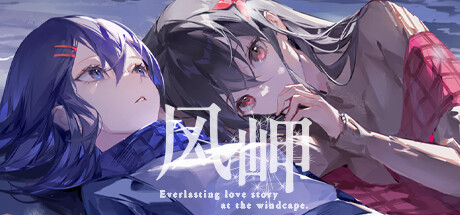
风岬-The Everlasting lovestory at the Windcap
I was abandoned by the world, and she was forgotten by time. Attracted by loneliness, we cling to each other because of misfortune. The happy fairy tale woven by the two eventually turned into a curse of despair.
Estimated lifetime revenueHigh confidence
$160.5K
$96.3Klow → high range$272.9K
Modeled estimate, not a reported figure. How we estimate →
Est. copies sold
33.5K
mid estimate
Reviews
825
Media
Screenshots & trailer
About
About the game
The Windcape is a short yuri visual novel developed by CentChansons, telling the story of Focfish (also known as Fisha), a young girl abandoned by her mother, who is raised in a small town by Mistie, a fireworks producer, and gradually falls in love with her "mother".
▌Contact
Weibo: @百歌游戏CentChansons
Bilibili: @魏千杨
QQ group 1: 342730014 (filled to capacity)
QQ group 2: 786877539
You can download lossless sound quality theme song and HD wallpaper in the group file.
▌Story
The world has abandoned me and time has abandoned them,
We are so lonely but we have each other, we are so painful but we can snuggle up to each other.
Our story of happiness that we hold will finally become a spell of despair.
-
Focfish, abandoned and homeless one winter day, was saved by a goldfish firework.
Mistie, her adopter, was so gentle and kind, but also afraid of love.
After a decade together, their romance has finally begun to grow on their family bond.
Will the fish fulfill her wish and jump into the ocean of love?
▌Feature
·Live2D sprites used
·Full Mandarin voice acting
·20 beautiful illustrations by a Japanese illustrator
·Four moving endings
·An original Japanese theme song "Kyuu wo Nagameta Sakanatachi"
▌Protagonists

·Her parents were divorced, resulting in a low self-esteem and sensitive personality, and she blamed herself for all her faults after being abandoned by her mother.
·Used to think of Mistie as her mother, but somehow her feeling became weird.
·Treasures Mistie's happiness more than her own.
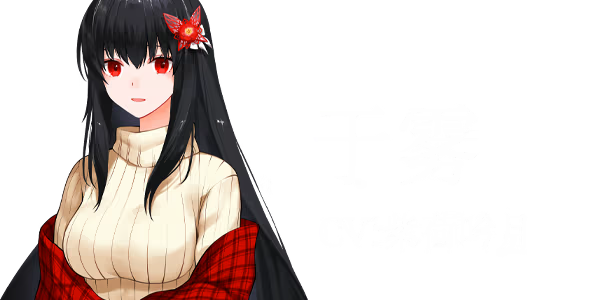
·A firework producer, who always stays in her workshop alone.
·Extremely unsocial and physically nauseous in crowds, but actually a gentle and kind person.
·Doesn't know how to get alone with others but forced herself to adopt Fisha who was abandoned.
▌Credit
Producer:魏千杨
Script:魏千杨
Illustrator:わか
Main visual graphic:夕烧chui
Cutscenes:He
Programming:风空
English support: 羊圈Yan-Gyan
Voice Acting:
Mistie - 紫荷吟月
Focfish - 木雅瑞林
Pitty - 柳知萧
Lin Wan-Feng - 白小蛮
Focfish's mother - 木南筝北
Lin Chien - 大老师Gin
Others - 牛仔仔、简章、流星、大老师Gin、北鸽
Voice acting director:大老师Gin
UI visual graphic:匣中猫
Music:957offical
Development assistance:龙之咲
▌Contact
Weibo: @百歌游戏CentChansons
Bilibili: @魏千杨
QQ group 1: 342730014 (filled to capacity)
QQ group 2: 786877539
You can download lossless sound quality theme song and HD wallpaper in the group file.
▌Story
The world has abandoned me and time has abandoned them,
We are so lonely but we have each other, we are so painful but we can snuggle up to each other.
Our story of happiness that we hold will finally become a spell of despair.
-
Focfish, abandoned and homeless one winter day, was saved by a goldfish firework.
Mistie, her adopter, was so gentle and kind, but also afraid of love.
After a decade together, their romance has finally begun to grow on their family bond.
Will the fish fulfill her wish and jump into the ocean of love?
▌Feature
·Live2D sprites used
·Full Mandarin voice acting
·20 beautiful illustrations by a Japanese illustrator
·Four moving endings
·An original Japanese theme song "Kyuu wo Nagameta Sakanatachi"
▌Protagonists
·Her parents were divorced, resulting in a low self-esteem and sensitive personality, and she blamed herself for all her faults after being abandoned by her mother.
·Used to think of Mistie as her mother, but somehow her feeling became weird.
·Treasures Mistie's happiness more than her own.
·A firework producer, who always stays in her workshop alone.
·Extremely unsocial and physically nauseous in crowds, but actually a gentle and kind person.
·Doesn't know how to get alone with others but forced herself to adopt Fisha who was abandoned.
▌Credit
Producer:魏千杨
Script:魏千杨
Illustrator:わか
Main visual graphic:夕烧chui
Cutscenes:He
Programming:风空
English support: 羊圈Yan-Gyan
Voice Acting:
Mistie - 紫荷吟月
Focfish - 木雅瑞林
Pitty - 柳知萧
Lin Wan-Feng - 白小蛮
Focfish's mother - 木南筝北
Lin Chien - 大老师Gin
Others - 牛仔仔、简章、流星、大老师Gin、北鸽
Voice acting director:大老师Gin
UI visual graphic:匣中猫
Music:957offical
Development assistance:龙之咲