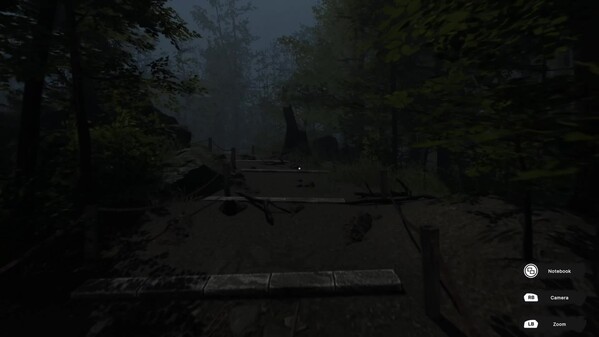
Tatari, developed by Hidden Tower Studios and published by TheGamesFortress, is a first-person investigative horror experience that attempts to blend detective storytelling with elements of Japanese supernatural folklore. Set against the backdrop of rural Japan, the game places players in the role of a Tokyo detective following the trail of a mysterious disappearance. What begins as a seemingly routine investigation at an abandoned campsite gradually evolves into a descent into isolated forests and deserted villages, where reality feels unstable and the atmosphere grows increasingly oppressive. The game’s core appeal lies in this slow unraveling of mystery, where each clue nudges the player deeper into a world that feels both grounded and eerily detached.
From a structural standpoint, Tatari emphasizes exploration over direct confrontation. The environments are designed to encourage careful observation, with progress often tied to locating key objects, solving light environmental puzzles, or interacting with subtle narrative triggers. Rather than providing constant direction, the game allows players to piece together the next step themselves. This approach reinforces the feeling of isolation and vulnerability, as there are few overt signposts guiding the investigation. While this design choice strengthens immersion for players who enjoy deliberate pacing, it can occasionally result in moments of confusion when objectives are not immediately clear.
The setting plays a significant role in shaping the tone. Dense forests, dimly lit campsites, and abandoned village streets create an atmosphere of abandonment and quiet dread. The game leans into emptiness as a tool of tension; long stretches of silence and stillness amplify even minor environmental sounds. Visually, the environments aim for realism with muted color palettes and subtle lighting, though some areas can feel sparse or repetitive. The use of similar textures and structural assets occasionally reduces the sense of distinct identity between locations, yet the overall mood of desolation remains effective in maintaining suspense.
Gameplay mechanics are intentionally straightforward. Players solve simple puzzles, unlock doors, and uncover story fragments that reveal more about the disappearance and the supernatural forces implied to be at work. The puzzles generally focus on logical progression rather than complex riddles, serving more as pacing devices than intellectual challenges. This keeps the experience accessible, but it may leave players seeking deeper mechanical engagement wanting more complexity. The absence of combat reinforces the emphasis on vulnerability and atmosphere, positioning Tatari more as a narrative exploration than a survival horror title.
Sound design is central to the experience. Subtle ambient noises—wind brushing through trees, distant creaks, and sudden bursts of unsettling audio cues—are used to cultivate tension. The game relies less on constant jump scares and more on creating a persistent undercurrent of unease. That said, certain abrupt sound effects can feel sharper than the surrounding atmosphere suggests, creating occasional tonal inconsistencies. When the audio works in harmony with the visuals, however, it effectively sustains a feeling of being watched or followed, even when nothing is visibly present.
Narratively, Tatari explores themes of disappearance, folklore, and the fragility of perception. The incorporation of Japanese mythological undertones adds a layer of intrigue, hinting at forces beyond simple human wrongdoing. However, the storytelling sometimes moves quickly between major developments, leaving certain plot points feeling less fleshed out than their premise suggests. The detective’s personal connection to the events remains somewhat understated, which can limit the emotional resonance of the unfolding mystery. Despite this, the overall narrative arc maintains enough intrigue to encourage players to see the investigation through to its conclusion.
Ultimately, Tatari is a modest but atmospheric horror title that prioritizes mood and mystery over mechanical depth. Its strengths lie in its quiet tension, its commitment to an investigative tone, and its use of rural Japanese settings to evoke unease. While it may not deliver groundbreaking gameplay systems or highly intricate puzzles, it offers a contemplative and immersive journey for players who appreciate slow-burning horror and exploratory storytelling. For those drawn to folklore-inspired mysteries and subdued psychological tension, Tatari provides an experience that lingers more through atmosphere than spectacle.
Rating: 5/10