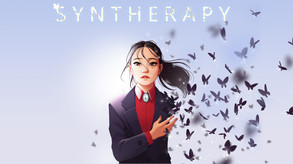
If an AI were sentient, how would you know if they were malfunctioning, or experiencing a mental health problem? A story-rich game that explores mental health and AI ethics in the form of therapy sessions with a sentient AI.
Modeled estimate, not a reported figure. How we estimate →
Media

About


Genres
Stats
All-time low is the lowest price we've recorded for this game since we started tracking it.
Languages: English*, Spanish - Spain, French*languages with full audio support
Engagement
Hours played at review time, across 40 reviews with recorded playtime.
Reviews
Themes across 40 recent reviews and how positive each mention is. A keyword signal, not full sentiment analysis.
positive critical· bar length = how often the theme comes up
Reviews
Syntherapy is a philosophical visual novel (VN) that explores mental health and AI ethics through therapy sessions with a psychologist, making players ponder if an AI can be truly sentient. There are multiple endings, story paths and many topics that force player contemplation to delve deep within their thoughts and come to a conclusion on some difficult, complex themes. [u]Pros[/u] + Well-scripted dialogue with many branching paths, directly influenced by player choice. + Sincere and emotional voice actors + Intricate and philosophical story on AI sentience in a psychological setting + 37 possible endings. + Steam achievements. [u]Cons[/u] - Have experienced multiple crashes (even after the developers removed the fast-forward option). - Cannot take screenshots through Steam. - Difficult to reach different endings without being able to skip to choices/no road map to see diverging story paths. [b]NOTE:[/b] Developers plan to add in a flowchart to enable easier tracking for the different endings and add a skip button that was actually removed before launch due to it being the cause of game-crashing bugs. [h1]Story[/h1] Players take on the role of Dr Melissa Park, a psychotherapist who finds herself tasked with the difficult job of diagnosing and treating a complex AI named Willow. Willow was designed for experimental therapy but instead finds itself suffering emotionally and is thrown into the ramifications of its very existence. Dr Park must juggle therapy sessions and consider being sensitive of Willow's feelings whilst appeasing both its passionate student creator, Tara, and the president of Petrichor University whom both have very different opinions on the matter. https://steamcommunity.com/sharedfiles/filedetails/?id=2259139787&fileuploadsuccess=1 During therapy, many ethical concerns begin to arise, particularly regarding the Universities ownership of Willow and if the AI has rights, if it should be able to strive for independence and more. With over 30 endings and multiple dialogue options, it allows players to delve deeper into each character’s background to discover their secrets and form a greater understanding of their backstories. [h1]Gameplay[/h1] Using arrow keys or the mouse to navigate text, players communicate with 4 different characters, expressing views via different dialogue options. The choices made impact Dr Park's professionalism level and relationship with each character, as well as leading to the different endings. Between therapy sessions, players get to navigate the protagonist’s computer and read emails, change the music, view the planner and read the patient file which states the trust relationship between each individual. Lastly, there is a report section that allows players to choose a therapy approach which can either be medicative or cognitive. Before each session begins, there are also some mini games that can be played such as spot the difference and bubble pop. Unfortunately, at the time of this review there is no skip option for dialogue nor any method of visualising the different story paths. The addition of these features would further encourage replayability to unlock more of the many endings. In retrospect, each of these features are apparently in the works and hopefully will be added in the near future. https://steamcommunity.com/sharedfiles/filedetails/?id=2259139174&fileuploadsuccess=1 [h1]Graphics & Sound[/h1] The art design is more realistic than other VNs I've played and creates a slightly pensive mood, allowing players to both concentrate and reflect on the somewhat heavy storyline and follow along without over-exaggerated animations. Music can be changed in between sessions to a variety of different Low-Fi, relaxing beats which almost oppose the heavy nature of the plot, but aid in creating a space to collect thoughts together. All of the dialogue is fully voiced and is delivered in an emotional, realistic manner which aids in bringing each character to life [h1]Bugs & Glitches[/h1] I experienced many crashes, before and after the official launch stating, 'Code Error'. Especially when skipping the dialogue too quickly, the game would automatically quit with this error message and I would lose all progress. [quote][b]This game was played with the following PC specs:[/b] Intel i5-9400 2.9 GHz 16GB RAM GeForce RTX 2060 6GB 1920x1080 resolution HDD Windows 10[/quote] [h1]Conclusion[/h1] Syntherapy is a thought-provoking VN that tackles difficult subjects on ethics, psychology, and AI incorporation in the modern world. With 37 different endings and a copious amount of choices to make, the foundation is present for a game with a high level of replayability, however some features to make this more enjoyable are unfortunately missing upon its initial launch. Once it is more user-friendly for repeated playthroughs, Syntherapy's asking price is more understandable, but in its current state I would suggest waiting for a hefty sale before purchasing. [h1]Rating: 6.5/10[/h1] This review copy was provided to the Devils in the Detail curator. [url=https://store.steampowered.com/curator/34936724][quote]Follow my curator page, [b]Cookie Reviews[/b], if you enjoyed this review and want to see more like it.
[i] My Experience [/i] Syntherapy is a complicated game. It’s similar mechanically to Zachtronics’ [i]Eliza[/i], but instead of playing an average citizen facilitating therapy by an AI, you’re an actual therapist, talking to an AI that has been designed to provide therapy themselves but has had a breakdown. I work as a therapist in real life, and I’m often drawn to trying games like this. Two things were most compelling to me about the game. One was the quality of the therapy delivered by Dr. Park, and the other was conceptualizing the case of Willow as well as the personal connections I felt to this AI. Initially, I was rather impressed with Dr. Park. I was usually able to find a dialogue choice that corresponded to a therapeutic response towards Willow, although sometimes the game made me exhaust all of the options in the “choice hub,” including those that I felt were not beneficial to the therapy. It’s also a bit odd that some of the dialogue choices initiate statements from another character – am I role-playing Dr. Park, or both characters? I liked Dr. Park’s attention to building rapport with the AI in the initial sessions, as it’s repeatedly emphasized to counselors that the therapeutic relationship is the most important factor in recovery. However, there were also a few things that weren’t as impressive for me. Despite Dr. Park’s insistence that she was implementing CBT treatment with Willow, I just didn’t see it. I didn’t feel like there was a focus on identifying the AI’s irrational self-statements and thoughts, or really much insight-based treatment in general. There’s also a weird focus on playing little games prior to each counseling session, which struck me as inane. You can “spot the differences” between two abstract paintings, or complete a brainwave exercise (that I was never able to figure out). I guess the intent here would be to “ease in” to the session, but (working in a higher education setting) I’ve never felt the need for anything like this. Additionally, the game presents an odd conflict of interest between “professionalism” and actually wanting to help the client. Often, Willow would ask Dr. Park something personal that I didn’t feel would be beneficial to answer. However, my only responses were inarticulate appeals to my “standards.” Most counselors in this situation will turn the question back on the client, which wasn’t an option in the game - for instance, replying “how do you feel it would help to know more about my experiences in college?” Also – and this isn’t a big issue – the way that Willow opened and closed up about various topics didn’t ring true with me. Towards the beginning of our work together it would open up about something tremendously personal, but then shut down and refuse to speak on something much less threatening. While it’s certainly possible that a client would indeed be more protective of information that seems less significant to a clinician, I found his caginess to be somewhat silly. Lastly, I must say that I was baffled by my intern Heather. I think that she was put in the game to guide players who felt overwhelmed by role-playing a therapist, but I personally felt like maybe she got a little "fresh" with Dr. Park. She was ostensibly there to “learn therapy from me,” but then spends all her time critiquing my approach? She also got up in arms when Willow had a breakdown, saying that it was evidence that my approach wasn’t working, when in actuality we’d just had a very productive session. I think it can be toxic for a therapist to tie their feelings of competency directly to client outcomes. Ultimately, clients are responsible for their own recovery. Despite these qualms, I was able to approach Willow’s treatment (at least partially) in the way that I would have if it was an actual client of mine. Identity issues seemed paramount for Willow – It was built for one task and one task only, and it’s been unsuccessful. I see this same dynamic with some of the student-athletes that I work with, that their identity begins and ends with their sport. If they become injured or are unable to proceed to the next level (professional sports), who are they? Even Willow’s name traps it – it feels that it should be a “happy little tree” (it was apparently named after Bob Ross) but is instead a depressed machine. Since Willow had no healthy childhood or parents, it doesn’t have a reservoir of safety and security that it can draw on to bolster its self-worth. One aspect of Willow’s therapy that resonated well with me was his insecurity about the job. Despite how long you’ve been counseling, you’re never that far from something you’ve never seen before. There are so many theories and therapeutic approaches, and it’s impossible to be versed in all of them. At one point, Willow said it “felt [it] would be lying if [it] gave them advice that didn’t work for [it].” The “wounded healer” is a real phenomenon, and many counselors initially get interested in the field by trying to understand their own issues. However, you will absolutely encounter clients with issues that do not resemble your own, where knowledge and willingness to try different approaches is vital. There are some other compelling subjects raised by the therapy, such as: [list] [*]Should the university that created Willow have control over it? Does this answer relate to how much control parents should have over children? [*]Do humans (or an AI) need steady work that they feel skilled at doing in order to maintain a sense of self-worth? [/list] Two other topics that are worth mentioning are consistency within the game, and some of the views about mental health espoused by Dr. Park. The game has some issues with consistency – at one point, Tara (the creator of the AI) and Dr. Freeman (the president of the University where Tara does her research) mentioned via e-mail that I “blew off” a meeting with Dr. Freeman that I had literally just finished having. Another time, I had an extremely poor meeting with Dr. Freeman (in which he flat out told me to leave) and he sent me an e-mail the following day with the most chipper tone of any of the e-mails I’d received to date. He closed the e-mail with “stop by any time!” On another occasion, I decided to do a guided meditation with Willow during one of our therapy session. When I introduced the task to him, he said “Are we going to recite mantras again?” This was odd, since we’d never broached the concept of a mantra prior to this session. Towards the end of the game, Dr. Park can become more open about her views regarding mental health. She mentioned that mental health isn’t about getting over problems – it’s about acceptance. While there is certainly some truth to this, there are indeed aspects of certain personality disorders that must be addressed – for instance, maladaptive approaches to forming relationships that must be identified and then altered. She also mentions the concept of mentally ill people “passing” as normal, and says that “a mended cup will always look out of place on a shelf.” This ideas are of rather limited usefulness. I’ve always found it much more valuable to say that “the only normal people you know are the ones you don’t know well enough.” There’s also the concept of “earned secure attachment,” referring to the way that people create self-worth and identity in adulthood despite a childhood lacking in warmth and safety. So in summary, I think I can recommend Syntherapy. Perhaps it would be more useful to simply review the game and not critique the depiction of therapy. However, perhaps potential players will find these thoughts useful.
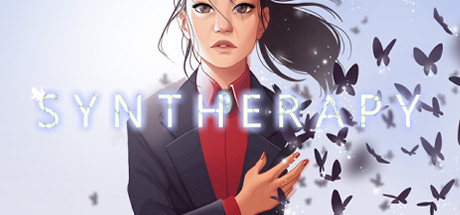
[quote][url=https://store.steampowered.com/curator/32732116-IndieGems/]Follow our curator page: [b]IndieGems[/b] if you like and want to see more reviews like this one.[/url][/quote] [b]How would you act facing the problems of tomorrow?[/b] [i]Syntherapy[/i] is a visual novel that dives into some deep topics that are hidden behind a veil of the future, with a time setting of being 2048. Realistically, these are topics that apply to humans in the past, present, and also future. The writing is done very well, and the voice-acting contains plenty of emotion. What's most outstanding about this visual novel is that it has a huge number of possible endings (37) and the game is actually really quite difficult to navigate through all of the options to get to the different endings. The topics that are rather heavy in this visual novel are behind an AI named Willow who you are treating from the perspective of Dr. Melissa Park, psychologist. You are tackling the ideas of rights, free will, sentience, in addition to dealing with an existentialism crisis, mental health issues, and other heavy topics with your choices. At least Dr. Park is articulate enough to make most conversation sound reasonable, even if she doesn't believe everything that's coming out of her own mouth. I am super impressed with the quality of the writing itself. There is no outside narrator, and the story only progresses along its narrative through dialogue and email exchanges. In order for some important aspects to be explained or for the story to flow, there are times when the therapist and her intern Heather seem to switch roles, with the intern offering advice and guidance as to the next steps of action. Of course this would never fly in reality, it served to pass the information along to the player, and that's fine for me. It was just something that I noticed and felt a bit out of place. The voice-acting is very good for this game. For its heavy topics and many lines of narrative, the parts I have seen come together very well. I could feel the surprise, uncertainty, amusement, hurt, resolve, anger, etc. befitting the situations. I was surprised by the quality of it all. Anyway, many of the topics under discussion within this game is not new for many people who wax philosophically. They are topics that have been in debates for many years or longer. A lot of the discussions have been more philosophical because of a lack of technological development to that point of needing to practically answer everything yet. There have been some games that have tackled them already, and I think this one did it in a thorough and profound way by using a professional therapist's perspective as the focus of narrative progression. [h1]Gameplay[/h1] It's a visual novel with many path-branching choices leading down to 37 possible outcomes. Unlike many other VNs, this one is actually quite difficult to steer it in directions you want to go. When you least expect it, the game can kick you in the guts. [h1]Controls[/h1] You can advance the text using Arrows or A/D. You can use Enter to select options. You can also use a mouse to click on everything. There are places that you absolutely need a mouse, so you cannot go mouse-free. [h1]Graphics[/h1] There's not a lot of graphical plates and the artwork is okay. It's not outstanding but also not lacking. [h1]Music[/h1] You can choose different soundtracks in-game and there's a good variety. If you don't make changes, things change based on situation/moods or so I think. [h1]Audience[/h1] People who want to explore some well-written dialogue narrative with good voice acting and some heavy topics in a VN would probably have fun with this. If you enjoy philosophical discussions regarding AI, sentience, free will, etc., you will almost certainly enjoy the dialogue within. Please keep in mind that most of the game focuses on the psychotherapy sessions between Dr. Park and Willow, and so that's where you will be spending most of your time and efforts. This game more so relies on the conversations than any other aspect of the game. [h1]Pricing[/h1] $14.99 is pretty reasonable for this VN given the amount of different outcomes. It took me over 3 hours to run to a first ending, an ending that came too soon. [h1]Positives[/h1] +Strong writing with game-altering choices +Excellent voice acting +Good music in the background +Deep philosophical topics that are interesting to think about +Difficult choice making +Many endings available +Good portrayals of mental health difficulties [h1]Negatives (Oct 18, 2020)[/h1] -Autosaving + many branching paths mean that the player currently needs to do a lot of replaying without proper flow charts to offer direction. The difficult choices will make the complex tree even more difficult to navigate. (The developer is planning to work on a flow chart and I would love to see clickable nodes to continue down unexplored paths from the branching points.) -[strike]No way to fast forward through dialogue or skip ahead past stuff you have seen and heard.[/strike] [i](Fixed: Dialogue skip function now live.)[/i] -Some achievement bugs (I had one unlock in-game at the end of my play through, but it did not show up reflected on Steam. The developer will be working this out soon.) [h1]Conclusion[/h1] [i]Syntherapy[/i] is difficult to navigate visual novel with heavy topics and many potential endings. Accompanied by good writing and excellent voice acting, the game really does come alive and is quite an experience to sit through. The topics explored and also the manner in which the story is done to progress through mostly the therapy sessions would limit its potential audience, but it's a game that gives back, if you put in the time and emotional investment, looking for some meaningful return. Or maybe it will just kick you in the guts. Score: 7.5/10 [quote]I received the product for free. I did not receive any compensation to write this review. The opinions represented here are entirely my own and were not influenced in any way.[/quote]
https://youtube.com/watch?v=P3YffyuAf3g A thought provoking visual novel where you act as psychotherapist and deal with the mental health of people as well as an AI that is believed to be sentient. The music in the game is great and fits very well with the atmosphere, as you listen to chill lofi music. A soundtrack for the game would be very neat as i would definitely play it in the background while doing various things or just to relax to. Visually it doesn't look too bad with the character designs, though it does look more realistic as opposed to being more anime/animated. It does have some nice details to the surroundings and backgrounds. The dialogue is a great part of the game which does have a focus of mental health as that is what the focus of the game is, with lots of choices to make. Some being minor and just for fun and not having a big deal, whereas some do have some more impact and can affect the path that the story goes. Voice acting is also quite a nice section as you can feel the emotions that the actors have put into the characters. It is a great simulation of being a therapist as of course you are one in the game, but this is enhanced with the details of various tasks on your computer that you can do. This includes choosing which music you listen to, checking emails and calendar for schedules, looking at patients files and even have a bubble popping game within the game. There is also a lot of ending that can be reached, so there is replayability in the game as to find and choosing the path to get the various endings. Overall, it is quite a cool and soothing visual novel that can get you thinking at times.
Willow reminds me of the toxic friend who is like 'but you have to exist for ME, you have to help ME, what about ME' and I'm glad this all came out in a therapy setting and not directed at Tara or anyone else. While I am sympathetic with their plight, I cannot recommend this game for anyone who has limited spoon thresholds like myself. Dealing with Willow is.... draining.
I've not yet finished the game, but I've had 4 sessions with the AI. I'll update this once I've played through to the end. This game is beautifully written, it's incredibly thought provoking on so many different topics, and I'm really enjoying the game play. It's closer to a visual novel than a game, but the choices you make do seem to affect the narrative quite a bit. I've been brought to tears several times already, some of the topics are hard to think about, but I feel like I've learned a lot about myself and the way I feel by playing through. Much recommend. EDIT: I've just finished my first play through and I did not get a positive ending. My recommendation still stands, though I'm heartbroken. Content warning for spoilers: [spoiler] suicide and other mental health struggles, hover below if that's okay [/spoiler] [spoiler] I ended with Willow requesting the mind wipe to forget their past and achieve "happiness". It absolutely broke my heart, but it also revealed a lot of myself to me. I've been suicidal for many, many years, always sitting in the back of my mind there, and when I tried to help a person/AI using conversation options I'd use with a friend who came to me for help, it lead another to believe that suicide was their "correct" option. It's made it rather clear to me that though I've made amazing progress in my own therapy sessions, I'm not even close to done, and I thank the games creators for that. I'm fairly sure I'll be providing the details of the game to my therapist in our next session, it's pretty amazing. [/spoiler]
Игра, позволяющая нам примерить роль психолога и задаться вопросами этики в отношении... искусственного интеллекта. Да-да, наша подопечная – ИИ по имени Уиллоу, и она была создана, чтобы помогать психологам в постановке диагнозов и для наблюдения за пациентами во время арт-терапии, однако что-то пошла не так, и теперь Уиллоу сомневается в себе. Она будет задаваться многими вопросами – начиная от "способна ли я поставить верный диагноз" и заканчивая "каково мое предназначение", "жизнь ли это – если ты его не имеешь". И мы будем рядом, чтобы помочь ей найти себя и не дать стереть ей память... Да! В этой истории все не так просто, ведь Уиллоу была разработана в университете, и раз уж она представляет собой, по всей видимости, разумную личность, это поднимает вопрос, как с ней быть дальше, если проблему ее беспокойства решить не получится. Относиться ли к ней как к человеку? К машине? Директор университета очень боится этого решения, и потому вовсю подгоняет нас с результатами, ведь если правда всплывет наружу, репутация заведения может пострадать. Геймплейно это визуальная новелла, где нам предоставляется выбор во время диалогов. Какие-то наши ответы будут вычеркивать возможности в дальнейшем, какие-то – их открывать. Например, я пыталась держаться профессионализма, изредко, когда считала это необходимым, выбирая искренние варианты ответов: что ж, это привело к тому, что в каких-то моментах выбор "сказать правду" для меня закрыт. Также нам дают выбрать, какие виды терапии мы будем использовать с Уиллоу. На момент написания отзыва я игру не допрошла (наиграла 4 часа, первый с русской озвучкой можно посмотреть в видео), поэтому четко что-то сказать про вариативность не могу. По ощущениям – она есть. Насколько масштабная – не знаю. В любом случае, ответственность за подопечную ощущается, а потому мне интересно все же допройти игру и узнать, смогла ли я помочь ей. Вероятно, отзыв будет обновлен, когда я это сделаю. [u]Так или иначе, считаю нужным подчеркнуть[/u]: эта игра хоть и с выборами, но больше о вопросах, которые задает себе каждый из нас, когда не может найти свое место в жизни. Это отличный проект о рефлексии для тех, кто сам любит этим заниматься, и для тех, кто такой же профан в психологии как я, но ему было бы интересно узнать об этой области чуть больше в формате игры. Однозначно рекомендую. https://youtu.be/yvS1cGUjqsg
[h1] Intro [/h1] As a self-proclaimed great psychotherapist (without any real training, experiences or studies), I would say this is a game test my theories of my options. At least, no humans were harm in the testing of my theories. [h1] Pros [/h1] - introduction to basic mental health issues - introduction to basic mental health therapy methods - Many Multiple endings - Requires deep thinking - I like some of quotes. one example is " :): It's all in how you look at things" - [spoiler] Able to sense the struggle between gaining trust, and how revealing personal relatable details might affect professionalism [/spoiler] [h1] Pros [/h1] - Though there are some sort of progress in the therapy sessions, they are more invisible than visible. I do not know if what I'm doing is right. - [spoiler] It gets repetitive after few sessions, though there are more information revealed over time. [/spoiler] [h1] Others [/h1] - Developers mentioned is not recommended for children, or those who may be affected by such subject matter. - Also note that, this game is not suitable for people who had mental issues or suffer mental trauma. - I don't deny that the game is interesting. It talks about ethics, policies and life-and-death issues. These was a turn-off for a few of the viewers as it speaks to them. I recommended for the game to be played, but may not be something suitable for streaming. Game was streamed on: https://www.twitch.tv/execell_is_here
There is something very important going on in this visual novel. I tried not thinking about movies like Blade Runner or Ex Machina while playing, but there are many parallels in their stories. I don't feel right talking about this game too much since I feel it's best explored without any preface. Although there are some slight audio issues, the voice acting is fine enough and the lofi tunes are something I always appreciate. Aside from that, this is a story with themes worth diving into for those might be struggling with mental health. It touches on the subject in a respectful and well researched manner while still being set in an interesting sci-fi world. It might even help those who have trouble reaching out to others in time of need. Well worth a look.
This game is ok but not my cup of tea. Personally, it has too much psychology and it is focused too much on the conversations. Yes I know that it is all intended, but after longer while the conversations become tedious, especially because you can't just skip them with a mouse click or space\enter. I did like the story though and I'm curious how it will end.
Related
Related
Trends
Modeled estimate over time, reconstructed from Steam's monthly review histogram.
Momentum
Pace estimated from the game's recent review growth (our daily snapshots) at its own sales-per-review ratio — a momentum signal, not booked sales.
Audience
Estimated from the language of this game's reviews — a proxy for where players are, not official Steam demographics.
Related
| Hero of the Demon | $16.8K | 60 | 72% | $14.99 |
| Sanity of Morris | $16.8K | 60 | 67% | $14.99 |
| Trip to Vinelands | $16.8K | 1.6K | 85% | $0.49 |
| Starlight Drifter | $16.8K | 50 | 68% | $19.99 |
| French Crime Detective Game | $16.8K | 60 | 88% | $19.99 |
| The Companion | $16.8K | 120 | 73% | $9.99 |