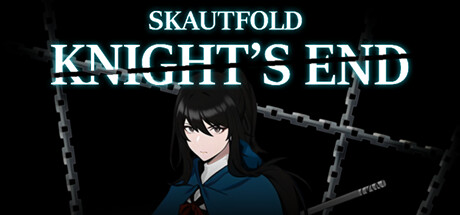
Skautfold: Knight’s End, developed by Steve Gal and published by Pugware, marks the ambitious conclusion to the long-running Skautfold series, a saga known for its dark atmosphere, cosmic horror inspirations, and genre experimentation. Serving as both a narrative finale and a mechanical evolution, Knight’s End moves away from the action-heavy exploration of earlier titles to embrace a more strategic, timeline-based role-playing structure. The result is a distinctive hybrid that aims to tie together years of mythos and character arcs while offering something mechanically new. Set in the dying days of humanity, the story follows Lennecia Britannia, the First Knight of the Angelic Empire, as she ventures deep into the mysterious Waltham Industries facility—an industrial labyrinth hiding secrets that could determine the fate of the world. The moon has shattered, reality has decayed, and the boundary between science and the eldritch has collapsed. It’s a world on the edge of annihilation, and Knight’s End thrives on that sense of despair and inevitability.
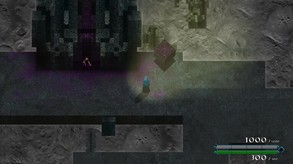
From its opening moments, Knight’s End establishes a haunting tone through its art and sound design. The environments are heavy with atmosphere, combining industrial machinery, gothic architecture, and otherworldly corruption in a way that evokes both dread and fascination. The color palette leans on muted greys and browns punctuated by bursts of crimson and pale light, giving the setting a sense of decay that mirrors the narrative’s central themes. The music alternates between ambient melancholy and tense battle rhythms, perfectly matching the rhythm of exploration and combat. Though the production values are modest, there’s an undeniable artistry to how the world feels oppressive yet oddly beautiful, a place where every corridor hints at the remnants of a fallen civilization. For long-time followers of the series, the aesthetic continuity helps reinforce the idea that this is a culmination—a final descent into the heart of Skautfold’s dark mythos.
The combat system is where Knight’s End most clearly distinguishes itself from its predecessors. Instead of relying on real-time action, it adopts a timeline-based RPG approach where every move has weight and consequence. Each action—whether attacking, defending, or using a skill—takes time to execute, and the player must consider how their choices affect turn order and positioning on the timeline. There’s also a “guard” mechanic that governs both offense and defense; your guard meter determines how much damage you can absorb before being staggered, but managing it also affects your ability to strike effectively. Enemies employ similar mechanics, adopting different stances that require the player to adapt quickly to maximize damage. This creates a rhythm that’s less about button-mashing and more about reading patterns, anticipating timing, and managing risk. It’s a clever system that adds tactical tension to every encounter, forcing you to think ahead rather than simply react.
While the core mechanics are well-conceived, they aren’t without their frustrations. The balance between precision and punishment can sometimes feel uneven, as mistimed defensive actions or small animation delays can lead to disproportionately harsh consequences. Some players may find the controls slightly unresponsive during key moments, which can break the flow of combat and lead to frustration. Enemy encounters are also prone to repetition after several hours, as certain attack patterns and animations reappear with little variation. However, the combat still carries a sense of satisfaction when mastered. Successfully chaining a series of attacks while perfectly timing a defensive guard feels rewarding in a way that recalls the deliberate pacing of classic turn-based RPGs, but with a modern twist. It’s a system that demands patience and discipline, rewarding players who engage with its rhythm rather than rushing through its encounters.
Narratively, Knight’s End is both reflective and apocalyptic. The story pulls together threads from previous games—recurring characters, ancient prophecies, and the legacy of the Angelic Empire—while grounding it all in Lennecia’s personal journey. Her mission begins as an act of loyalty and rescue but slowly becomes an existential pilgrimage, forcing her to confront the cosmic truths underlying the collapse of her world. The lore, as always in the Skautfold series, is dense and mysterious. Fragments of documents, scattered dialogues, and cryptic encounters reveal layers of history and tragedy. This fragmented storytelling fits the tone of a dying world, but it can be overwhelming for newcomers. Those unfamiliar with previous entries might struggle to connect all the narrative pieces, though the emotional beats remain understandable even without full context. The writing captures a sense of poetic fatalism, portraying humanity’s end not as a singular catastrophe but as the inevitable conclusion of hubris and obsession.
Despite its thematic ambition, Knight’s End isn’t immune to technical and design limitations. The game’s pacing occasionally falters during exploration segments, where large stretches of backtracking or sparse environments slow down momentum. There are also minor technical issues, including bugs and navigation quirks that can occasionally interrupt progress. Some players have reported inconsistencies in item functionality or collision detection, though these problems are relatively minor and don’t significantly detract from the overall experience. What stands out most is how the game manages to convey scale and intensity despite its indie scope. Each encounter, location, and piece of dialogue feels carefully placed to contribute to the larger tone of desolation and finality. Even when the game stumbles, its vision remains clear—it’s a title that reaches far beyond its means, and that ambition gives it a unique identity among indie RPGs.
The closing hours of Knight’s End encapsulate everything that defines the Skautfold series: haunting beauty, existential dread, and a touch of grim hope. As the narrative unfolds toward its conclusion, the stakes become less about saving the world and more about understanding what remains worth saving. The ending offers both resolution and melancholy, tying together the cosmic threads that have run throughout the series while leaving room for interpretation. It’s not a triumphant finale in the traditional sense but rather a contemplative farewell, fitting for a saga that has always embraced decay and transcendence in equal measure. For long-time fans, it delivers the emotional closure they’ve been waiting for; for newcomers, it stands as an intriguing but demanding entry point into a universe defined by its uncompromising vision.
In the end, Skautfold: Knight’s End is an ambitious and atmospheric conclusion to one of the more distinctive indie sagas of recent years. Its blend of timeline-based combat, apocalyptic storytelling, and grim aesthetic make it both intellectually and emotionally engaging, even when rough edges occasionally break immersion. It’s a game that thrives on its atmosphere and ambition more than its polish, offering an experience that rewards patience and curiosity. While its mechanical precision may not appeal to everyone, its thematic richness and haunting tone leave a strong impression. Knight’s End is a fitting conclusion to the Skautfold mythos—dark, imperfect, and deeply human in its portrayal of a world facing its final reckoning.
Rating: 7/10