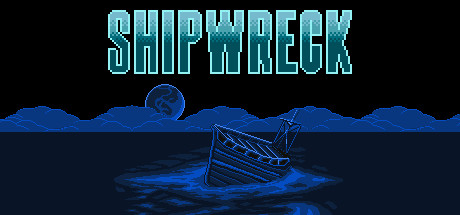
Shipwreck is a retro-inspired action adventure game developed and published by Brushfire Games that captures the spirit of classic handheld exploration titles through simple but satisfying dungeon crawling, puzzle-solving, and top-down combat. Built around the concept of surviving on a mysterious island after a disastrous voyage, the game embraces an old-school design philosophy focused on exploration, discovery, and gradual progression rather than cinematic storytelling or large-scale open-world complexity. While the experience remains relatively short and mechanically straightforward, its charm, atmosphere, and nostalgic gameplay loop make it an enjoyable adventure for players who appreciate classic action-adventure design.
The story begins with the protagonist stranded on a remote island after a shipwreck, forced to navigate unfamiliar environments while searching for a way to escape. The narrative itself remains intentionally minimalistic, allowing the island and its hidden dangers to become the primary focus of the experience. Rather than overwhelming players with extensive dialogue or complicated lore, the game encourages exploration and curiosity to drive progression forward. This approach feels very reminiscent of older adventure games where uncovering new locations and conquering dangerous dungeons formed the core of the journey.
One of the game’s strongest aspects is its dungeon structure. The island contains multiple dungeons filled with enemies, environmental puzzles, hidden pathways, and boss encounters that gradually expand the player’s abilities and exploration options. As players progress, they unlock classic adventure tools such as weapons, ranged attacks, and defensive equipment that help open previously inaccessible areas. Each dungeon introduces new mechanics and small gameplay twists that keep the experience engaging despite the game’s relatively simple systems.
Exploration plays a major role throughout the adventure. The island is filled with forests, caves, ruins, and hidden routes that reward players for paying attention to environmental details. Discovering shortcuts, secret areas, and hidden items creates a satisfying sense of progression that helps the world feel interconnected despite its modest scale. The game consistently encourages players to revisit earlier locations after obtaining new abilities, reinforcing the classic adventure-game structure that inspired much of its design.
Combat is intentionally simple but functional. Battles revolve around positioning, timing, and recognizing enemy attack patterns rather than relying on fast reflexes or complicated combo systems. Enemies gradually become more dangerous as the adventure progresses, and boss encounters in particular provide some of the game’s most memorable moments. While the mechanics may feel basic compared to modern action games, they fit the retro-inspired tone perfectly and remain enjoyable throughout the relatively compact runtime.
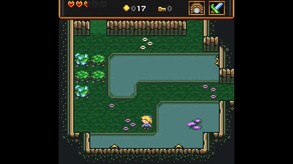
The visual presentation is one of the game’s most charming qualities. Shipwreck embraces a colorful pixel-art style heavily inspired by classic portable gaming adventures from earlier generations. The environments are clean and readable, while enemy and character sprites carry a nostalgic simplicity that reinforces the game’s old-school identity. Despite the minimalist visuals, each area maintains enough variety to feel visually distinct, helping the island remain interesting to explore from beginning to end.
The soundtrack also contributes significantly to the game’s atmosphere. The music uses retro-inspired melodies that create a relaxing yet adventurous mood throughout the journey. Many tracks evoke the feeling of classic handheld adventures, giving the game a warm sense of nostalgia without simply copying older titles directly. The sound design remains understated but effective, supporting exploration and dungeon crawling without becoming distracting or repetitive.
Another positive aspect is the game’s pacing. Shipwreck avoids stretching its mechanics beyond their limits and instead delivers a focused adventure that can typically be completed in only a few hours. This shorter runtime helps maintain momentum and prevents the gameplay from becoming repetitive. The concise structure makes the game approachable for players looking for a smaller retro-style adventure that can be completed over a weekend or in a handful of relaxed play sessions.
The game also succeeds because of how sincere its design feels. Rather than attempting to modernize every aspect of the classic action-adventure formula, Shipwreck embraces simplicity and straightforward progression. This gives the experience a cozy and nostalgic quality that feels refreshing compared to larger games overloaded with unnecessary systems and excessive objectives.
However, the same simplicity that gives the game its charm may also limit its appeal for some players. Combat mechanics remain fairly basic throughout the adventure, and enemy variety is somewhat limited compared to larger action-adventure titles. Some puzzles may feel too easy for experienced players, while the relatively small overworld can occasionally feel sparse during exploration. Players expecting a more ambitious narrative or deeper RPG mechanics may also find the experience lacking in complexity.
The short length may similarly leave some players wanting additional content. Certain mechanics and dungeon concepts feel entertaining enough that it becomes easy to imagine a much larger version of the game with expanded exploration and more advanced puzzles. While the concise structure helps maintain pacing, it also means the adventure concludes relatively quickly once players become fully invested in the island and its mysteries.
Despite these shortcomings, Shipwreck succeeds because it understands exactly what kind of experience it wants to deliver. It focuses on creating a relaxing and nostalgic adventure driven by exploration, dungeon-solving, and gradual progression rather than chasing modern trends or excessive complexity. Its straightforward design ultimately becomes one of its greatest strengths.
Shipwreck ultimately stands out as a charming retro action-adventure that successfully captures the feeling of classic handheld exploration games while maintaining its own identity. Its enjoyable dungeon design, cozy atmosphere, satisfying progression, and nostalgic presentation create an experience that feels simple in the best possible way. While its limited scope and mechanical simplicity may prevent it from reaching the depth of larger adventure titles, fans of old-school exploration games will likely find Shipwreck to be a fun, relaxing, and memorable journey filled with retro charm.
Rating: 8/10