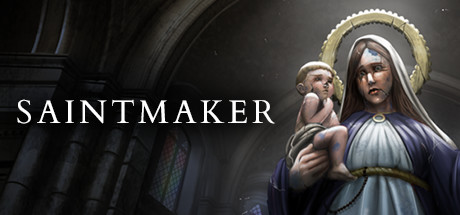
A haunted convent. Statues that move on their own. A buried past. Welcome to Saint Idelora’s convent, where becoming a saint comes with a price.
Modeled estimate, not a reported figure. How we estimate →
Media

About
What makes a saint? Fire to one’s face, wounds on one’s body, dying slowly from disease — history paints a grim picture. When Holly Beltran attends a religious recollection, she discovers the dark secrets that haunt the convent’s past. At night, broken faced statues and whispered prayers haunt Holly’s dreams — before the recollection is over, Holly may have to face more than her own demons to come out alive.
What happens when the faithful go too far?
✟ Religious Horror: Experience a horror story rich with eerie religious iconography and psychological scares.
✟ A Short and Haunting Story: At around 60,000 words and with 4-6 hours of estimated gameplay, Saint Maker is perfect to play on a dark and stormy night.
✟ Fully Voiced: A cast of professional English voice actors has breathe life into the characters and their struggles.
✟ Interactive Dialogue Choices: As the horror unfolds, your choices will help Holly discover more about herself during this ordeal. A normal ending and a (secret) bonus scene await you depending on your choices.
✟ Bone-chilling Visuals: Witness the haunting setting of Saint Idelora's Convent, with detailed backgrounds, CGs, and animated illustrations adding to an immersive and terrifying experience.
✟ Original Soundtrack: Originally composed soundtracks which add both horror and heart to the story.
The following is a list of trigger warnings for Saint Maker. At the end of the day, player enjoyment is our priority and we want to make sure our players are prepared for such content.
Spoiler warning for some of the triggers:
Child Abuse / Violence Against Children
Religious Abuse
Homophobia
Trauma
Discussions of Suicide
Death
Please note that this does not reflect the views of any of the people who have worked on this project.
Stats
All-time low is the lowest price we've recorded for this game since we started tracking it.
Languages: English*, Simplified Chinese, Traditional Chinese, German*languages with full audio support
Engagement
Hours played at review time, across 41 reviews with recorded playtime.
Reviews
Themes across 41 recent reviews and how positive each mention is. A keyword signal, not full sentiment analysis.
positive critical· bar length = how often the theme comes up
Reviews
Saintmaker Review After finishing Saintmaker, I came away with mixed feelings. On one hand, it is a well-written and emotionally mature horror visual novel that respects both its themes and its audience. On the other hand, it feels more like a short horror novella than a fully-fledged visual novel experience, especially when compared to Yangyang Mobile's previous title, The Letter. What Saintmaker Does Well Writing This is unquestionably the game's strongest aspect. The social interactions feel grounded, authentic, and believable. Characters speak and behave like actual people. Customs, relationships, and personal struggles are portrayed with nuance. The story itself is well written and thematically coherent. While the overall storyline is kind of small, the writing extracts a good amount of emotional weight from it. The ending feels complete. The game says what it wants to say and reaches a conclusion without overstaying its welcome. Audio and Voice Acting The audio production is above average throughout. Voice acting is consistently solid and helps sell both the emotional moments and the atmosphere. The soundtrack and ambient audio match the game's tone. User Interface The UI serves the gameplay perfectly. It stays out of the player's way, remains intuitive, and never bothers. Visuals The visuals fully support the game's goals. While they are not technically impressive, they effectively communicate atmosphere, character emotions, and story beats. Average Elements Gallery and Extras The gallery and bonus content feel forgettable and uninspired. They exist, but they do little to enhance the overall experience. No Story Branching The game presents choices, but players looking for multiple routes or significantly divergent outcomes may find the structure disappointing. Visual Quality Although functional, the visuals themselves are average at best, Weaknesses Lack of Replay Features Once the game is completed, there is no chapter selection system. There is also no story-flow map or progression chart that allows players to revisit specific moments, track choices, or understand how scenes connect. Poor Revisitation Tools There is no convenient way to quickly return to previous interactions and replay them while retaining full access to all available options. This makes experimentation and post-completion exploration unnecessarily cumbersome. Choice Illusion Choices appear to have little or no meaningful impact on the overall narrative. The story feels heavily scripted from beginning to end, making player agency largely cosmetic. Limited Interactivity Outside of reading the story and selecting occasional dialogue options, there is very little meaningful interaction. Limited Scope This is perhaps my biggest criticism. Saintmaker focuses exclusively on the protagonist's perspective. As a result, players only access a small portion of the larger events and mysteries surrounding the story. The game repeatedly hints at broader contexts, additional perspectives, and untold stories, yet never fully explores them. Comparison with The Letter I cannot discuss Saintmaker without comparing it to The Letter. The Letter felt vastly more expansive, nuanced, flavorful, and ambitious. It features multiple perspectives, a larger cast, branching structure, and a broader scope that together create a richer and more immersive experience overall. Saintmaker is undoubtedly more focused and concise, but it never reaches the same level of depth or narrative breadth. While Saintmaker succeeds as an intimate character-focused horror story, The Letter remains the more complete and rewarding visual novel experience in nearly every category. Final Thoughts Saintmaker is a good game and an even better story. Its writing, atmosphere, characters, and ending are all worth experiencing. However, players expecting a large-scale visual novel with meaningful branching, substantial replay value, and extensive world-building may find themselves wishing there was simply more of it. The ending is satisfying. The journey itself is enjoyable. I just wish the game had given me more opportunities to explore its world, its characters, and the events surrounding them. Recommended, but only if you are comfortable paying for a short, highly focused narrative experience.
Saint Maker, developed by Yangyang Mobile and published in partnership with Neon Doctrine, is a haunting and deeply introspective horror visual novel that blends psychological tension, religious symbolism, and coming-of-age trauma into a uniquely affecting experience. Set within the suffocating walls of a remote convent, the game invites players into an environment of isolation and quiet dread, where the line between faith and fear begins to blur. At its core, it is less about overt terror and more about the emotional and spiritual damage caused by repression, guilt, and blind devotion. Every aspect of its design, from the muted art style to its whispered soundtrack, reinforces this theme, creating an atmosphere that lingers long after the screen fades to black. The story follows Holly Beltran, a young girl sent to Saint Idelora’s convent as part of a “recollection” retreat—a spiritual rehabilitation after a family tragedy that has left her shaken and vulnerable. She is joined by another troubled participant, Gabby, and under the watchful eye of Sister Adira, she must endure days of forced silence, self-reflection, and ritualistic discipline. What begins as an attempt to heal through religious practice soon takes a darker turn as Holly begins to experience strange visions, shifting memories, and a growing unease about the convent’s true nature. The game slowly peels away layers of mystery through Holly’s fragmented perception, revealing a story that is both supernatural and profoundly human. Beneath its gothic surface lies a critique of faith wielded as control, exploring how systems of belief can twist love into fear and devotion into despair. Narratively, Saint Maker thrives on subtlety and emotional nuance. The writing is deliberate and introspective, using first-person narration and richly written dialogue to immerse the player in Holly’s state of mind. The pacing is methodical, allowing tension to build gradually rather than relying on shocks or cheap scares. Each scene feels carefully placed, with the smallest gestures—a flickering candle, a passing shadow, a whispered prayer—carrying heavy emotional weight. The characters are more than archetypes; they feel real, wounded, and conflicted. Sister Adira, in particular, embodies the game’s central conflict—she is both a figure of authority and a tragic symbol of faith corrupted by fear. Holly’s interactions with Gabby add warmth and fragility, grounding the narrative in moments of shared humanity amidst the surrounding darkness. Visually, Saint Maker captures a mood of quiet horror through its art direction. The setting is presented in rich detail, from the convent’s austere corridors to its candlelit chapel and damp, echoing halls. The soft, hand-painted art style masks a sense of unease; even in stillness, the environment feels alive and suffocating. The use of color is especially striking—muted tones dominate the palette, but moments of revelation or terror are punctuated by sharp contrasts of crimson and gold. The visual presentation complements the narrative’s psychological focus, reinforcing the idea that beauty and sanctity can coexist with decay and menace. The animation is subtle yet effective, with slight movements and changes in lighting giving life to each scene, enhancing the illusion that something unseen is always watching. The sound design and music are equally integral to the experience. The game’s score is sparse but deliberate, using quiet hymns, ambient noise, and occasional bursts of dissonance to unsettle without overwhelming. There are stretches of silence that carry immense weight, broken only by the creak of floorboards or the faint echo of chanting. The voice acting is one of the game’s strongest aspects—each line is delivered with a natural rhythm that captures the fragile emotions of the characters. Holly’s voice in particular carries a trembling sincerity that makes her pain and confusion feel painfully real. The combination of subdued visuals and immersive audio creates a dreamlike rhythm that keeps players entranced even during moments of quiet reflection. In terms of structure, Saint Maker adheres closely to the conventions of the visual novel genre, focusing on reading, dialogue, and choice-based interactions. The choices, while not drastically altering the story’s trajectory, give players opportunities to shape Holly’s tone and reactions. This limited agency mirrors the game’s central theme—the struggle for control in an environment defined by submission. Some players may find the linearity restrictive, but the focus on narrative coherence and thematic resonance ensures that the experience remains engaging from start to finish. The game’s relatively short runtime—typically around four to six hours—works to its advantage, allowing for tight pacing without unnecessary filler. Every scene serves a purpose, either deepening the mystery or illuminating another facet of Holly’s emotional turmoil. What makes Saint Maker so compelling is its ability to use horror as a lens for emotional truth. It is not a game about monsters or gore, but about the quiet terror of internalized guilt and the suffocating grip of faith turned oppressive. The convent becomes a metaphor for psychological imprisonment, and the supernatural elements serve as reflections of trauma rather than external threats. Holly’s journey becomes one of self-confrontation, as she learns to question authority and reclaim the agency denied to her by those who claim to know what’s best for her soul. This blend of psychological realism and spiritual horror gives the narrative a rare depth that resonates long after the story concludes. Though it is not without flaws—the linear path, limited replay value, and occasionally uneven pacing may disappoint those expecting branching narratives—Saint Maker succeeds precisely because of its focus and restraint. It understands the power of implication and atmosphere, preferring to disturb rather than startle. The combination of elegant writing, expressive visuals, and haunting sound design results in a deeply personal horror story that feels both intimate and universal. It joins the growing body of visual novels that use the medium not just to tell stories but to explore the human condition through interactive emotion. In the end, Saint Maker is a quiet masterpiece of psychological horror and narrative craftsmanship. It invites players into a world of devotion and doubt, where every act of faith carries the shadow of fear, and every prayer echoes unanswered. Its story is about confronting the ghosts of belief—both literal and metaphorical—and finding the courage to speak in a place built on silence. Yangyang Mobile has created a work that lingers in memory, not because it terrifies, but because it understands the subtler horror of being told what to believe and the quiet power of choosing for oneself. Rating: 8/10
和前作相比内容短小不少 不过质量还是过关的 美中不足的是选择大部分都是线性
Not sure what compelled me to get this game considering that I'm not really the religious type but I gave it a shot anyway. Honestly, it wasn't terrible but it wasn't good either. Pros: -The visuals were clean and the style was good. -Voice acting was actually pretty good, maybe a little awkward at times but each character had a strong voice. The vocal ranges made this visual novel come to life. -The ambient music was eerie and the sound effects added to that effect to make it chilling and suspenseful. -The plot was interesting. I really thought it would revolve around the main character only but the further you read the more it unravels that every character had their own plot twists. I definitely didn't expect it to end the way that it did for both the main ending and the secret ending. Cons: -Main character was kind of annoying (lol) but I think it's because her voice was kind of fake-sounding (?). Not sure how to explain it. -The "horror" wasn't actually scary. The only "jump scares" were amplified by a sharp and loud sound that lasts for a second. -It didn't really seem like like a "choice matters" game only because you would choose an option and it wouldn't matter because the game automatically chooses for you anyway to keep it more linear. It doesn't change the story at all. This feature, in this game, is primarily to get certain achievements, it seems. Overall I still enjoyed this. I can't remember if I paid full price for this but $14 isn't so bad for what is offered. I'd still recommend getting this while it's on sale instead.
过程虽然算不上完美,但好在最后两人互相抱团取暖,互相依偎,砥砺前行
👎
从《鬼来信》入坑,无脑相信了开发商,并且购买了本作,于是上当了! 这作怎么回事啊?!从立意、到恐怖程度、到剧情的精彩程度都比不上《鬼来信》一点! 三个小人物发生的小故事,对这三个人一点都不了解的时候就让我强行共情他们来推进游戏了,我真的完全代入不进去。 玩完本作一丝波澜都没有,大高潮的中心人物是一位游戏中后期总共出场没有说过20话,中文版还有大量文本bug的陌生角色 如果满分100分我打1分。这1分给在游戏文本量够短,没有耽误我五六个小时后再告诉我这是一坨垃圾。
配音演出太好了,让我身临其境般绝望和无助,半个月当中,好几次中断了游玩。 看着文本、听着配音,我也觉得喘不上气,可能是我太容易被心理暗示了。
It's honestly pretty great. The art, voice acting and music wasn't that good. But it's the story and characters that matter. Between this and the letter (The other game from this studio that I have played). This studio has some pretty good wrighters!
Everytime I was given an option of dialog, the MC would choose the "correct" option. Giving the trash illusion of choice. So my choices blatantly mean nothing....REFUND!!
Related
Related
Trends
Modeled estimate over time, reconstructed from Steam's monthly review histogram.
Audience
Estimated from the language of this game's reviews — a proxy for where players are, not official Steam demographics.
Related
| Echoes of Aetheria | $70.1K | 185 | 83% | $14.99 |
| Duck Life 9: The Flock | $70.1K | 203 | 83% | $9.99 |
| The Assistant Season 1 | $70.1K | 360 | 89% | $9.99 |
| Arcane Worlds | $70.1K | 238 | 45% | $9.99 |
| Wally and the FANTASTIC PREDATORS | $70.1K | 227 | 93% | $14.99 |
| Loot Tycoon | $70.1K | 520 | 72% | $6.99 |