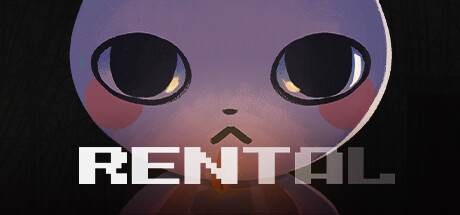
Rental is a short and spooky adventure game about the dangers of renting a house in an unknown place.
Revenue comes from in-game items and microtransactions, which our price-based model doesn't estimate. Copies below reflect the player base, not paid sales.
Media

About
Stats
Languages: English, Spanish - Latin America, Simplified Chinese, Traditional Chinese, Japanese, Spanish - Spain
Engagement
Reviews
Themes across 65 recent reviews and how positive each mention is. A keyword signal, not full sentiment analysis.
Reviews
Nice little game, a bit spooky but not too spooky. Scariest part was seeing my face in the mirror, 10/10
Super cutie patootie I love this art style and character! The “horror” parts are just enough to get the vibe across. The game itself has a couple of interesting elements but it’s very straightforward and easy. Super short game but I heart it!
I got too scared 13 minutes in and quit,,...,.,..,, very pretty though :))
Related
Related
Trends
Concurrent players on Steam, sampled daily since tracking started.
Hours played at review time, across 65 reviews with recorded playtime.
positive critical· bar length = how often the theme comes up
Jogo de mistério, terror e suspense, esse aspecto de gravação antiga da um toque a mais no jogo, deixando ele único e intuitivo, viciante e relativamente fofo também
israel propoganda game made by Charlie Kirk
A very short and entertaining game. My only complaint is that, whenever I tried to play a second run, the camera would glitch inside the house and I had to restart the game; but then again, you can'tbe picky being a free game.
it alright
Rental is the work of Animita Project, specifically Lonely House from Chile. An art collective bound by a love of horror In its every way, shape and form. Helping each other publish short and high-quality horror experiences for your pleasure and enjoyment. An animita is house for a wandering soul who died away from home. Handmade by the people who remember the dead and wish for them not to be alone. This is what our games are to us, a digital memento mori where we lay to rest our ideas, and mark them with a makeshift grave. For you, and everyone who passes by, to play and (with a bit of hope) remember. This is a short and unsettling title that utilizes the PSOne aesthetic that became a big trend for indie developers at some point in the past *checks notes* decade? Game Developer (at the time still Gamasutra) had a post from 2016, “Why are so many devs employing a retro low-poly mid-1990s aesthetic?” The Twitter account PS1 Aesthetics was created in 2021. More and more notable titles have appeared bearing the character of Sony’s first console. For a long time “indie” games were pretty much advancements of the SNES pixel-art era of visuals. Those still reign within the space—just look at Animal Well and UFO 50 from this year—but the introduction of success with very low detail 3D models opens up the viability of much more exciting works. It is difficult to define exactly what a PSOne indie game looks like. Castlevania: Symphony of the Night is a PSOne game but that is not what we would reference when talking about games such as Crow Country, Mouthwashing, Iron Lung, Paratopic, Lunacid, Threshold, or Nightmare Kart. Blood and Bacon from 2016 is one of the earliest examples I could find: low poly 3D models, low detail textures adorning the environment, an obvious conceit that the game is capable of doing so much more than that original console would allow but still retains the spirit. Rental fits in terms of its look, though is more demo in terms of substance. I love this aesthetic. I have a fondness for the graphical style and detail of the early 2000’s. Games such as The Elder Scrolls III: Morrowind, Max Payne, and Deus Ex could have been the end point of what was possible and I would be happy. This acceptation of low detail due to nostalgia means smaller teams can more easily create games in a 3D space that doesn’t chase realism and frees time that would have been spent on fidelity on other aspects. It is simply an aesthetic decision and has introduced a new choice to the indie space separate from the pixel arts, sidescrollers with an attention grabbing style, and games that can afford to chase the AAA level of detail in smaller scopes for shorter games. Low detailed 3D graphical indie games exist, but the intentional lack of detail is what separates these games from the likes of something like Tactical Breach Wizards or Little Kitty Big City. Those contain 3D graphics stylized in such a way that does not require much detail but do not at all resemble what you would find on the original PlayStation. Rental itself is a rudimentary seek and find, click and describe game. Walk about environments as young bunny rabbit Umi in a creepy situation and receive text boxes. Your family is on vacation renting a house out in the woods, but the door to the house locks behind you. Occasionally the game will freeze and show a shadowy, Slenderman-proportioned rabbit lumbering over you. One portion has you navigating a maze’s impossible physical space possible only within video games thanks to its combination of artificiality and inhabiting a controllable point of view. You collect items and eventually enact a ritual that summons a large entity before the game ends and reveals itself as a loop. Loops have been on my mind lately thanks to a game club focused on Pathologic 2, which goes out of its way to make it plain that the events of the game have happened and is happening again currently. What is it about works of fiction that we constantly resort to portraying loops? Is it that our life is on loop, repeating the same cyclical acts daily, weekly, monthly, annually? This repetition of action is reflected in things such as the Evangelion Rebuilds, Deathloop, Alan Wake, Outer Wilds, 12 Minutes, and so on. For videogames it also provides an easy way to justify the repetition of gameplay within the fiction, and sometimes annoyingly becomes a meta-commentary of self-aware winking. Rental’s looping could be a purgatory or hell for Umi (maybe if she was nicer to her younger brother she’d escape) or maybe it was just a nightmare while drifting to sleep on the car ride over. The simplicity is what makes it so difficult to talk about, as there is not much to it in terms of gameplay and writing. Three playthroughs took 34 minutes so it seemingly exists more as a proof of concept than anything else. Rewatching the credits they note that the game was originally created as part of a game jam which further adds to its existence more as a concept than something substantial. The playfulness of its text in both dialogue and action—when considering the armchair our bunny girl details, “Ugh this texture looks so meaty,” and the rental man who gives you your objective pops out of existence only to pop back in to offer a last piece of advice before once again exiting—does entice one to click on every interactable object simply to see what text will appear in response. A pleasing if brief experience indicative of the continuing appeal of certain trends within the industry on both the smallest and largest ends of development.
i LOVEEEEE THIS GAME.. I CANT WAIT FOR MORE!!!!!!!!!..
Very short and sweet (15 minutes or less) with some camera jank, it's clear that Rental was made for a game jam. In spite of that, there's a few interesting horror ideas that I feel could be expanded upon for a larger project. The game is relatively polished with writing that plays on what you'd usually expect from modern indie horror games in a more light-hearted silly way.
Audience
Estimated from the language of this game's reviews — a proxy for where players are, not official Steam demographics.