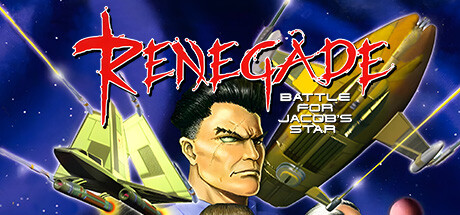
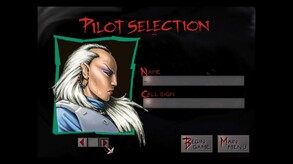
Renegade: Battle for Jacob’s Star is one of those overlooked science-fiction combat simulators that perfectly captures the spirit of classic PC gaming from the 1990s. Developed by Strategic Simulations and later revived on Steam through SNEG’s preservation efforts, the game stands as a reminder of a time when space combat titles balanced cinematic ambition with deep mechanical gameplay. During an era crowded with legendary franchises like Wing Commander, Freespace, and X-Wing, many excellent games struggled to gain widespread recognition despite offering experiences that were equally memorable in their own ways. Renegade falls firmly into that category. It may not have become a household name within the genre, but it possesses enough quality, atmosphere, and tactical excitement to deserve far more attention than it originally received.
From the very beginning, the game establishes a convincing military science-fiction setting centered around a violent interstellar conflict. The universe feels grounded in old-school space opera traditions, featuring oppressive political powers, rebel resistance forces, and desperate frontline battles fought in the darkness of space. Players are placed in the role of a combat pilot operating within a larger war effort, and that perspective helps the game feel immersive despite its technical age. Rather than focusing entirely on cinematic storytelling, the narrative unfolds naturally through mission briefings, in-flight communication, and the escalating scale of the conflict itself. The story may not be emotionally complex by modern standards, but it succeeds in giving players a strong sense of purpose and progression throughout the campaign.
The strongest aspect of Renegade: Battle for Jacob’s Star is unquestionably its combat. Space battles are fast, tense, and consistently engaging, striking an excellent balance between arcade-style accessibility and tactical depth. Piloting starfighters feels responsive and energetic, allowing players to focus on maneuvering, targeting, and survival without becoming overwhelmed by overly complicated simulation systems. Unlike hardcore flight simulators that require extensive study before becoming enjoyable, Renegade is approachable enough to let players jump directly into combat while still offering enough depth to reward mastery over time. Dogfights become increasingly intense as enemy squadrons swarm the battlefield, forcing players to constantly manage positioning, weapon timing, shield awareness, and threat prioritization.
One of the game’s most satisfying features is the variety of spacecraft available during the campaign. Different fighters handle differently, and each ship feels designed with a clear tactical purpose in mind. Some excel in speed and maneuverability, allowing skilled pilots to outmaneuver opponents during close-range engagements, while others prioritize armor and firepower for direct assaults against larger targets. This variety prevents the gameplay from becoming repetitive because switching ships often changes how missions must be approached. Players who enjoy experimenting with combat styles will appreciate how the game encourages adaptation rather than relying on a single dominant strategy.
Mission design also deserves significant praise because it consistently keeps the campaign engaging. The objectives extend far beyond simple enemy elimination. Escort operations, defensive battles, fleet assaults, reconnaissance missions, and large-scale engagements all appear throughout the game, creating a sense of progression and unpredictability. Some missions emphasize precision and survival while others unleash chaotic multi-ship warfare where situational awareness becomes absolutely critical. The campaign structure successfully conveys the feeling of participating in an evolving war rather than merely completing disconnected combat scenarios. Even when certain mission archetypes repeat, the changing scale of combat and increasing enemy pressure help maintain excitement from beginning to end.
Visually, the game remains a fascinating snapshot of mid-1990s PC gaming technology. The polygonal models, cockpit interfaces, and environmental effects clearly belong to an earlier generation of 3D graphics, yet there is still a certain charm and authenticity to the presentation. Ship designs are memorable, laser exchanges create satisfying visual chaos during combat, and the scale of larger engagements remains impressive considering the technological limitations of the era. While modern audiences accustomed to highly detailed graphics may initially struggle with the dated visuals, retro gaming enthusiasts will likely appreciate the game’s raw ambition and distinct aesthetic style. It represents a time when developers pushed emerging 3D technology as far as possible to create immersive science-fiction worlds.
The sound design contributes heavily to the game’s atmosphere as well. Explosions, weapon fire, warning alarms, and radio chatter work together to create the sensation of being inside an active warzone. Combat feels alive because pilots constantly communicate during missions, reinforcing the illusion that players are part of a functioning military operation rather than isolated arcade battles. The soundtrack complements the action effectively, adding tension during dangerous encounters and helping quieter moments feel appropriately dramatic. Even smaller details, such as cockpit audio feedback and targeting sounds, enhance immersion considerably.
What makes Renegade particularly interesting in retrospect is how it avoided becoming either excessively arcadey or overwhelmingly simulation-heavy. Many space combat games from the era leaned strongly toward one extreme or the other, but this title found an impressive middle ground. It offered enough realism and tactical complexity to satisfy strategy-minded players while remaining exciting and accessible for those who primarily wanted thrilling dogfights and cinematic space warfare. That balance allows the game to remain enjoyable today, especially for players who appreciate classic design philosophies that prioritize gameplay depth over excessive hand-holding.
The Steam rerelease by SNEG is valuable not just for nostalgia but for preservation. Many DOS-era titles become increasingly inaccessible over time as hardware and operating systems evolve, causing important pieces of gaming history to disappear for newer audiences. Bringing Renegade: Battle for Jacob’s Star back to modern storefronts ensures that players can continue experiencing a noteworthy chapter of the space combat genre without dealing with technical compatibility issues. It also helps highlight Strategic Simulations’ contributions beyond traditional historical wargames, showing that the studio was willing to experiment with ambitious science-fiction projects as well.
What ultimately makes Renegade: Battle for Jacob’s Star memorable is the way it captures the fantasy of being a space combat pilot during a desperate galactic war. The game combines satisfying dogfighting mechanics, varied mission design, immersive atmosphere, and strong pacing into a package that still feels rewarding long after its original release. It may never have reached the same legendary status as the biggest names in the genre, but it absolutely deserves recognition as one of the more underrated and ambitious space combat simulators of its generation. For fans of retro science-fiction games, classic PC simulations, and old-school tactical dogfighting, this remains a highly worthwhile experience that continues to hold its own surprisingly well.
Rating: 7/10