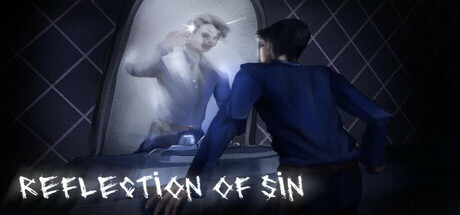
You'll see a reflection of your past sins here, Jack. For every sin, there is a consequence. Will you surrender?
Revenue comes from in-game items and microtransactions, which our price-based model doesn't estimate. Copies below reflect the player base, not paid sales.
Media

About
Suddenly you wake up, dim lights and familiar corridors. Endless loop. The place is filthy. It's like this place is familiar, but it's worse than you remember. In this game you play as Jack Miller, wandering the corridors in an infinite loop, who knows, maybe later you'll find out why you're here and who you are.

- A looping psychological horror experience
- Disturbing atmosphere and mind-bending illusions
- Subtle storytelling through environment and sound design
- Unsettling audio cues and eerie visual changes
- Prepare for 25 minutes of intense psychological horror
Header & Main Capsule art :elenmayart
Genres
Stats
All-time low is the lowest price we've recorded for this game since we started tracking it.
Languages: English**languages with full audio support
Reviews
Section with the mirror seems to be broken. Unless I am missing something, this game is impossible to beat.
Would've been a positive, but the section where you need to look in the mirror did nothing and the door never let me pass. After several retries, there was no change. If this gets fixed, I'll change my review.
un court jeu d'horreur P.T like sympa pour voir mon gameplay c'est ici https://youtu.be/YZrYcbwnNnI?si=qAHcdDRo5TRxhSAK
[quote][b][url=https://en.wikipedia.org/wiki/Asset_flip]Warning: Asset Flip![/url][/b] Reflection Of Sin is a Digital Homicide style asset flip, or what Valve calls a "Fake Game". The "developer" paid for/pirated a few Unity asset store assets, dumped them all in a blender, and submitted it to Valve as if they're real game developers.[/quote] Reflection of Sin is another lazy Unreal kitbash infesting Steam, the usual first person horror jumpscare "adventure". These are very simple to make, you can make one in the space of a weekend, just grab assets from the Unreal Marketplace, drop them on the basic Unreal Engine first person adventure blueprint, and call yourself a game developer. Like all of these (and there are thousands of them, all terrible), it's badly translated, and has you wander around a spooky house asset in the dark until you get jumpscared. Truly the pinnacle of game development... taking other people's game assets and trying to get money for them. It's unpolished, clunky, and thoroughly unpleasant to try to play, and all you end up doing is looking at all the assets you've already seen in a dozen other games. It has no value or merit as a real game. Taking this shovelware seriously as if it was a genuine attempt to make a game, it doesn't meet basic minimum requirements that most PC gamers expect as standard. There's no option to change the resolution and no useful graphics tweaks. There's no way to ensure this is running at the native resolution of your display. There's no guarantee this game will look right on any PC as a result of this hamfisted design decision. The game assets are fairly mediocre/low quality which fits with the idea they weren't developed by the game creator... they look like they're "just reasonable enough" to go on sale as part of an asset pack. The issue of asset flipping aside, ultimately the quality of these assets is low and low quality always makes for a less than optimal gaming experience. The game assets, such as they are, are much higher than the general quality of the game and it seems apparent the developer has just plagiarised/kitbashed them. Stock assets are just there to be used as placeholders while the developer creates their own assets for their games, but what happens far more often is lazy/unethical developers just throw a bunch of other peoples assets into a blender and put their own name on the horrible Frankenstein's Monster that results. Like this mess. The controls can't be customised, which will be an annoyance for many, but it can also render the game unplayable for differently-abled gamers, left handed gamers or gamers using AZERTY or other international keyboard layouts. These flaws make this game fall far short of the professional standards we expect from a modern PC game. The poor quality of this game is reflected by how many people spent time with it. At the time of this review, SteamDB shows the all-time peak player number was [b]only 2 players[/b]. This is a remarkably low number, and now, the only player activity occurs once or twice a month, presumably someone loading it up to see what it is then quickly uninstalling it. Considering there's over 130 million gamers on Steam and well over 140,000 games for gamers to choose from, the overwhelming lack of interest in this low quality game is to be expected. This kind of asset flipping isn't harmless. It makes it harder for gamers to find genuinely made games from ethical developers. It makes it harder for genuine indie developers, who put hard work into trying to make real games, to find an audience for their products. It gives indie developers a bad name. Now on to pricing and value. Should you download this asset flip? Is this really better than any of the 140,000+ genuinely made games on Steam? Of course not! Reflection Of Sin is currently free, but it's not worth it. The developer was charging $4 for this, but clearly changed their mind once they finally worked out it's morally and ethically wrong to try scam people into paying money for plagiarized Unreal assets. There are over 140,000 games on Steam, not every one of them is a hidden gem. I'm here to try help gamers find the ones that actually matter in that sea of Steam Direct self published mess. If you don't agree with my findings in this review, you should definitely buy it, download it, and play it to see for yourself. I'm happy to have helped you make an informed choice, regardless of the outcome. [quote][url=https://partner.steamgames.com/doc/store/reviews]Developer Response![/url][/quote]The developer has weighed in to inform everyone they didn't read the [url=https://partner.steamgames.com/doc/store/reviews]Developer Usage Rules[/url] for Steam "partners", or they deliberately ignored the part where Valve says: [quote]Though it may be tempting, not every review needs to be responded to. A developer response will frequently draw more attention than the original statement, potentially turning a small issue into a much larger community discussion. It's also not a good idea to use this feature to refute customer opinions. Your direct attention can be seen as validation or a defensive attempt to silence your customers.[/quote] First, take the developer response in the context of their abject, utter failure. SteamDB does not lie, with a peak player count of only two very disappointed people (possibly the developer and his therapist, or maybe just a pair of copyright lawyers), this is textbook failure from an incompetent asset thief and plagiarist. The developer makes the rather serious claim that my review is inaccurate/contains information which isn't factually evident. But this simply isn't true... the facts of my review can easily be verified with just a glance at this godawfully crap product. We know that if there was any glaring inaccuracy in my review the developer would have jumped on it and pointed it out right away... but they can't even cite one single example. Because [i]they know my review is accurate[/i]. They just don't like being presented with the facts. So they make up these false accusations of inaccuracy to soothe their ego. Anything but facing up to the truth. But why is this intellectual dishonesty good for gamers? It isn't. Nothing in the developers pointless breach of Valve guidelines changes any of the objective facts of my review. My review stands unaltered. I cannot recommend this asset flip from a toxic and failed developer to anyone. Edit: The developer compounds his response with insulting and unacceptable BS. Let's break down this cancer from a demonstrably failed developer... it's bad, and self incriminating. 1. Customizable controls are a basic minimum standard for any real PC game. The developers utter crap BS assertion that basic standards like "colour graphics" etc must be advertised or nobody should expect them is laughably horrid. 2. The developer admits to plagiarizing the work of others... utterly toxic to steal other people's work and claim it's your own... and now he admits it. Why is this not an outright actionable crime? If you plagiarize other people's work in literature, you can go to jail, and this guy just admitted he does it. WTF. 3. The developer boasts this is FREE at the same time he admits IT'S NOT HIS WORK because he plagiarized most of this "game" from an asset store. What an utter joke. Valve should take action against such toxic, unethical and morally bankrupt developers. Think about this developers response and the harm and damage it does to the gaming industry and to genuine indie developers who do the right thing and don't steal the work of others.
Reflection Of Sin is a psychological horror game that relies heavily on atmosphere, tension, and unsettling environmental storytelling to create an experience that feels deeply oppressive from beginning to end. Developed and published by Old Cave Studio, the game places players inside a disturbing world filled with decaying interiors, distorted realities, and lingering emotional trauma. Rather than focusing on action or constant enemy encounters, the game builds fear slowly through exploration, sound design, and a constant sense that something is deeply wrong beneath the surface. The result is a horror experience that prioritizes psychological discomfort and emotional unease over traditional survival horror spectacle. The atmosphere is easily the game’s greatest strength. From the opening moments, Reflection Of Sin creates a suffocating sense of dread through dark hallways, abandoned environments, flickering lights, and subtle environmental details that constantly make players question what they are seeing. The game understands that psychological horror works best when fear develops gradually, and it uses long stretches of silence and exploration to build tension before introducing more disturbing moments. Even when nothing dangerous is happening directly, the environments themselves feel threatening enough to keep players anxious throughout the experience. The story leans heavily into themes involving guilt, trauma, distorted memories, and mental instability. Narrative details are intentionally fragmented, forcing players to piece together events through environmental clues, notes, surreal sequences, and symbolic imagery scattered throughout the world. The game rarely explains itself directly, which helps maintain an unsettling sense of uncertainty. Players are left constantly questioning whether the horrors unfolding around them are supernatural, psychological, or some combination of both. This ambiguity strengthens the atmosphere significantly because the unknown becomes one of the game’s most effective sources of fear. Gameplay focuses mostly on exploration and survival-oriented tension. Players navigate through dark locations, solve basic puzzles, search for clues, and avoid dangerous entities hidden throughout the environment. Combat and direct confrontation are minimal, which works well because vulnerability becomes a major part of the experience. The game creates fear by making players feel exposed and powerless rather than turning encounters into action-heavy sequences. Exploration often feels nerve-racking because every new room carries the possibility of disturbing imagery, unexpected events, or hidden threats waiting nearby. Visually, Reflection Of Sin makes strong use of lighting and environmental design to create its oppressive atmosphere. The environments are filled with shadows, deteriorating interiors, and grotesque details that make the world feel constantly unstable. Certain sequences become highly surreal, blending realistic horror with dreamlike visual distortions that create a strong psychological effect. While the game clearly operates within the limitations of a smaller indie budget, the art direction succeeds because it understands how to create discomfort through visual mood rather than relying solely on graphical fidelity. The sound design is another major highlight. Reflection Of Sin constantly uses subtle ambient noises, distant sounds, and oppressive silence to keep players uncomfortable even during slower sections. Audio cues are handled carefully, allowing tension to build naturally without depending entirely on loud jump scares. When sudden horror moments do occur, they feel more impactful because the game spends so much time creating anticipation beforehand. The soundtrack itself remains restrained for much of the experience, allowing environmental sounds and silence to dominate the atmosphere. The pacing is deliberately slow, which may divide players depending on their horror preferences. Reflection Of Sin focuses far more on mood and immersion than constant gameplay variety or fast progression. Large portions of the game involve careful exploration, observing environments, and slowly uncovering narrative fragments. For players who enjoy atmospheric psychological horror, this approach works extremely well because it allows tension to develop naturally over time. However, players expecting frequent action sequences or more dynamic gameplay may find the slower structure repetitive during certain sections. The gameplay mechanics themselves are fairly simple and occasionally show signs of roughness. Movement can feel stiff at times, and interactions with objects or puzzles are not always as smooth as they could be. Most puzzles are relatively straightforward and mainly serve as pacing tools between story and horror sequences rather than major gameplay highlights. Some areas also rely heavily on scripted events and walking sequences, which may feel limiting for players looking for deeper mechanical engagement. The game’s abstract storytelling may also frustrate some players. While the ambiguity strengthens the psychological tone, certain narrative elements become so vague that it can be difficult to fully understand the emotional core of the story. Reflection Of Sin clearly prioritizes symbolism, atmosphere, and emotional interpretation over direct narrative clarity, which works artistically but may leave some players feeling disconnected from the overall plot. Technical limitations are occasionally noticeable as well. Certain animations lack polish, and some environmental interactions feel underdeveloped compared to larger horror productions. Despite this, the game’s strong atmosphere often compensates for its rougher edges because the horror design itself remains consistently effective. What makes Reflection Of Sin memorable is its dedication to psychological horror built around discomfort and emotional tension rather than constant shocks. It understands that fear often comes from uncertainty, isolation, and the gradual collapse of reality itself. The game creates a lingering sense of dread that stays effective because it rarely allows players to feel safe or fully understand what is happening around them. Reflection Of Sin succeeds as an unsettling and atmospheric indie horror experience that focuses entirely on mood, symbolism, and psychological unease. While its slow pacing, abstract narrative, and technical roughness may not appeal to every horror fan, players who enjoy immersive exploration-based horror and oppressive environments will likely appreciate what it offers. It may not completely redefine psychological horror, but it delivers a disturbing and memorable experience that remains effective through its commitment to tension and emotional discomfort. Rating: 7/10
Yes.
Not a bad game. I won't spoil the story I gathered from it, so I'll just get straight to the game itself. It's a PT style horror, which wasn't a problem for me. It can be completed in under an hour. I liked this has more of a human element, and the dialogue helped piece things together. The footstep sounds were good, and the voices and news articles add a bit more to the story. I would recommend it, as the game has a good foundation and design to it, and with updates can become really good. However, I there were some issues. I had trouble with collecting the final newspaper. I got the one in the hall and the one in the room with the CV, but the last one had no click icon appear and I could not grab it. So, I had to restart the game. As far as objectives, I think adding a reason to pick up some items would help improve the immersion, For example, if picking up said items gave us a bit more insight into the story, like a memory or dialogue of the past. A bit more subtle but ambient sounds would also help make more eerie. Other than these aspects, I had a smooth time playing it. Overall, a fun game. if updates do happen, I would like playing it again. As I said, I like this has a stronger human element to it with a bit of uncanny.
i really enjoyed this game
有点短
nice game :)
Related
Related
Trends
Modeled estimate over time.
Momentum
Pace estimated from the game's recent review growth (our daily snapshots) at its own sales-per-review ratio — a momentum signal, not booked sales.