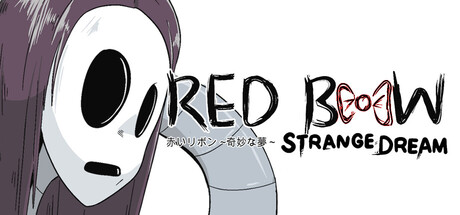
Embark on an immersive adventure alongside Roh as she tries to break free from her strange dream.
Modeled estimate, not a reported figure. How we estimate →
Media

About
Embark on an immersive adventure alongside Roh as she tries to break free from her strange dream. Red Bow: Strange Dream offers a nice 1 to 2 hours of engaging gameplay. Dive into a semi-open world filled with puzzles and navigate between different realms, uncover secrets, and encounter enigmatic entities. Unlock the path to awakening by diving deeper and unraveling the mysteries of this strange spirit world.
GAMEPLAY
Take control of Roh and explore a strange fantasy world with spirits, ghosts, and other unnatural monstrosities as she try to find a way to return home. Search for objects to solve simple puzzles and talk to characters to unravel the lore behind this mysterious place.
Across the game’s multiple areas, players can expect to clear puzzles and find specific items should they wish to advance through the game’s story, but be sure to take your time. In this all new adventure of Red Bow is now fully explorable from the game's start. Travel between realms to find items for others and interact with the spirits to help you uncover clues.
FEATURES
Unique enhanced story which adds more to the lore of the strangaverse games
Adventure style gameplay
Top-down all new pixel artwork with stunning scenery
All new Original Soundtrack
Stats
All-time low is the lowest price we've recorded for this game since we started tracking it.
Languages: English
Engagement
Hours played at review time, across 24 reviews with recorded playtime.
Reviews
4/10 A remake that did not need to happen. I enjoyed the original Red Bow and would absolutely recommend you go play that version, because this remake failed to recapture the charm of the original. In the original, the story is linear as you visit three different worlds to assist various spirits. In this version, you are forced to jump back and forth between the various worlds to find the items needed for the various puzzles. This feels like an attempt to simply pad the game's runtime. The actual story arcs of the spirits feel less impactful as you only get bits and pieces of their stories as you go back and forth between worlds, instead of being able to experience the whole story in one go. And while Stranga's previous remake felt like an upgrade in the art department, this one felt like a downgrade. Everything feels... smaller. The original's set pieces felt like large areas you were exploring with a very nice attention to detail, whereas the remakes set pieces feel cramped and compressed like tiny rooms, and because there's less space, it feels like a lot of detail from the original was lost. I'm also not a big fan of the story changes and additions made in the remake. Overall, I simply do not see any reason why this game needed to be remade. Please go play the original.
a very good casual game. I recommend it. it's very cute made. a good length of story. very cool pixel graphic I love it. some puzzles. the price of this game is alright.
Red Bow: Strange Dream is a beautifully crafted return to the eerie world of Red Bow, offering a short but immersive experience that expands on the original while standing confidently on its own. The updated visuals are a real highlight. The pixel art is vibrant, atmospheric, and thoughtfully colored, making each area feel distinct and memorable. I really enjoyed seeing familiar characters return alongside new additions, which helped deepen the world and its lore without overwriting what made the original game special. While I personally didn’t find this entry quite as frightening as I remember the original being, that may simply come down to how much the horror genre has evolved and become more familiar over the past few years. The unsettling atmosphere and themes are still very much present and effective. A huge shoutout to Stranga Games for delivering such a polished experience as a solo dev. It’s genuinely impressive.
Несомненно, невероятный прогресс по сравнению с предыдущей версией Red Bow. Если раньше все головоломки заканчивались на "пройдись по локации туда и обратно и поговори со всеми на пути", то теперь действительно нужно думать. История также очень шагнула вперёд, персонажи получили настоящие истории, которые, порой, правда могут быть трогательными и неплохо прописанными. Также, наконец-таки, нельзя из-за одного неудачно выбранного диалога перенестись из одного мира в другой. Из минусов: много багов в диалогах. Например, во время получения огнетушителя в маяке ничего нет. Визуальный стиль хоть и стал заметно лучше и проработаннее, отсутствие полноэкранного режима и огромные пустые пространства по бокам локаций (например, на дороге Куби) сильно режут глаза. Помимо прочего, игру прошёл целиком, но не получил ни одного достижения. Не такая серьёзная проблема, но обидно... В общем и целом, игра своих денег и времени несомненно стоит.
I already played the original Red Bow and I really think this is a huge improvement to that game! Highly suggested!
As much as I LOVE the original Red Bow, and as much as I'm all for remasters, I just don't like this one. The new redesign and approach to the game are interesting at first, but I quickly found the narrative way worse. Great scenes from the original are either bastardized or missing entirely. The game is thus not only less scary but, more importantly, way less authentic, feels more rushed, and also has some plot points missing (not from the original, but from this game itself). You also get like 1 choice only throughout the whole game, while the original had multiple with branching paths. There are, however, a couple new scenes added, some sweet, some interesting, but yet again, the narrative could've been more fleshed out. The linear progression of the first game, without jumping from world to world, felt way more immersive, and I liked it better that way. The graphics definitely look more polished, I do find them nice, albeit beauty lies in the eyes of the beholder. However, the game definitely lost a lot of its original charm. And not only from the graphics, layout, and level design, but also from the ambience and immersion that were so prevalent in the first game and that are now pretty much missing. The redesign of some locations and a couple new ones are cool to see, but I still find the original better, and the weird visible corners of some maps just don't do it for me. The one thing I did DEFINITELY find playing this for is the lovely remaster of the soundtrack, pulling on my heartstrings. I wouldn't call this game a failure, because it's still a functional, fun, and enjoyable game to some degree, but it would definitely benefit from more work put into it, like the remaster of My Big Sister got.
Red Bow: Strange Dream, developed by Stranga Games and published by GrabTheGames, is a compact narrative-driven adventure that leans heavily into atmosphere, symbolism, and quiet unease rather than overt challenge or spectacle. It positions itself as a dreamlike journey through fractured spaces where meaning is implied rather than explained, inviting players to slow down and absorb its mood. From the moment the game begins, it establishes a subdued, introspective tone, signaling that this is an experience meant to be felt and interpreted rather than conquered through mechanical mastery. The story follows Roh, a young protagonist trapped inside a strange and shifting dream world, where familiar logic no longer applies and every location feels like a fragment of a deeper subconscious narrative. Rather than relying on direct exposition, the game tells its story through environmental details, cryptic dialogue, and encounters with spirits that speak in riddles or half-truths. This approach gives the narrative a haunting quality, as players piece together the nature of Roh’s predicament through implication and emotional cues. The dream framing allows the game to explore themes of fear, memory, and identity in an abstract but resonant way, making the journey feel personal even when the story remains deliberately elusive. Exploration forms the backbone of the gameplay. The world is presented from a top-down perspective, rendered in detailed pixel art that balances softness with moments of unsettling imagery. Each area feels distinct, using color palettes and environmental design to convey mood shifts as players move deeper into the dream. Progress is driven by careful observation, interaction with NPCs, and the discovery of items that unlock new paths or resolve environmental puzzles. These puzzles are generally intuitive but thoughtfully placed, encouraging players to reflect on clues scattered across dialogue and scenery rather than relying on trial-and-error mechanics. What makes Red Bow: Strange Dream particularly effective is its pacing. The game is relatively short, often completed in a single sitting, yet it rarely feels rushed or incomplete. Each segment of the journey flows naturally into the next, with just enough challenge to maintain engagement without disrupting the contemplative rhythm. Instead of padding the experience, the game embraces brevity, ensuring that every area contributes meaningfully to the atmosphere and narrative. This restraint allows the emotional weight of certain moments to linger, giving players time to reflect on what they’ve seen and heard. The audiovisual presentation plays a crucial role in sustaining immersion. The pixel art style is expressive, conveying emotion through subtle animation and environmental detail rather than high fidelity. Character sprites, while simple, are animated with care, and the world itself often feels alive in quiet, unsettling ways. The soundtrack complements this presentation with soft, melancholic melodies and ambient tones that reinforce the dreamlike atmosphere. Music and silence are used deliberately, heightening tension in some moments while allowing introspection in others. Mechanically, the game avoids combat entirely, focusing instead on exploration and interaction. This design choice reinforces the sense of vulnerability and curiosity that defines the experience. Players are not empowered to fight their way through obstacles; instead, progress comes from understanding the world and responding to it thoughtfully. For some, this lack of traditional action may feel limiting, but for others it strengthens the narrative focus, keeping attention on mood and story rather than reflex-based challenge. Replayability is modest but meaningful. While the core path remains consistent, attentive players may notice nuances in dialogue or environmental storytelling on subsequent playthroughs, especially if they approach interactions with a deeper understanding of the game’s themes. Steam achievements provide light incentives for exploration and completion, encouraging players to fully engage with the world rather than rush to the end. Ultimately, Red Bow: Strange Dream succeeds as a small but carefully crafted narrative experience. It does not attempt to overwhelm players with systems or length, instead delivering a focused journey that values atmosphere, symbolism, and emotional resonance. For players who appreciate short, story-driven indie games that prioritize mood and interpretation over action, it offers a memorable and quietly haunting experience that lingers well after the dream has ended. Rating: 6/10
Uhh, John Stranga? I think perchance you sent me a dev build for the game by mistake as I started the game in a different location than everyone else and an object in a room gave me every item. I couldn't really "play" it. It was pretty funny though. You bet I'm gonna submit my speedrun of 2:30 to Speedrun(dot)com [Key provided by devs] Stream when I played it (Live thoughts): https://www.twitch.tv/videos/2649025220 https://youtube.com/live/J_x50XvMGr8
Eu sempre lamento um pouco quando o game não tem uma localização para o brasileiro, mas mesmo sem isso esse jogo possui uma história muito cativante, que vale o esforço... Ele é super fluído com um gráfico de pixel que encanta. Mesmo pra quem não manja muito de inglês eu super recomendo, porque ele é bem redondinho e com uma história misteriosa que vale se aprofundar.
🎀 Improving your work is commendable, but this case is a bit odd. The OG was simple, but had few story choices. The remade has become even more linear, despite locations from all chapters being accessible simultaneously (they look different, and the art is good, but more improvements, like character portraits and more animations, would be nice). The story is still short, but items are now scattered everywhere and become available gradually. There's no replayability anymore (aside from achievements), so it can be leisurely completed in an hour, and that's it. The secret ending isn't obvious and is inaccessible to regular players (at the time of review). No one has a clue, even though the game is small. This isn't good, and it's quite possible that the path to it is simply broken by bugs. Otherwise, it's modest, cheap, and not bad.
Related
Related
Trends
Concurrent players on Steam, sampled daily since tracking started.
Audience
Estimated from the language of this game's reviews — a proxy for where players are, not official Steam demographics.
Related
| Ashes of Immortality II | $1K | 57 | 47% | $0.79 |
| Millennium 2 - Take Me Higher | $1K | 57 | 82% | $0.79 |
| Rustled Pete | $1K | 74 | 97% | $2.99 |
| Jade's Journey 2 | $1K | 55 | 62% | $0.79 |
| Fiery Disaster | $1K | 56 | 54% | $0.69 |
| Spiral Splatter | $1K | 98 | 70% | $4.99 |