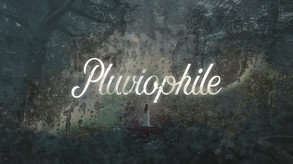
Pluviophile is a short atmospheric exploration game developed and published by independent creator Tonguç Bodur, a developer known for crafting small narrative and environmental experiences that emphasize mood and visual storytelling rather than traditional gameplay mechanics. Released on Steam in 2020, the game belongs to the walking simulator genre, a category of games where exploration, ambience, and environmental observation take priority over puzzles, combat, or complex objectives. True to its title, Pluviophile—meaning a person who finds peace and comfort in rain—builds its entire experience around the calming and reflective atmosphere of a rainy forest.
The game places players in a first-person perspective within a dense woodland landscape during a gentle rainfall. Rather than presenting a conventional story with characters or dialogue, the experience unfolds through environmental immersion. Players walk along winding forest trails surrounded by trees, mist, and the steady sound of rain falling through the canopy. The environment feels quiet and isolated, as if the player has stepped into a hidden corner of nature far removed from the noise of everyday life. This setting forms the core of the game’s identity, turning the act of walking through the forest into the central activity of the experience.
Progression in Pluviophile is guided by a simple objective structure that involves locating glowing flowers scattered throughout the environment. As players explore the forest paths, they search for these flowers and collect them. Once enough flowers have been gathered, they can be placed at special altars or markers along the trail. Activating these points unlocks new paths deeper into the forest and reveals fragments of poetry that slowly unfold as the player moves through the chapters of the experience. The poetry is inspired by works from the American poet Madison Julius Cawein, and these lines help establish the reflective tone that defines the game.
Although the mechanics themselves are extremely simple, they serve an important role in encouraging players to pay attention to their surroundings. The search for flowers gently pushes players to look around the forest and observe its details, from the subtle lighting filtering through the trees to the damp ground and fog drifting through the undergrowth. Because the game is largely linear and the paths are clearly defined, the experience rarely becomes confusing or frustrating. Instead, it maintains a relaxed pace where exploration feels natural and unhurried.
The visual design is one of the strongest aspects of Pluviophile. Built using Unreal Engine, the game presents a lush natural environment filled with dense vegetation, tall trees, moss-covered rocks, and atmospheric lighting. The forest is rendered with a surprising level of detail for such a small project, and the constant rainfall enhances the sense of immersion. Raindrops fall through the air, leaves sway gently in the wind, and faint mist lingers between the trees, giving the environment a soft and dreamlike quality. The lighting system plays an important role as well, with beams of sunlight occasionally breaking through the clouds and illuminating parts of the forest in warm tones that contrast with the cool, damp atmosphere.
The sound design complements the visuals beautifully. The steady rhythm of rainfall forms the foundation of the game’s audio landscape, accompanied by distant thunder, rustling leaves, and subtle environmental sounds. These ambient effects create a natural soundscape that reinforces the feeling of walking through a living forest. In addition to the environmental audio, the game features a gentle musical score composed primarily of soft piano melodies and ambient orchestral tones. The music blends seamlessly with the sound of rain, creating an atmosphere that many players find deeply relaxing and even meditative.
One of the defining qualities of Pluviophile is its pacing. The game intentionally moves at a slow and deliberate rhythm, encouraging players to take their time and absorb the environment rather than rushing toward objectives. There are no enemies, time limits, or challenging puzzles to interrupt the calm flow of exploration. Instead, the experience feels more like a peaceful nature walk than a traditional video game. This design philosophy aligns perfectly with the theme of appreciating rain and quiet natural environments.
However, the same minimalistic approach that gives Pluviophile its charm also limits its scope. The game is very short, typically lasting around half an hour to an hour depending on how thoroughly players explore the environment. Because there are very few gameplay mechanics beyond walking and collecting flowers, players who prefer more interactive or narrative-driven games may find the experience lacking in substance. Once the journey is complete, there is little reason to revisit the forest unless one simply wants to enjoy the atmosphere again.
Additionally, the lack of a conventional storyline may leave some players wanting more narrative context. While the poetic fragments provide thematic depth, they are abstract rather than plot-driven, leaving much of the meaning open to interpretation. For players who appreciate artistic or symbolic storytelling, this can be part of the appeal, but those expecting a structured narrative with characters and dramatic events may find the experience somewhat empty.
Despite these limitations, Pluviophile succeeds at what it sets out to do. It offers a tranquil, visually pleasing exploration of nature that focuses on mood and reflection rather than challenge. The combination of detailed forest environments, soothing rainfall, and gentle music creates a relaxing atmosphere that stands out among more traditional game experiences. For players who enjoy walking simulators or atmospheric indie titles, it provides a brief but memorable journey into a peaceful world shaped by rain and poetry.
In the end, Pluviophile feels less like a traditional game and more like an interactive piece of digital art. Its purpose is not to test a player’s skills or present a complex narrative but to evoke a specific emotional response—the quiet comfort that can come from walking through a forest while rain falls softly around you. While its short length and minimal gameplay may not appeal to everyone, those who appreciate calm, atmospheric experiences will likely find something special in its simple beauty.
Rating: 7/10