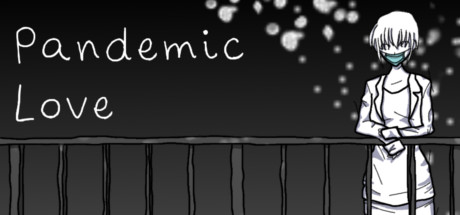
A short visual novel about isolation. You try to search for comfort in the lonesome people around you. Keeping the darkness at bay with small embers of light. Will you let the fear change you?

Revenue comes from in-game items and microtransactions, which our price-based model doesn't estimate. The player count below is how many people own it, not what they spent.
About


Genres
Stats
Languages: English
Engagement
Reviews
Themes across 42 recent reviews and how positive each mention is. A keyword signal, not full sentiment analysis.
Reviews
"Pandamic Love" is a short visual novel about isolation. You try to search for comfort in the lonesome people around you. Keeping the darkness at bay with small embers of light. You play as Trond, who's forced into quarantine for the next two weeks after making it out of Italy's lockdown. The game itself has over 8 endings, i didnt found all of them tho- I liked the artstyle of te game and the music! I ülayed the game for around 1.4 hours but like i said, i didnt found all endings. I will continue to try tho The Game itself is free which is nice and it was fun. Try it out!
It took an hour to reach one ending. It’s worth a play, but I’m not sure if the other endings are as good as the one I had
Media

Related
Related
Price dynamics, follower growth, revenue and sales trajectories with interactive tooltips
This and every other Pro feature is free until October 20, 2026. A free account is all it takes.
Hours played at review time, across 42 reviews with recorded playtime.
positive critical· bar length = how often the theme comes up
Fajne ale jaguar nie pokazuje argumentow przez szybe 4/5
Buen juego la verdad y muy profundo me ayudo mucho en mi vida y da que pensar, lo único malo que es muy corto y el final no tiene sentido
Valeu totalmente a pena ver não só um, mas todos os finais. Personagens muito interessantes, ótima história, dê uma chance nem que jogue apenas 1-2 finais. Faz qualquer um parar pra refletir um pouco.
Pandemic Love, developed and published by Red Skald, is a compact visual novel that centers itself on emotional realism rather than mechanical depth. Set against the backdrop of a global health crisis, it follows a solitary protagonist navigating isolation, digital communication, and the fragile threads of human connection that persist even in difficult circumstances. Instead of offering escapism, the game leans into introspection, presenting a narrative that feels grounded, sometimes uncomfortable, and often quietly affecting. The structure is intentionally minimal, with the experience unfolding through dialogue choices and branching interactions. Players guide conversations, respond to messages, and make decisions that influence how relationships develop and ultimately conclude. While the mechanics are simple—largely confined to reading and selecting responses—the weight behind those choices gives the game its sense of engagement. Each decision subtly shifts the tone of the story, leading to multiple possible endings that reflect different emotional outcomes rather than clear-cut successes or failures. What stands out most is the writing’s focus on vulnerability. The characters you encounter are not exaggerated or idealized; they feel like people shaped by uncertainty, stress, and loneliness. Conversations often carry an awkwardness that feels intentional, mirroring the way real interactions can falter, especially when mediated through screens. Themes such as anxiety, illness, and emotional disconnection are handled with a degree of sincerity that makes the experience feel personal rather than performative. The game doesn’t try to resolve these issues neatly—instead, it allows them to exist in a space of ambiguity, where outcomes depend as much on emotional nuance as on player choice. The branching narrative system reinforces this grounded approach. With multiple endings available, the game explores a range of possibilities that reflect both connection and distance. Some paths lead to moments of understanding and warmth, while others highlight miscommunication, missed opportunities, or the quiet drift that can occur between people under strain. This variety gives the game replay value despite its short length, encouraging players to revisit it and explore how different choices reshape the experience. Importantly, these variations feel meaningful, not just cosmetic, as they alter the emotional tone of the story in noticeable ways. Visually, the presentation is modest but effective. The art style is simple and expressive, focusing on conveying mood rather than detail. Character portraits and backgrounds are designed to support the narrative without drawing attention away from it, and the restrained color palette complements the game’s introspective tone. The audio design follows a similar philosophy, providing subtle atmospheric support rather than dramatic emphasis. Together, these elements create a cohesive aesthetic that prioritizes clarity and emotional focus over visual complexity. The game’s brevity is both a strength and a limitation. Its relatively short runtime ensures that the narrative remains focused, with little room for filler or unnecessary repetition. Each scene feels purposeful, contributing to the overall emotional arc. At the same time, this limited scope means that certain ideas and character dynamics are only lightly explored. Players who find themselves invested in the story may wish for more time to develop these relationships or delve deeper into the themes presented. Another defining aspect is its accessibility. As a free-to-play title, it invites players to engage with its narrative without commitment, making it easy to approach even for those unfamiliar with visual novels. However, this accessibility also highlights its niche appeal. The experience is heavily reliant on its writing and thematic resonance, offering little in terms of traditional gameplay or challenge. For players seeking interactive complexity or mechanical variety, it may feel sparse, but for those interested in narrative-driven experiences, it offers something more reflective. Ultimately, Pandemic Love succeeds by committing fully to its tone and intent. It captures a specific emotional landscape—one shaped by isolation and the search for connection—and translates it into an interactive format that feels personal and sincere. While its simplicity and brevity may limit its broader appeal, they also allow it to deliver a focused and memorable experience. It’s not a game that aims to impress through scale or spectacle, but rather one that leaves an impression through its quiet honesty. Rating: 7/10
gud game
not worth my time, i was ready for ♥♥♥♥ to gown down, and i see the ending. i thought i would get psychological horror from this game, nope, just a girl that dies (spoiler). disappointed.
☀️
Banger
Players by region
Where this game's players are, estimated from review languages.
Related
| Game | Estimated lifetime revenue | Reviews | Review score | Price |
|---|---|---|---|---|
| $0 | 42 | 95% | Free | |
| $1,000 | 2 | 0% | $12.99 | |
| — | 0 | — | — | |
| — | 0 | — | — | |
| $0 | 0 | 82% | Free | |
| $64.1K | 97 | 95% | $19.99 |