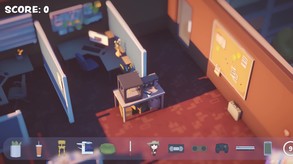
Unwind while you play at your own pace exploring vibrant microcosms, in your search for hand-placed hidden objects, set to a chill lofi soundtrack.
Revenue comes from in-game items and microtransactions, which our price-based model doesn't estimate. The player count below is how many people own it, not what they spent.
About


Genres
Sums Steam only; PlayStation, Nintendo publish no volume signal, so the true total is higher by an unknown amount.
| Store | Price | Audience | Score | Chart | Est. revenue |
|---|---|---|---|---|---|
SteamYou are here | Free | 252reviews | 83% | — | $0 |
| $10.49−30% | 424ratings | 93% | — | not modelled |
Engagement
Reviews
Themes across 44 recent reviews and how positive each mention is. A keyword signal, not full sentiment analysis.
Reviews
;]
I must give this game a big favourable comment,developer of the game must be a architecture designer.
Out of Sight developed and published by NinjaDuck Games is a deliberately low-pressure hidden object experience that prioritizes relaxation over challenge, offering a quiet, almost meditative approach to the genre. Rather than trying to reinvent the formula or layer in complex systems, it leans into simplicity and accessibility, creating a space where players can engage at their own pace without the usual constraints of timers, penalties, or escalating difficulty. The gameplay loop is immediately familiar: players are presented with detailed scenes and tasked with locating a list of hidden items scattered throughout each environment. What sets the experience apart is its refusal to rush the player. There are no strict time limits pushing you forward, and mistakes carry little consequence, allowing for a more thoughtful and unhurried style of play. This design encourages careful observation rather than quick reactions, making the act of searching feel more deliberate and, in many ways, more satisfying. It’s a game that invites you to slow down and take in the details rather than skim through them. The environments themselves are one of the game’s stronger aspects. Each scene is colorful and densely packed with visual elements, often blending objects into the background in clever ways that require a keen eye to uncover. The art style leans toward a stylized, slightly whimsical aesthetic, which helps keep the visuals engaging even as the gameplay remains consistent. Subtle variations in object placement across sessions add a small degree of unpredictability, ensuring that revisiting levels doesn’t feel entirely repetitive, even if the core structure stays the same. Audio design plays an important supporting role in shaping the overall tone. The soundtrack is soft and unobtrusive, often leaning into mellow, ambient compositions that reinforce the game’s relaxed atmosphere. Sound effects are minimal but effective, providing just enough feedback to make interactions feel responsive without breaking the calm pacing. Together, the visuals and audio create an experience that feels more like a digital escape than a traditional challenge-driven game. Progression is handled in a straightforward manner, with new scenes unlocking as players complete objectives. There is a light scoring system for those who enjoy tracking performance, but it remains secondary to the core experience. The game doesn’t push players toward mastery or competition; instead, it offers a steady stream of content that can be enjoyed casually. This makes it particularly well-suited for short sessions or moments when you want something engaging but not demanding. However, the same simplicity that defines the game can also limit its appeal. Without evolving mechanics or significant variation, the experience can begin to feel repetitive over time. Each new level introduces a different visual setting, but the fundamental interaction remains unchanged, which may not be enough to hold the attention of players looking for deeper gameplay systems. The absence of a narrative or broader progression arc also means there’s little incentive to keep pushing forward beyond personal enjoyment. Despite these limitations, Out of Sight succeeds in delivering a cohesive and focused experience that knows exactly what it wants to be. It doesn’t aim to challenge or overwhelm, but rather to provide a gentle, visually engaging activity that can be picked up and put down with ease. For players who enjoy hidden object games or are simply looking for something calm and undemanding, it offers a pleasant and approachable option that fits comfortably into a relaxed gaming routine. Rating: 7/10
Media

Related
Related
Price dynamics, follower growth, revenue and sales trajectories with interactive tooltips
This and every other Pro feature is free until October 20, 2026. A free account is all it takes.
Stats
Languages: English, French, Italian, German, Spanish - Spain, Japanese, Korean, Polish, Portuguese - Brazil, Russian, Simplified Chinese, Turkish
| $14.99 | — | — | — | not modelled |
Matched by title — a reused name can pair the wrong games. * is a critic aggregate. Prices and positions are each store's United States storefront; Epic charts worldwide. Audience and Score too, except Steam's, which is worldwide.
Hours played at review time, across 44 reviews with recorded playtime.
positive critical· bar length = how often the theme comes up
цікаві low poly головоломки щоб знайти предмет
小品级游戏,不知道玩什么就打开这个
一个缺乏游戏制作技术的美术生展示自己建模作品的游戏
힌트와 가이드를 이용해서 도전과제를 전부 깼습니다. 카메라 시점 상태가 별로지만 무료 게임이라서 추천.
릴렉싱이나 탐험보다는 늪에다 바늘 던져두고 찾으라 하는 느낌, 담백함 보다는 무미건조한 느낌이다.
对我来说有点无聊的找东西小游戏 有些场景好看 玩着玩着就会去干会儿别的 很容易挂机
no me gustan los juegos de busqueda, le di una oportunidad, siguen sin gustarme
Selling now
See how fast this game is selling right now — estimated copies and revenue per day from recent review growth.
Players by region
Where this game's players are, estimated from review languages.
Related
| Game | Estimated lifetime revenue | Reviews | Review score | Price |
|---|---|---|---|---|
| — | 0 | — | — | |
| — | 0 | — | — | |
| $101.3K | 1.1K | 92% | $6.99 | |
| $74.4K | 332 | 73% | $8.22 | |
| $2.7K | 18 | 67% | $9.99 | |
| $1.9K | 61 | 59% | $1.99 |