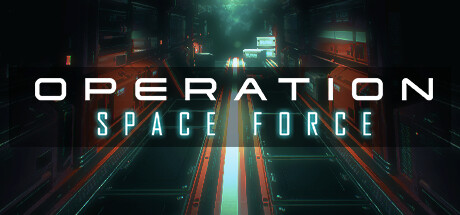
Operation Space Force is a science-fiction first-person shooter built around fast multiplayer battles, selectable heroes, flexible weapon loadouts, and arena-style maps. Developed and published by Newton Fun Studio, the game approaches the competitive shooter formula with a mixture of traditional gunplay and character-based mechanics. Rather than relying on an elaborate storyline, its focus is firmly placed on combat, customization, repeated matches, and experimenting with different combinations of characters and equipment. As a free-to-play Early Access title, it presents itself as an evolving multiplayer project rather than a completely finalized experience.
Character selection plays an important role in shaping each match. Operation Space Force provides several heroes with different characteristics, including variations in areas such as movement speed and power. These distinctions encourage players to consider more than appearance when choosing who to control. Faster characters may suit aggressive players who prefer constant movement, while other heroes can potentially complement different tactical approaches. The system gives the game some qualities associated with hero shooters without abandoning the recognizable structure of an arena FPS.
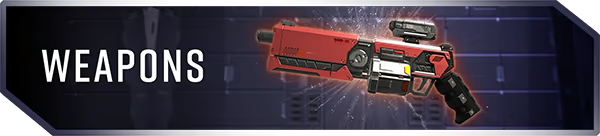
Weapons provide another major layer of variety. Players can carry two firearms alongside a grenade and knife, allowing several combat options to remain available without constantly changing the entire loadout. The Early Access version was introduced with fourteen weapons, three grenades, and a melee weapon. Having two firearm slots creates opportunities for complementary setups, such as carrying one weapon for close engagements and another for opponents encountered at greater distances. Grenades provide additional tactical possibilities, while the knife ensures that players still have an option when fighting at extremely close range.
The weapon system becomes more interesting through customization. Certain firearm components can be changed, giving players some control over how their preferred equipment is configured. Weapon skins also provide cosmetic personalization. These systems are particularly appropriate for a multiplayer game intended to support repeated sessions because experimentation can become part of the progression loop. Interface colors can also be customized, which is a relatively minor addition but demonstrates that Newton Fun Studio has attempted to provide personalization beyond weapons and heroes.
Operation Space Force also tries to distinguish itself through its arenas. Five maps were described as being available during Early Access, but not every battlefield necessarily behaves like a completely fixed competitive map. Some environments remain consistent while others can change when a new match begins. This introduces unpredictability into navigation and combat. Players cannot always depend exclusively on memorizing every route and position if portions of an environment can vary between sessions.
That concept has both advantages and potential drawbacks. Traditional competitive FPS maps reward players for developing extensive knowledge of routes, sightlines, chokepoints, and advantageous positions. Variable environments instead reward observation and adaptability. Combining fixed and changing maps could prevent matches from becoming excessively repetitive, although procedural variation must be carefully designed so that randomly generated layouts do not accidentally favor one team. When successful, this mixture gives Operation Space Force a more distinctive identity than it would have as a conventional collection of static arenas.
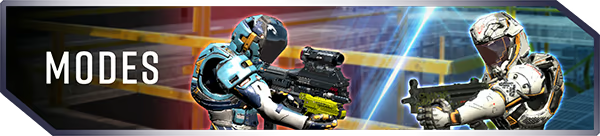
Several game modes further expand the multiplayer structure. The Early Access description presented six modes, providing different ways to use the available characters, maps, and weapons. Players can participate in team-oriented battles, join existing sessions, or host their own games. Hosting is particularly useful for groups that want more direct control over their multiplayer experience. The game also lists competitive and cooperative functionality, broadening its appeal beyond players interested exclusively in conventional PvP matches.
The major limitation is that most of these ideas depend heavily on having other people available to play. Multiplayer shooters thrive when matchmaking is active enough to fill matches consistently. A game can offer numerous heroes, weapons, arenas, and modes, but those features lose much of their practical value if the active community becomes too small. Providing several modes can actually intensify this issue because the available population may become divided between separate playlists. Private or hosted sessions help groups of friends, but they cannot entirely replace active public matchmaking.
Its Early Access condition introduces another consideration. Newton Fun Studio originally outlined ambitious plans involving additional heroes, alien races, weapons, seasons, competitive features, and game modes. Other ideas mentioned during development included daily missions, login rewards, mobile support, and improved accessibility for Steam Deck users. These concepts indicate that the developers envisioned Operation Space Force becoming considerably larger than its initial Early Access form. However, prospective players should evaluate the game according to the content actually available rather than assuming every planned feature will eventually be implemented.
The free-to-play business model makes trying the game relatively easy, although monetization remains relevant to its competitive design. The developers indicated that microtransactions could involve heroes, weapons, skins, and additional content. Cosmetic purchases are generally straightforward in multiplayer shooters, but purchasable weapons and characters require careful balancing. Competitive matches are most satisfying when success feels connected to aiming, movement, tactical decisions, teamwork, and intelligent equipment choices rather than spending.
Visually and conceptually, Operation Space Force embraces a futuristic setting that fits its arena combat. Science fiction gives Newton Fun Studio considerable freedom to introduce unconventional heroes, alien factions, imaginative firearms, and unusual environments. The game's modest installation requirement also makes it less demanding in storage than many modern multiplayer shooters. Its listed hardware requirements suggest that the project is designed to remain accessible to comparatively modest gaming PCs, although some of the published specification details should be treated cautiously because they contain unusual values.
Taken as a whole, Operation Space Force is an ambitious independent multiplayer FPS whose strongest qualities come from the interaction between hero selection, customizable firearms, multiple equipment slots, different grenades, numerous modes, and partially changing maps. No individual component completely transforms the genre, but their combination creates a flexible foundation. The changing arena concept is particularly promising because it can introduce uncertainty into matches that might otherwise become predictable after repeated play.
Its weaknesses are closely tied to its status and scale. The experience requires a functioning multiplayer community, its competitive balance must account for monetized gameplay content, and some of the larger ambitions described for development remain uncertain. Players looking for a polished alternative to major established hero shooters may therefore find it comparatively limited. Those interested in smaller experimental multiplayer projects, however, may appreciate the range of systems Newton Fun Studio has attempted to combine.
Rating: 6/10