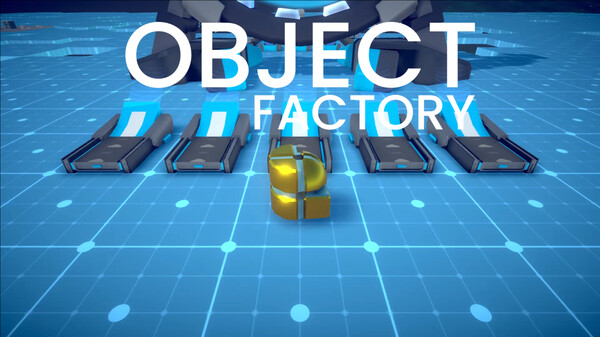
A unique take on factory building — design and optimize flowing 3D systems where routing and space are your most valuable resources. Start with guided challenges, then expand into an endless sandbox focused on efficiency, scale, and layout mastery.
Modeled estimate, not a reported figure. How we estimate →
About

A spatial factory puzzle game about transforming simple shapes into complex 3D structures — powered by flow, layout, and specialized production districts.
Best Gameexperience on Steamdeck or with a Gamepad
Design efficient production lines, route resources through a central conveyor backbone, and solve spatial challenges by placing machines, modules, and districts with precision.
What starts as guided challenges quickly opens into an endless optimization sandbox, where you refine layouts, push throughput, and build increasingly efficient factory systems.
Unlike traditional factory builders, Factory Mode focuses on spatial problem-solving and district-based optimization.
You don’t just build machines — you design scalable systems, where placement, routing, and flow define long-term efficiency. The district system allows you to run the specific machine with a speed bonus up to +275%.
In Arcade Mode, you can build more freely and create the shape factory of your dreams.
At the core of your factory lies the Main Conveyor belt zone (green) — a high-throughput backbone that connects your entire production. Surround it with specialized factory districts that amplify your capabilities and create powerful, localized production hubs.
Build close for simplicity — or expand into specialized districts for maximum efficiency and speed.
🏭 Spatial Factory Building
Design production layouts where space, flow, and structure matter as much as logic.
🟨 Specialized Factory Districts (Core Feature)
Build around powerful districts that boost production and define your layout strategy.
Place Cutter, Joiner, Painter, and Rotater districts to create high-efficiency production zones. In this zones the specific machine has a speed bonus up to +275%.
🚚 Main Conveyor System
Route everything through a central high-speed backbone. Manage input and output flow, and feed district production back into the system without bottlenecks.
⚙️ Automation Modules & Systems
Use modules like Type Sorters, mergers, and feedback loops to control flow and automate complex routing behaviors.
🔄 Endless Optimization Gameplay
Refine, expand, and perfect your factory. Push throughput, eliminate bottlenecks, and design systems that scale.
🧩 Structured Challenges → Sandbox Freedom
Learn through guided objectives, then apply everything in an open-ended sandbox focused on efficiency and creativity.
🎲 Procedural Levels
Adapt to new layouts and challenges every run.
🔓 Progression & Unlocks
Unlock new machines, modules, and production options as your factory evolves.
✂️ Shape Manipulation
Cut, combine, rotate, and paint shapes to meet increasingly complex goals.

This is a game about flow and structure.
Build around your main conveyor, create powerful district-based production hubs, and design systems that can handle both precision and overflow.
Mastery comes from continuous optimization — improving layouts, increasing throughput, and refining your factory over time.
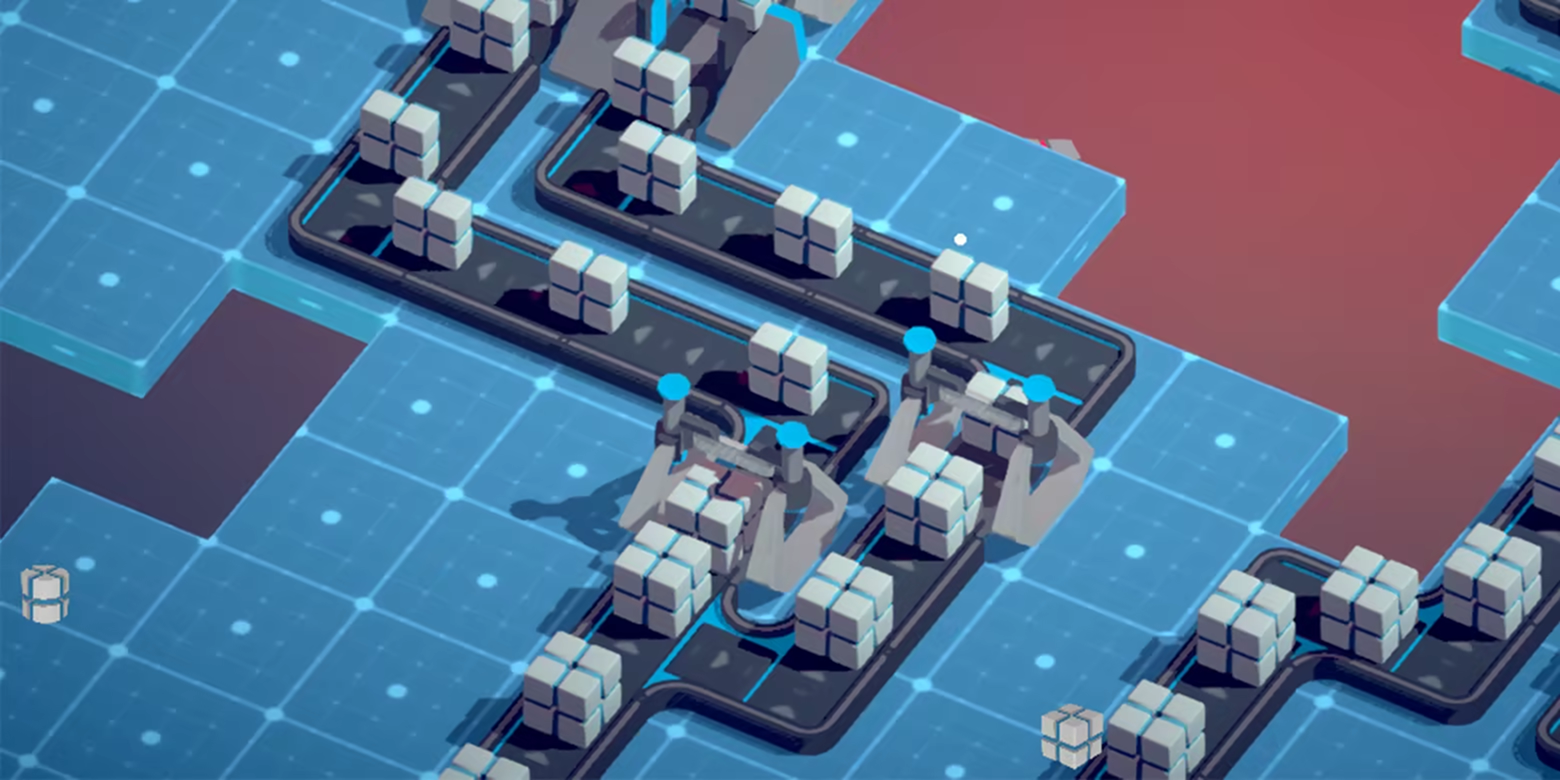
Start with basic forms — Sphere, Cube, Pyramid, and Cylinder — and transform them through cutting, rotating, painting, and recombining into complex structures.
Progress through structured challenges to learn the systems — then take full control in sandbox mode, where optimization, efficiency, and scale become the real challenge.
The goal is simple, but the path to mastery lies in how well you can turn the simplest shapes into something extraordinary overcoming the imposed restrictions with the tools given.
If you encounter any issues, feel free to report them in the discussions or contact me directly — feedback is always appreciated!
Genres
Stats
All-time low is the lowest price we've recorded for this game since we started tracking it.
Languages: English
Reviews
Object Factory, developed and published by Kistler Studios, is a factory-building puzzle game that takes a stripped-down, almost abstract approach to automation. Rather than focusing on sprawling industrial complexes or resource-heavy logistics, it centers on transforming simple geometric shapes into more complex objects through carefully arranged systems. This narrower focus gives the game a distinct identity, emphasizing logic and spatial planning over scale or spectacle. The core gameplay revolves around manipulating basic forms—cubes, spheres, cylinders, and other simple shapes—using a variety of machines that cut, rotate, merge, and paint them. At first, the tasks feel straightforward, but the complexity increases as new requirements are introduced. Creating a finished object often involves multiple steps, each of which must be carefully planned and integrated into a functional production line. The challenge lies not just in achieving the final result, but in designing a system that works efficiently and consistently without breaking down. What makes the experience engaging is how much importance it places on layout and flow. Every conveyor belt, machine placement, and directional choice has an impact on how well the factory operates. Space becomes a resource in itself, and even small inefficiencies can create bottlenecks that disrupt the entire process. This turns the game into a continuous exercise in refinement, where players are encouraged to revisit and improve their designs rather than simply move on after completing an objective. The progression system supports this approach by gradually introducing new tools and mechanics. Early levels serve as guided challenges that teach the fundamentals, while later stages and sandbox modes open up more freedom for experimentation. As the number of available machines grows, so does the potential for more intricate and interconnected systems. The game strikes a balance between structured learning and open-ended problem-solving, allowing players to apply their knowledge in increasingly creative ways. One of the standout aspects of Object Factory is the way complexity emerges naturally from simple rules. Individual mechanics are easy to understand, but combining them into a working system requires careful thought and experimentation. Mistakes often lead to unexpected results, forcing players to analyze and adjust their designs. This process can be both challenging and satisfying, especially when a previously inefficient setup is transformed into a smooth, optimized system. Visually, the game adopts a clean and minimalistic style that prioritizes clarity. Shapes and machines are easy to distinguish, which is essential given the potential complexity of larger factories. The lack of visual clutter helps players focus on the mechanics, though it also gives the game a somewhat sterile feel. There is little emphasis on atmosphere or thematic elements, reinforcing the idea that the experience is driven entirely by its systems. At the same time, this focus on mechanics can be a double-edged sword. Without narrative or thematic progression, the game relies entirely on its puzzle design to maintain interest. For players who enjoy problem-solving and optimization, this works well, but others may find the experience lacking in variety or emotional engagement. As factories grow more complex, managing them can also become overwhelming, particularly when multiple processes are running simultaneously. The pacing reflects the game’s emphasis on iteration. Progress is often slow, requiring players to test, adjust, and refine their designs multiple times before achieving an optimal solution. While this can be rewarding, it also demands patience, as there are few shortcuts to success. The satisfaction comes from understanding and improving systems rather than from immediate rewards or dramatic milestones. In the end, Object Factory is a focused and thoughtfully designed puzzle game that excels in its niche. It offers a deep and engaging experience for players who enjoy building and optimizing systems, even if it doesn’t provide much beyond that core concept. Its minimalist presentation and deliberate pacing may limit its appeal, but for those who appreciate its approach, it delivers a rewarding and intellectually satisfying challenge. Rating: 7/10
Horrible controls. In the beginning, you have to place and re-orient each piece of conveyor belt individually. Sometimes, for no apparent reason, you cannot place a piece or delete a piece. With upgrades, you can place a limited chain of belts. After the last one, you have to go back to the build menu and reselect the belts to place more. Right and left turns have to be placed and oriented individually. Last straw was the conveyor belts just randomly stopped running. So many other factory games do the same thing as this game, only better. Save your money.
[h1]🏭 Object Factory — clean systems, but not enough to chew on[/h1] [b]🎮 I run the curator group [url=https://store.steampowered.com/curator/45719096/]Build, Rule, Repeat[/url] — simulators and system-driven games where mechanics matter.[/b] [hr] [h2]⚙️ Simple factory, smooth start[/h2] Object Factory is a minimalistic automation game focused on building production chains and optimizing simple systems. It’s easy to get into, quick to understand, and immediately satisfying in short sessions. The core loop works: place machines → connect processes → watch things run. [hr] [h3]🧠 What works well:[/h3] [list] [*]Clean and readable visual style [*]Very accessible mechanics — easy to learn [*]Satisfying early automation loop [*]No unnecessary complexity or overload [*]Great for short, relaxing sessions [/list] [hr] [h3]⚠️ What holds it back:[/h3] [list] [*]Very limited amount of content [*]Progression ends too quickly [*]Lack of challenge — systems stay simple [*]No real late-game depth or optimization layer [*]Little incentive to experiment long-term [/list] [hr] [h2]🎮 Gameplay & Feel[/h2] The game feels good at the beginning — building your first chains and seeing everything work is genuinely enjoyable. However, that sense of growth fades quickly once you realize there isn’t much further to go. There’s no strong escalation in complexity, and optimization never becomes necessary — everything just works without pushing the player. [hr] [h2]🎯 Recommended for:[/h2] [list] [*]Players new to automation games [*]Those looking for a very casual factory experience [*]Short play sessions without commitment [*]Fans of minimalistic system-building [/list] [hr] [b]Object Factory is a pleasant and polished small-scale automation game. It delivers a clean and satisfying start, but runs out of depth and challenge too quickly. Worth playing for a few relaxed sessions — just don’t expect a long-term factory sandbox.[/b]
Fun factory, yeah same as this type a bunch, as it was $2.96 so ok, but is has some buggy is what would say some, but the game dose work.
有成就 没中文 物件工厂 《物件工厂》是一款空间布局类工厂解谜游戏,核心是把简单几何体加工成复杂 3D 结构,依靠物流流向、空间布局与专业生产区实现高效生产。 在 Steam Deck 或手柄上游玩体验最佳。 设计高效生产线,通过中央传送带主干输送资源,精准摆放机械、模块与生产区域,解决空间规划难题。 游戏从引导式关卡起步,很快开放为无限优化沙盒模式,让你不断优化布局、提升产能,打造效率越来越高的工厂系统。 ✨ 独特之处 不同于传统工厂建造游戏,工厂模式专注于空间解谜与分区优化。 你不只是摆放机器,而是设计可扩展系统 —— 摆放位置、线路规划、物流流向直接决定长期效率。 专属区域可让对应机械获得最高 **+275%** 的运行速度加成。 街机模式下则可以更自由地建造,打造你梦想中的几何造型工厂。 工厂的核心是主传送带区域(绿色)—— 连接整条生产线的高运力主干。 在其周围搭建专业生产区,强化产能,形成高效的局部生产枢纽。 紧凑布局追求简洁,或扩展专属区域以实现极致效率与速度。 🚀 游戏特色 空间化工厂建造 设计生产布局,空间、物流与结构和逻辑同样重要。 专业工厂分区(核心玩法) 围绕强力区域建造,提升产能并规划布局策略。 可搭建切割、拼接、涂色、旋转专区,打造高效生产带,对应机械速度加成最高 **+275%**。 主传送带系统 所有物资经由中央高速主干输送,管控输入输出,让专区产能回流系统,避免拥堵。 自动化模块与系统 使用分类器、合并器、回流回路等模块,控制物流流向,实现复杂线路自动化。 无限优化玩法 改良、扩建、完善工厂,提升吞吐量、消除瓶颈,设计可扩展系统。 从引导关卡到自由沙盒 通过指定目标学习玩法,再在开放沙盒中追求效率与创意。 随机生成关卡 每局都有全新布局与挑战。 成长与解锁 随工厂发展解锁新机械、模块与生产功能。 几何体加工 切割、组合、旋转、涂色,完成越来越复杂的造型目标。 🧠 核心体验 这是一款围绕物流流向与结构布局的游戏。 围绕主传送带建造,打造强力的分区生产枢纽,设计既能精密运作又能应对流量溢出的系统。 精通之道在于持续优化:改进布局、提升吞吐量、不断打磨工厂。 从球体、立方体、棱锥、圆柱等基础形状开始,经切割、旋转、涂色、重组,变为复杂结构。 在引导关卡中熟悉系统,再进入沙盒模式自由发挥 —— 优化、效率、规模才是真正挑战。 目标简单,但精通之路在于:如何利用现有工具突破限制,把最简单的形状打造为非凡作品。 🔧 备注 如遇到任何问题,欢迎在社区讨论区反馈或直接联系开发者,非常感谢您的意见!
Game description says that it is best experienced on Steamdeck or gamepad, but my controller is barely functioning in this game. I can basically navigate the main menu, and pan around the map once in the game. However, I cannot navigate the radial menu without a mouse, and therefore basically can't do anything on controller. Definitely willing to try the game again, as it looks interesting... but in this state I would classify controller support as non-functional. I did try the game with Steam input turned on/off. I also tried changing the in-game setting for gamepad support on/off. However, none of these things seemed to change anything. Also the in-game tutorial only gives instructions for keyboard and mouse binds. There is no way that I could see to check/change in game keybinds, so you are stuck with the defaults.
Ich habe das Spiel kostenlos vom Entwickler erhalten, was aber in keiner Weise meine Meinung beeinflusst. Das Spiel macht auf mich einen unfertigen Eindruck. Es will zwar minimalitisch sein, aber das ist dann doch etwas sehr wenig. Die Grafik ist für dieses Spielprinzip voll in Ordnung. Aber das es nahezu keinen Sound gibt, abgesehen von einer nervigen Hintergrundmusik die man aber zum Glück abschalten kann, finde ich sehr unschön. Noch nichteinmal wenn man eine neue Freischaltung erreicht, bekommt man einen akustischen Hinweis. Ausserdem fehlen mir so einige Erklärungen. Am Anfang bekommt man die (einfache) Steuerung erklärt - ok. Aber während des Spielens bekommt man weitere Bauteile freigeschaltet. Diese muss man aber dann erstmal in dem sehr umständlichen Baumenü suchen. Und auch dann weiss man nicht sofort, was das Bauteil wirklich macht. Das findet man dann nur durch probieren heraus. An Spielmodi gibt es Arcade (in verschiedenen Schwierigkeitsstufen) und seit neustem auch Factory. Jetzt hätte ich erwartet, dass man in Factory eine ebensolche (also eine Fabrik) aufbauen soll. Aber bis auf einige wenige Änderungen ist dieser Spielmodus identisch mit Arcade. Ok, es gibt einige wenige neue Möglichkeiten durch verschieden eingefärbte Bodenplatten, und der Boden hat hier und da ein paar Lücken die es dann zu umbauen gilt. Aber die Aufgaben sind komplett gleich und auch der Techtree, in dem neue technische Verbesserungen (z.B.schnellere Förderbänder) freigeschaltet werden wenn man Anzahl X einer bestimmten Form durch das Portal geschickt hat, ist komplett gleich. Fazit: Das Spielprinzip ist gut, aber an der Umsetzung muss noch sehr viel getan werden um ein vernünftiges Spielerlebniss zu bekommen.
Object Factory ist ein solides und entspanntes Puzzlespiel, das vor allem durch sein simples, aber effektives Spielprinzip überzeugt. Die Aufgabe ist klar: Formen abbauen, bearbeiten, zerschneiden, einfärben und am Ende möglichst effizient weiterverarbeiten. Klingt simpel – wird aber schnell knifflig. Die Optik ist eher schlicht gehalten, erfüllt aber absolut ihren Zweck und lenkt nicht vom eigentlichen Gameplay ab. Besonders motivierend ist der Tech-Tree, über den man nach und nach neue Maschinen, Förderbänder und Möglichkeiten freischaltet. Dadurch bleibt das Spiel abwechslungsreich und belohnt Fortschritt spürbar. Ein cooles Feature sind die verschiedenen Zonen, wie z. B. die Cutting Zone, in der bestimmte Prozesse schneller ablaufen oder Förderbänder beschleunigt werden. Das bringt eine zusätzliche strategische Ebene ins Spiel und lädt zum Optimieren ein. Die Steuerung mit Tastatur ist anfangs etwas gewöhnungsbedürftig und fühlt sich stellenweise etwas frickelig an, aber man kommt mit der Zeit gut rein. Alternativ kann man auch mit Controller spielen, was ich allerdings noch nicht getestet habe. Die Musik ist okay – teilweise passend und entspannend, teilweise aber auch etwas eintönig, sodass man sie nach längerer Spielzeit eventuell leiser drehen möchte. Fazit: Ein nettes Puzzle-Spiel für zwischendurch, das den Kopf fordert, ohne zu überfordern. Perfekt, um die grauen Zellen mal wieder ein wenig anzukurbeln. Ich hatte auf jeden Fall meinen Spaß damit!
I can't recommend this game right now. The UI feels finnicky and there are bugs. Keyboard shortcuts or something for what to build would be a great help. Instead, you have to use a radial menu to select everything and the options aren't always the most intuitive - splitter and merger belts for example are under machines, not belts. Plus, it would be nice if you could swap their orientation (or if you can, if that were clear). The game towards the later stages gets a bit too slow imo. Yes, if it's too fast it's not fun, but it shows you upcoming stages so you can prepare for it. That's a great idea, but it doesn't retroactively count the shapes you already sent, so it's not as rewarding as I'd like to work ahead. The most frustrating piece for me was probably the belts. If you place a straight belt near two others at a turn, it will *sometimes* auto-turn for you. It was too inconsistent to use well, so then I'd have to back into the same radial menu, delete the belt, go to the radial menu, and find the correct turn, and place it. It's too cumbersome as it is right now to be satisfying. Ok, so maybe it was designed more for controller than keyboard and mouse - I should give that a try. Literally unplayable - if I try to build, it just points in whatever direction my mouse was last in. There is a bug report button on the main menu. It doesn't do anything. I don't think it's even a button. It seems like a simple factory game that functions fine but interacts with annoyingly. I like the idea of areas that have buffs to certain types of work, but that's the only real unique thing I see here. What I'd like to see: bugs fixed, actual controller support, the ability to work ahead on the next stage, and then a little more depth wouldn't hurt.
Related
Related
Trends
Concurrent players on Steam, sampled daily since tracking started.
Related
| RunningDead | $3.1K | 103 | 83% | $1.99 |
| Red Riding Hood - Star Crossed Lovers | $3.1K | 102 | 65% | $1.99 |
| Water Boiling Simulator | $3.1K | 76 | 95% | $1.50 |
| Bound by Desire 🍆👩 | $3.1K | 100 | 42% | $0.99 |
| Amazing Fix | $3.1K | 52 | 94% | $4.99 |
| Death Tractor | $3.1K | 91 | 69% | $0.99 |
Related
| Factorio | $140.7M | 232.3K | 98% | $35.00 |
| House Flipper | $65.8M | 110.8K | 94% | $24.99 |
| Prison Architect | $63.1M | 73.6K | 89% | $29.99 |
| The Scroll of Taiwu : Beyond The Dome | $62.3M | 69.6K | 66% | $29.99 |
| Tabletop Simulator | $42.2M | 73.8K | 96% | $19.99 |
| Transport Fever 2 | $32.5M | 32.1K | 90% | $7.99 |