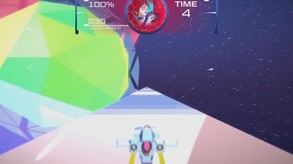
Nirvana Pilot Yume is the cure for your ‘80s sci-fi anime nostalgia: a retro-synthwave world with space races inspired by the DOS classic SkyRoads and a steamy visual novel of romance and redemption. Raise the volume and turn on the neon lights!
Modeled estimate, not a reported figure. How we estimate →
Media

About


Stats
All-time low is the lowest price we've recorded for this game since we started tracking it.
Languages: English, Italian, Russian
Engagement
Hours played at review time, across 40 reviews with recorded playtime.
Reviews
Themes across 40 recent reviews and how positive each mention is. A keyword signal, not full sentiment analysis.
positive critical· bar length = how often the theme comes up
Reviews
Pros: Soundtrack is dope Cons: Everything else
Some interesting ideas and art, but not really fleshed out or polished. Also very quick and short. On the gameplay side, they ditch the gravity and fuel mechanics of the original Skyroads and lower the perspective. This makes it harder to gauge jumps and gaps, and is honestly a cheap way of introducing difficulty. It would be an interesting game if they improve at least one of the three areas of visual novel/plot/world, gameplay, and graphics. As is, it feels more like a demo that was built up a bit so it could be sold on Steam.
ради музыки игру можно переигрывать часами
Nirvana Pilot Yume, developed and published by Dev9k, is an eccentric and visually striking fusion of visual novel storytelling and retro-inspired racing that thrives on style as much as substance. It draws inspiration from 1980s and 1990s science fiction, channeling the aesthetics of old DOS racers like SkyRoads while wrapping everything in a neon-lit, synthwave atmosphere. The game is set in a far future where interplanetary conflicts and high-stakes politics are settled through the Great Ultrathought Race of the Universe, an intense competition that merges human consciousness with machine precision. Players assume the role of Mitur Aldaine, a fallen “Eye” — a psychic navigator who once guided pilots to glory but whose career was destroyed by tragedy. When a new pilot, the determined and spirited Yume, enters his life, Mitur is pulled back into the high-speed world he left behind, setting the stage for a story about redemption, connection, and the transcendental bond between human and machine. Structurally, Nirvana Pilot Yume alternates between two distinct modes: its narrative-driven visual novel sequences and its fast-paced arcade-style racing. The story portions focus on character development and choices that affect the relationship between Mitur and Yume, gradually revealing their pasts and emotional complexities. These scenes play out with vivid anime-inspired character portraits, bright futuristic backgrounds, and dialogue steeped in philosophical undertones about failure, ambition, and trust. Players are given occasional dialogue options that influence how characters respond to one another, with certain choices unlocking different narrative paths and multiple possible endings. The relationship between the two leads sits at the heart of the story, exploring themes of trauma, mentorship, and rekindled purpose, often with a romantic or suggestive undertone. The writing leans into melodrama and science fiction flair, giving the story an operatic tone that fits well with its flashy presentation. When the narrative segments give way to the racing sequences, Nirvana Pilot Yume transforms into a completely different experience. The races, clearly inspired by the likes of SkyRoads and F-Zero, take place on twisting, minimalistic tracks suspended in space. The player pilots a sleek spacecraft that must navigate a series of jumps, hazards, and narrow turns while maintaining perfect control at blistering speeds. The goal is not simply to finish first but to survive and maintain synchronization with the co-pilot — the titular Nirvana Sync that connects the pilot and the Eye. This mechanic is represented by a gauge that depletes as players crash or take damage, forcing them to maintain rhythm and precision to keep the bond intact. The gameplay is deceptively simple yet punishingly demanding, requiring memorization of track layouts and split-second reflexes to avoid obstacles. Each track feels like a meditative test of focus, where success depends as much on internal rhythm as on mechanical skill. One of the game’s most compelling elements is its audiovisual presentation. The developers clearly understand the appeal of retro-futurism and harness it with flair. The environments glow with purples, blues, and pinks, creating a dreamlike ambiance that captures the essence of classic cyberpunk and space opera aesthetics. The character artwork, though relatively static, is detailed and expressive, complemented by sharp lighting and neon reflections. However, it’s the soundtrack that truly defines the experience. Composed of pulsating synthwave and electronic tracks by Retröxx, the music propels both the races and the narrative forward with infectious energy. Every song perfectly suits the tone of its scene, from the adrenaline rush of a high-speed run to the quiet melancholy of introspection between Mitur and Yume. The soundtrack, arguably, carries much of the emotional and sensory weight of the game, giving it an identity that transcends its small-scale production. While its style is undeniable, Nirvana Pilot Yume’s gameplay execution can be inconsistent. The racing segments, while visually thrilling, sometimes suffer from imprecise controls and uneven difficulty spikes. The ships respond smoothly enough on open tracks but can feel slippery during sharp turns or uneven jumps, often leading to crashes that feel more like technical flaws than player errors. Some players may find the collision detection erratic, with a single mistimed movement sending the ship spiraling into failure without clear warning. The challenge is further compounded by minimal visual indicators for obstacles, making memorization essential to progress. The braking mechanic, though present, is nearly useless in tight spots, forcing players to rely on raw reflexes instead of deliberate control. These design quirks give the game a steeper learning curve than expected, but for players who enjoy punishing arcade-style challenges, the sense of mastery that comes with finally conquering a difficult track can be immensely satisfying. The visual novel side of Nirvana Pilot Yume, though conceptually strong, struggles at times with pacing and narrative depth. The story moves quickly, sometimes rushing emotional beats or introducing key moments of intimacy without enough buildup. While the chemistry between Mitur and Yume is engaging, the writing occasionally leans into cliché or overdramatization, which may not resonate with all players. Some side characters appear briefly but never develop beyond their surface roles, leaving parts of the world underexplored. Despite these shortcomings, there’s an undeniable sincerity to the storytelling. The dialogue conveys a sense of earnest emotion, and the themes of loss, connection, and self-redemption ring true, especially as Mitur confronts his past failures and learns to trust Yume as his new partner. The game’s branching structure and multiple endings give it replayability, allowing players to experience alternate conclusions that range from triumphant to bittersweet. Technically, Nirvana Pilot Yume runs smoothly on most systems, with short loading times and stable performance. However, minor bugs occasionally disrupt immersion — such as audio cutting out unexpectedly or graphical flickers during transitions. The minimal user interface suits the game’s aesthetic but can feel sparse in the visual novel portions, lacking conveniences like a dialogue history or quick-save function. The story mode can be completed in just a few hours, which might disappoint players expecting a lengthier experience, but its brevity works in its favor by keeping the pacing tight and avoiding unnecessary filler. There’s also an Arcade Mode that lets players replay races for high scores, providing additional value for those who enjoy the challenge. In the end, Nirvana Pilot Yume is a stylish, ambitious experiment that stands out precisely because it dares to mix genres that rarely intersect. It’s both a love letter to classic sci-fi racing games and a romantic visual novel drenched in neon atmosphere. It’s far from perfect — the racing mechanics can frustrate, and the storytelling occasionally falters — but it has heart, vision, and a distinct personality that makes it memorable. It’s a game best appreciated by those who enjoy artistic risks and retro aesthetics rather than conventional polish. For players willing to embrace its quirks, Nirvana Pilot Yume offers an immersive and emotionally charged journey that celebrates human connection through speed, sound, and starlight. It’s the kind of experience that lingers not because of mechanical mastery, but because of its passion, mood, and dreamlike energy. Rating: 7/10
游戏性是真蠢 除此之外是真不错
[h1]Jack of Two Trades; Master of Neither[/h1] [b]Summary:[/b] A weak visual novel and a weak racing game; too much of two things getting too little attention. [b]Review:[/b] I wasn't sure what I was getting into with this game. It looked like a racing game, but there was a visual novel component that I was not expecting at all. At a glance the screenshots of this game's racing portions reminded me of an Atari arcade classic, S.T.U.N. Runner, but unfortunately this falls well below that concept. Instead, what we get is an all too easy series of obstacle courses. A couple of tracks require some memorization, a couple even need the use of brakes, though you typically have no reason to slow down throughout the game, but otherwise there is nearly no challenge to any of these. Just get from start to finish mostly to progress the story. Which brings us to the other half of this game, the equally weak visual novel. I tried to get into the story but was confused and a bit bored by what I was reading. The writing itself was hackneyed and needed much more working on. Characters lacked depth, I felt no connection to any one of them, and the writing felt like it came from one train of thought. It's difficult to feel immersed when everything felt like it played out as planned, with no nuance or subtlety. This is one of the failings of the genre more than the writer in this case. Visual novels, as far as writing goes, are often low effort and badly paced. I've yet to play a single one that had me guessing, or even caring enough to try guessing. Again, to be fair, I'm generally not a fan of visual novels or stories told from the 2nd person perspective. Even then they can be better, and good examples exist. Nirvana Pilot Yume seemed to want to be a much more serious story than it had to be, and the author was out of his element here. I've played adventure games that worked better, but telling a story from the 2nd person is often extremely difficult to pull off, and even then it's rarely very good. Aesthetically, this game is kind of a mess. The look overall kind of resembles what old movies from the 70s and 80s might have imagined games of our time would look like, which is to say gaudy and nonsensical. The artwork isn't bad, but lacks polish. Some of the character designs seem like they were first drafts and not really considered carefully, which is a recurring theme I'll get into a little later. It's clear the developer was going for an aesthetic that dabbled in more of a retro 80s style, but the grasp on that was weak and typically reduced to a few visual effects and color schemes that felt unnecessary and distracting. The game’s graphics during the racing portions were also all over the map. I thought the ship design was nice, but everything else was so basic, bland, or lacking that I wondered how far into development this went before release. I get that most games these days are a work in progress rather than a completed project, which is a shame for the industry as a whole, but some things should be addressed before a product goes on sale. Palettes were bold and clashed more than complimented. Some of the color choices were just bad; ugly browns and tans mixed with red, and that eye-straining blue and white stripe flashing at the bottom of the screen like a strobe made my eyes hurt. The choice for a star field wasn't great, but having it show through objects on the track looked cheap. Sounds were okay, but forgettable. One of the quirks with this game was that the sound options kept resetting if I closed the game and booted it up again later. There were other technical issues as well, such as menu scrolling feeling slippery when using a controller, or that sometimes the controller would simply not work at all. I have better things to say about the developer than the game. Having only a couple of minor interactions and seeing their forum and Reddit posts, I can tell that they're really communicative with their customers and others to make this the best experience possible. The problem is the product itself needed more: more development, more time, more dedication to one aspect or another, or daresay, more willingness to cut the parts that don't work to allow the parts that do to flourish unhindered. I sincerely wish them well going forward, and I am hopeful that their future releases are given more polish before going live. There was some sexual content but it was very mild and brief, I would go as far as saying it was [PG] more than [R]. Nothing I experienced was explicit. This game was played with all settings maxed out using an Intel i7-8700k, 32gb DRAM, Samsung Evo SSD, 1080ti, running in windowed mode on a 3440x1440 monitor. There were pillars, which was a limitation of the game's engine, but I don't think it would have made any difference in either racing portions, and obviously not in the visual novel portions. [b]Pros:[/b] [list] [*]Friendly and active developer [*]Story progresses win or lose [*]A couple of races were modestly challenging [*]VN sections has a fast forward feature [*]It tries being more than a simple VN [/list] [b]Cons:[/b] [list] [*]Short experience [*]Story could be better [*]Characters need more development [*]Visual themes clash more than compliment [*]Writing needs refinement [*]Racing portions offered almost no challenge [*]Volume option bugs [*]Fiddly controller support [*]Overall lack polish [/list] [b]Verdict: 3/10[/b] In a market flooded with racing games and visual novels, a game that melded both could have been stellar. Instead of strengthening the experience, the division of development left both aspects of this game too weak to hold up on either end.
The controls and track design are absolute ass. Can't comment on the rest because I did not get too deep into the story (although it is filled with so much terrible technobabble I was already just skipping dialog and clicking random choices at some points), but the gameplay part is just so bad it's 100% not worth it.
Én csak ajánlani tudom. Szépvolt magyarok :D
首先必须夸一句 BGM真的挺好听的 其次 这个,港币要52 我不太懂 何以来此信心进行的定价
Relativně povedená kombinace vizuální novely a závodu ve stylu DOS hry Kosmonaut (popř. SkyRoads), stylizovaná do retro-synthwave. Hra je krátká, příběh vcelku zajímavý a celkem deset tratí nabídne tu a tam menší výzvu.
Related
Related
Trends
Concurrent players on Steam, sampled daily since tracking started.
Audience
Estimated from the language of this game's reviews — a proxy for where players are, not official Steam demographics.
Related
| 100 hidden birds | $10.6K | 719 | 94% | $0.59 |
| Disminal | $10.6K | 161 | 90% | $4.49 |
| Garbage Pail Kids: Mad Mike and the Quest for Stale Gum | $10.6K | 51 | 88% | $9.99 |
| Jetman Go | $10.6K | 175 | 80% | $1.99 |
| RETSNOM | $10.6K | 99 | 77% | $4.99 |
| My Name is Mayo 2 | $10.6K | 449 | 97% | $0.99 |