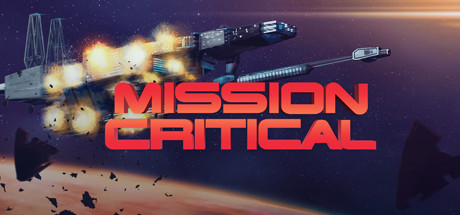
Mission Critical, developed by Legend Entertainment and published on Steam by Ziggurat, is a thoughtfully constructed science-fiction adventure that reflects an era when narrative ambition and experimental design were central to the genre. Originally released in the mid-1990s and now preserved for modern systems, the game blends exploratory puzzle solving, strategic decision-making, and hard-science world-building into a compact but memorable experience. Rather than chasing spectacle or action-heavy pacing, it commits to tension, atmosphere, and the slow unraveling of a high-stakes situation.
The premise places the player in a bleak future defined by decades of political division and warfare. You awaken as the sole surviving officer aboard the battlecruiser USS Lexington after a catastrophic ambush, surrounded by failing systems, damaged hull sections, and the looming threat of total mission failure. From the outset, the game frames survival as an intellectual challenge rather than a reflex-driven one. Every objective—whether restoring ship functions, navigating damaged areas, or responding to unfolding threats—is grounded in the narrative reality of being alone in hostile space, reinforcing immersion through context rather than exposition.
Gameplay unfolds through first-person exploration, drawing heavily from the adventure genre traditions of its time. Players move through meticulously designed ship interiors and external environments, interacting with consoles, machinery, and environmental details to solve puzzles that are rooted in logic and observation. Unlike more abstract puzzle adventures, Mission Critical often ties its challenges to plausible technological problems, such as rerouting power, managing life support, or interpreting sensor data. This grounding in believable systems strengthens the game’s identity as hard science fiction rather than fantasy in space.
What distinguishes Mission Critical from many contemporaries is its willingness to vary mechanics. Alongside traditional exploration and inventory-based problem solving, the game introduces strategic segments that require defensive planning and spatial awareness. These moments shift the player’s mindset, asking them to think not just as an explorer but as a commander responsible for protecting what remains of the ship. While these sequences are relatively simple by modern standards, they add urgency and prevent the experience from becoming mechanically monotonous.
Narrative delivery is one of the game’s strongest elements. Story progression is conveyed through a mix of environmental storytelling, terminal logs, conversations, and full-motion video sequences featuring live actors. These FMV segments, though unmistakably products of their era, lend the game a cinematic quality that enhances emotional stakes. Characters feel human and ideologically driven rather than purely functional, giving weight to the broader conflict and reinforcing the sense that the player’s actions matter beyond the immediate survival scenario.
Visually, the game reflects mid-90s design sensibilities, combining pre-rendered environments with early 3D elements and FMV. While modern players may find the visuals dated, they remain effective in establishing mood and clarity. The ship’s interiors feel coherent and purpose-built, and the restrained color palette reinforces the isolation and danger of deep space. Audio design complements this atmosphere, using subdued music and ambient effects to heighten tension without overwhelming the experience.
The Steam release, published by Ziggurat, ensures the game runs smoothly on modern systems, removing the technical barriers that often accompany classic titles. This preservation allows players to engage with the game as intended, without wrestling with compatibility issues. Interface conventions, however, remain rooted in their original era, and newcomers unfamiliar with classic adventure game logic may find certain puzzles opaque or pacing slower than expected.
Despite its relatively short length, Mission Critical leaves a lasting impression due to its cohesive design and narrative focus. It does not aim to overwhelm players with endless content or branching paths, but instead delivers a tightly controlled experience where each segment reinforces the central themes of isolation, responsibility, and survival under pressure. Its challenge lies not in mechanical difficulty, but in attention, patience, and thoughtful problem-solving.
Ultimately, Mission Critical stands as a strong example of classic science-fiction adventure design, one that values atmosphere and intellect over spectacle. While its age is evident in presentation and interface, its storytelling ambition and genre-blending structure remain compelling. For players interested in narrative-driven sci-fi games, the history of adventure design, or thoughtful, self-contained experiences, it offers a rewarding journey that has aged with dignity and purpose.
Rating: 6/10