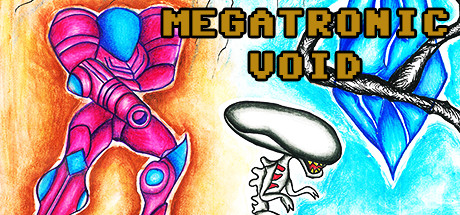
Megatronic Void, developed by Firestorm Entertainment and published by Conglomerate 5, is a retro-styled action platformer that fully commits to recreating the look and feel of early home computer games. From its visual presentation to its pacing and mechanics, it deliberately echoes the design philosophy of the 1980s, aiming to capture both the charm and the challenge of that era. While this commitment gives the game a distinct identity, it also exposes many of the limitations that come with such a rigid adherence to retro design.
The premise is rooted in classic science fiction. Set in a post-apocalyptic future where Earth has been rendered uninhabitable, players assume the role of a scientist tasked with exploring an alien world in search of resources and artifacts that could ensure humanity’s survival. The narrative serves primarily as a backdrop, offering context for the player’s actions without developing into a central element of the experience. There is little emphasis on storytelling beyond the initial setup, leaving the focus squarely on gameplay.
The gameplay itself follows a familiar structure of side-scrolling platforming combined with shooting mechanics. Players move through levels filled with enemies, hazards, and collectible items, gradually unlocking new areas as they progress. While this loop is functional, it rarely evolves in meaningful ways. The addition of features such as energy management and artifact collection introduces some variation, but these systems do not significantly change how the game is played. As a result, the experience can begin to feel repetitive, especially over longer sessions.
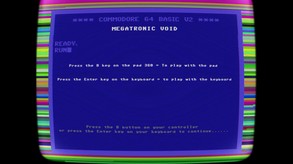
One of the most noticeable aspects of Megatronic Void is its visual style. The game intentionally mimics the appearance of old CRT displays, complete with scanlines and limited color palettes. This aesthetic is consistent and clearly designed to evoke nostalgia, but it also impacts clarity. In some cases, it becomes difficult to distinguish important elements on screen, which can interfere with gameplay. While fans of retro visuals may appreciate the authenticity, others may find it more distracting than immersive.
Controls and mechanics present another challenge. Movement often feels stiff, and the lack of responsiveness can make precise platforming difficult. Combat suffers from similar issues, with attacks lacking the fluidity needed to feel satisfying. These problems are particularly noticeable in sections that require careful timing, where the game’s difficulty can feel more like a result of mechanical limitations than intentional design. This creates moments of frustration that detract from the overall experience.
Level design does little to alleviate these concerns. Although there is some variation in environments and enemy placement, the structure of levels remains largely consistent. New areas rarely introduce fresh mechanics or ideas, leading to a sense of monotony as the game progresses. The lack of meaningful escalation in complexity means that later stages feel similar to earlier ones, reducing the sense of progression.
Despite these issues, the game does have a certain niche appeal. Its dedication to retro aesthetics and straightforward gameplay may resonate with players who enjoy minimalist experiences or who have a strong appreciation for early gaming history. There are moments where its simplicity aligns with its intended tone, offering brief periods of satisfaction when everything comes together.
However, these moments are not enough to overcome the broader shortcomings. The combination of repetitive gameplay, limited mechanical depth, and control issues prevents the game from fully realizing its concept. What could have been a focused homage instead feels like an experience that replicates the constraints of its inspirations without adapting them for a modern audience.
Ultimately, Megatronic Void is a game that prioritizes style over refinement. It succeeds in establishing a clear aesthetic and tone, but it struggles to deliver a consistently engaging experience. While it may appeal to a specific group of players who value its retro authenticity, it lacks the depth and polish needed to stand out more broadly.
Rating: 3/10