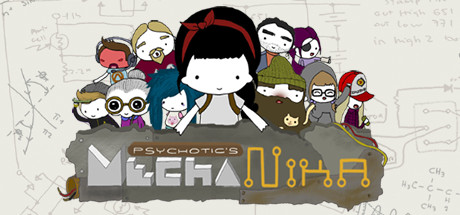
MechaNika is a strange and fascinating little adventure, a point-and-click game that combines the irreverent humor of indie animation with the melancholy of a lonely child trying to make sense of an absurd world. Developed by Mango Protocol and published in collaboration with WhisperGames, it tells the story of Nika, a seven-year-old genius who has had enough of what she considers a stupid, boring, and hypocritical society. Instead of conforming to the world around her, she decides to build a giant robot—MechaNika—to wipe out everything she finds meaningless and start over. The setup is outrageous, but the tone is surprisingly thoughtful. Beneath its crude jokes and cartoon chaos lies a game that uses humor and surrealism to reflect frustration, alienation, and the imagination of a child who doesn’t fit in.
The first thing that strikes you about MechaNika is its presentation. The hand-drawn art style looks deceptively simple, with clean lines, bold colors, and exaggerated character designs that resemble a twisted Saturday-morning cartoon. The bright palette contrasts sharply with the dark undertones of the story, creating a sense of unease that works perfectly for the world it portrays. Every environment, from Nika’s bedroom to the grimy streets she explores, is packed with odd details that reward curiosity. The game’s aesthetic has a mischievous charm—cute, yet unsettling—and it’s this visual contrast that gives MechaNika its distinctive personality. The soundtrack and sound effects further enhance the offbeat tone, using light, whimsical melodies to accompany moments that are often disturbingly bleak or absurd. It’s a game that invites you to laugh, but also to squirm a little.
Gameplay follows the familiar rhythm of classic point-and-click adventures. You guide Nika through various locations, talk to eccentric characters, collect items, and solve puzzles that allow you to progress toward building her massive robot. The puzzles are mostly straightforward, often revolving around item combinations or quirky logic, and while none are particularly complex, they fit the flow of the story well. The interface is simple and intuitive, and the pacing is brisk enough to keep players engaged throughout its short runtime. One of the game’s strengths is how seamlessly it blends humor and puzzle-solving; even the smallest interactions can yield bizarre or darkly funny outcomes. The narrative often breaks convention, tossing out jokes about society, pop culture, and human stupidity without ever taking itself too seriously. For a game about a little girl building a doomsday machine, it somehow manages to feel both cynical and oddly endearing.
What makes MechaNika memorable is not the complexity of its puzzles but the boldness of its voice. The writing is sharp, witty, and unafraid to explore uncomfortable topics through the lens of a child who doesn’t understand why the world works the way it does. Nika’s worldview is both naive and insightful—her complaints about hypocrisy and meaninglessness often sound eerily adult, yet her solutions are comically extreme. This duality gives the character a depth rarely seen in short indie adventures. The supporting cast adds to the game’s eccentricity: strange shopkeepers, unhelpful adults, and bizarre personalities populate Nika’s journey, each embodying the very absurdities she despises. The dialogue can be crude and irreverent, but that irreverence feels intentional, a way of highlighting how ridiculous and self-contradictory the world appears through Nika’s eyes. The game’s humor might not land with everyone—it’s often dark, deadpan, and deliberately provocative—but it’s undeniably unique.
While MechaNika’s creativity and attitude make it stand out, its limitations are hard to ignore. The entire experience can be completed in just a few hours, and once the story reaches its conclusion, there’s little reason to revisit it. The brevity isn’t necessarily a flaw—its compact length ensures the pacing remains tight—but it does leave you wishing for more time in this strange, chaotic world. The game also suffers from the occasional pacing lull, especially when backtracking between locations for item collection. Some players may find the humor or thematic contrast jarring, as the shift between childish whimsy and morbid satire can feel abrupt. Still, the imperfections are forgivable given the scope of the project and the clarity of its artistic vision. It’s clear that Mango Protocol prioritized personality and message over technical complexity, and in that respect, the game succeeds admirably.
Ultimately, MechaNika is a small but fiercely distinctive piece of interactive storytelling—a mix of black comedy, satire, and psychological exploration wrapped in the innocent trappings of a cartoon. It’s an experience that lingers not because of intricate puzzles or grand spectacle, but because of its tone and perspective. It invites players to laugh at the absurdity of existence, to question the superficiality of modern life, and to sympathize, however uneasily, with a little girl who wants to destroy everything that doesn’t make sense. It’s weird, short, and sometimes rough around the edges, but also clever, heartfelt, and unapologetically original. For players who enjoy narrative-driven indie adventures with a subversive edge, MechaNika is a delightful and thought-provoking journey into madness, imagination, and the dark humor that hides beneath childhood innocence.
Rating: 8/10