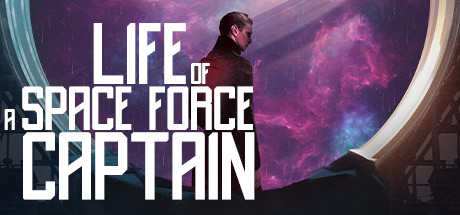
Live a full life in the future as a human, an alien, or even a robot as you rise through the ranks to become captain of your very own starship.
Modeled estimate, not a reported figure. How we estimate →
Media
About
Stats
All-time low is the lowest price we've recorded for this game since we started tracking it.
Languages: English
Engagement
Hours played at review time, across 40 reviews with recorded playtime.
Reviews
Themes across 40 recent reviews and how positive each mention is. A keyword signal, not full sentiment analysis.
positive critical· bar length = how often the theme comes up
Reviews
Good
I loved this game! It's a super thorough CYOA. So many macro-level decisions, such as your species and what you study, affect the game in really interesting ways, and there are so many paths I didn't expect at all. For example, choices that I assumed were "skip this choice" options actually lead to really interesting storylines! The secondary characters also play important roles and experience full character arcs depending on your decisions, which is really cool. They feel like full characters whose stories you're also telling! I like that each of them has an ending of their own, in addition to all the endings created from alternate storylines. I had a ton of fun in my first playthrough, and I replayed it a whole bunch almost immediately to explore some of the different paths.
this probably won't be for everyone, and I certainly wouldn't recommend to anyone new to text-based games. if steam offered a neutral recommend, that's what I'd be giving it. reasons it might not be for you: -it's less 'pew pew', more 'what alien should i take to the school dance'. -the game could have used a lore page somewhere in there - tons of information that the character would know but the player doesn't, leading you to just kinda shoot from the hip. -the weird in-game self-promotion of the creator's other game is genuinely off-putting. THAT BEING SAID: if you're like me and you a) logged hundreds of hours into the 2005 Hasbro masterpiece "Dream Life" and b) are a big fat sci fi nerd, it's a fun way to kill an afternoon.
Pros: 1. It's a rich, well-developed space opera setting. 2. Most of the characters are compelling. 3. The challenges are difficult enough to feel challenging, but not so hard as to be frustrating. 4. Like most Choice of Games games, you can customize your character's identity and choose your relationships. Cons: 1. The actual decisions made within the game are often not as interesting as they could be. 2. Despite "captain" being in the title, you're not actually promoted to captain until quite late in the story. You spend about the same amount of time as a kid as you do as a captain. 3. Characters can die very suddenly with very little recourse. Overall, I thought it was decent, but not great. I didn't regret playing it, but it may not be for everyone.
A very in-depth interactive space opera, and one that keeps me coming back for more, but there's room for improvement. The Good: It becomes clear very early that the setting was crafted by somebody who loved science fiction, and there are allusions to all sorts of beloved settings and franchises, from Star Trek to Star Wars to Mass Effect. Some thought has been put into how post-scarcity economics would work, while very carefully walking the middle road between libertarian hypercorporate space capitalism and fully automated luxury space communism; in other words, there are expository paragraphs here and there but author doesn't try to shoehorn in his entire political thesis. There are multiple paths to varying endings using a bunch of different stats and skills, so replayability is very high. The Bad: Mike Walters' "Lucidverse" games all have a common flaw or limitation; more emphasis is put on the numerical values of stats and stat checks than the actual narrative choices in the game. This game is no exception, and is arguably a worse example because of all of those different stats and skills and factions and relationship values. What makes this really stand out is that the introductory chapter, which features the protagonist learning to interact with other children outside of VR, features a sort of "hidden" social mechanic: Winning the Social games requires the ability to assess the strengths and weaknesses of partners and opponents, then choose the options that make the most of that knowledge. This system could easily be the core mechanic of an entire game all by itself, with or without numerical value checks for stats and skills, and once I realized what was going on I immediately thought "Aha, this is where the whole Space Captain thing comes from, learning how to work with different people." But it only ever shows up a few other times in the game, and some of those instances are path / branch specific. It's both a let down and a tragically squandered opportunity. Likewise, the narrative arc of the entire story favors some stats and skills over others, above and beyond normal RPG core stat / dump stat metagaming. Charm and Intelligence are the biggest offenders, and while that does thematically fit the whole "Star Fleet With The Serial Numbers Filed Off" motif it does put other character builds on the back foot. The same metagaming element also shows up in the "Academy" chapter; rather than relying on stat or skill checks as the chapter goes on to prove competence in different fields (or sacrifice studying one class to be sure of a good grade in another class, like Walters did in Life Of A Wizard), you basically choose two classes to excel in (which influences your later ship assignments) and one to suck at, before classes even start. There's also a branching choice between the student council and the sports team, with the only other option being to ♥♥♥♥ around in video games during spare time; there's no options to just focus on studying at the expense of everything else, which would at least make thematic sense for people who are are preparing to go into freaking SPACE. The Ugly: It may be inevitable due to the size of the game, and the sheer amount of text to proofread and variables to troubleshoot, but there are a number of areas where the text just breaks because the main text of the scene wasn't completely compatible with the variables corresponding to certain character choices. This doesn't wreck the game but it's jarring to read. This mostly happens with non he / she pronoun choices, since the scene text was clearly written with he or she pronouns in mind. It also happens when referring to race / species, though less often, and sometimes a psionic character will be told they got a message through their cybernetic implant rather than their portable computer tablet, despite psionics and cybernetics being mutually exclusive. The psi / cyber dichotomy also runs into some railroading; no matter if you choose one or the other or to abstain from both, that choice is made way before you're legally allowed to in setting and there's no option to seek out one or the other after you've waited the "right" way. It's unclear if this is an oversight or a bug or a thematic commentary about childhood choices shaping adult experiences. The process for upgrading skills, stats, psionics, cybernetics, or pets are somewhat inconsistent - most of the opportunities rely on a faction relationship check to learn from another alien species, and the rest basically fill in "dead air" in the narrative and gloss over time spans when not a lot happens. This would make perfect sense for an interactive fiction game under almost any other circumstances, but Life of a Space Force Captain is a game that relies on rigorous mechanics and value checks, so this is one area where a formulaic option that gets almost predictable would actually make sense. (Possibly as a formal debrief after each mission or something like that.) All in all, definitely a rough polished gem. Highly recommended to anyone who wants to save the galaxy, destroy it, make a security robot blow itself up, have a one night stand with a Grey, or challenge Commander Shepard for the title of Galaxy's Worst Dancer.
This is well written and quite imaginative, however every other page is a skill check which you'll likely fail and be penalised. The relentless pace of skill checks rarely gives you enough chances to increase skills, so the stress from that detracts from the enjoyment of the story. I wish I could give a neutral review, but that being said, I do think it's a better offering than the last few Choice games I've read.
One of the best COG/HG Life Sim games ever
Phenomenal, but the ending has a disappointing lack of content. Would have appreciated at least a "where are they now" section or more info on the character's child/spouse.
The writing its abysmal
I had a bit of a rough start, being put into the game's world without some sort of lorebook to help orient me to it. Thus a bit like a child one has to learn about the world as one experiences it, which is why the game starting with the character's youth helped me orient myself to the setting. Being a fan of Star Trek the writing style wasn't off putting though much like growing up one can't expect to endure situations we wish to. Some times the social situation seemed blunt in tone- bruted in- forced but I realize such is because they where uncomfortable for me. It was only after getting the game that I realized I would have benefited from having played other Lucidverse installments. I think that lacking some context about the world (the previously mentioned lack of a lorebook) wouldn't have been as troubling if I was more familiar with the setting. Having mentioned Star Trek, if players are expecting something like it- you kind of get that but you get something more like Mass Effect. Since the game didn't have a lore book I'll tell you a bit that I think will help your start; >The six playable species. The culture of them isn't vital to creating one's character as your character wasn't born into their native culture. You could how ever decide to embrace aspects of it as your character learns about their heritage. It leaves things open for you to be as unique as you wish. >With that said, the society your character is brought into- is primarily a Solarian civilization that's struggling with integrating members of other species. There will be tension that you'll have to navigate (for Trekies think 'Terra Prime Movement is Active' and 'it's United Earth- not the Federation' and you'll have an idea of what's going on in the setting). >Due to this, some notes I can provide for those wishing to have some inclination of the life their character may lead; Aurellians (empathic inclination, native society is nudist monarchy, deals with unwanted attention or the manipulative power of popularity), Linnerian (unwelcomed migrants in character's society, hivemind only effects those close to Queens with a number of individuals having left the mind, native culture is peaceful industrialist), Orrok (no homeland of their own, deals with a desire for a nation of their own). The others deal with things that I think are common troupes of the genre making them easier to navigate for players new to the Lucidverse setting.
Related
Related
Trends
Modeled estimate over time, reconstructed from Steam's monthly review histogram.
Momentum
Pace estimated from the game's recent review growth (our daily snapshots) at its own sales-per-review ratio — a momentum signal, not booked sales.
Audience
Estimated from the language of this game's reviews — a proxy for where players are, not official Steam demographics.
Related
| Lost Cartridge - Cold Read | $9.1K | 84 | 94% | $6.99 |
| The Backrooms: Found Footage | $9.1K | 63 | 71% | $6.99 |
| MOMO.EXE 2 | $9.1K | 151 | 85% | $2.99 |
| Fables from the Den | $9.1K | 62 | 84% | $6.99 |
| Rock Boshers DX: Directors Cut | $9.1K | 55 | 89% | $6.99 |
| Loser Reborn | $9.1K | 74 | 86% | $5.99 |