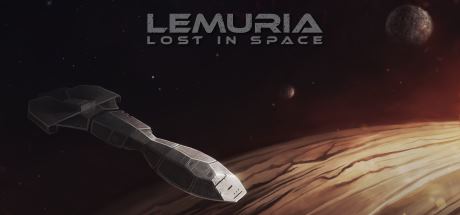
Lemuria: Lost in Space, developed and published by EJRGames, is an indie sci-fi adventure that attempts to blend exploration, survival mechanics, and puzzle-solving within the haunting corridors of a derelict starship. It opens with a familiar but intriguing premise: the long-lost vessel Lemuria 7 mysteriously reappears after decades of silence, drifting back into known space. You take control of Abrix, a humanoid robot dispatched to investigate the ship, recover vital data, and uncover the fate of its vanished crew. What follows is a solitary expedition through silent decks and malfunctioning systems, where the line between machine and man is blurred, and survival depends as much on logic and resource management as it does on curiosity. From the outset, Lemuria presents itself as a hybrid—part survival game, part narrative-driven mystery, and part mechanical simulation—and while it never perfects any one of these elements, its ambition makes it a fascinating experiment.
The heart of Lemuria lies in its atmosphere of desolation. The ship feels ancient and wounded, a floating tomb filled with flickering lights, dead terminals, and echoes of lost human activity. The game’s pacing is deliberate, encouraging players to move carefully through each compartment, scanning terminals, scavenging resources, and piecing together fragments of the crew’s story through scattered logs and malfunctioning AI systems. Exploration is not just about moving forward; it’s about survival. As Abrix, you must constantly monitor your core systems—energy, coolant, and radiation resistance. These are not simple abstractions but active constraints that shape every decision. Stray too far without recharging, and your power drains rapidly. Ignore the growing heat or the rising radiation levels, and your systems begin to deteriorate. This balance between curiosity and caution defines the experience. Every open door and unlit corridor represents both discovery and danger, reinforcing the game’s sense of isolation and vulnerability.
Puzzles form the intellectual backbone of Lemuria. Much of your progress depends on solving problems that range from code-breaking and logic riddles to mechanical switch puzzles and hacking mini-games. The hacking sequences, in particular, attempt to add tension and variety to the otherwise slow pacing, requiring the player to react quickly or think strategically under time pressure. When these puzzles work, they evoke the thrill of deciphering forgotten technology in a dead world. However, their execution is inconsistent. Some are cleverly designed and satisfying, while others rely too heavily on trial and error, with unclear feedback or uneven difficulty. This inconsistency occasionally disrupts the flow, forcing players to repeat actions or backtrack unnecessarily. Yet even in these moments, the puzzles serve their thematic purpose—reminding you that you are an intruder piecing together a broken system, not a hero blazing through clear solutions.
The game also incorporates light role-playing elements, allowing Abrix to level up skills that enhance hacking, combat, and energy management. This progression system gives a hint of customization and strategy, but in practice, it is underdeveloped. Most skills have marginal impact, and the game rarely demands long-term planning. The survival systems overshadow the RPG progression, which feels more like a checklist of statistical tweaks than meaningful development. Combat, too, is an uneven component. Occasionally, you encounter hostile drones or automated defenses, but these moments are more interruptions than highlights. The gunplay is simplistic, the enemies repetitive, and the encounters lack tension. In many ways, Lemuria is at its weakest when it tries to be an action game. Its strengths lie in exploration, quiet tension, and problem-solving—not in firefights or mechanical duels.
Narratively, Lemuria: Lost in Space leans heavily on the atmosphere of mystery rather than deep character writing. The story unfolds through fragmented logs, computer entries, and brief voiceovers that hint at the fate of the ship’s crew and the experiments that led to its downfall. It is a familiar sci-fi setup—scientific hubris, lost humanity, and the cold logic of machines—but it is delivered with sincerity. Unfortunately, the execution doesn’t always live up to the concept. The dialogue and writing often suffer from awkward phrasing and grammatical errors, likely due to translation issues, which can dull the emotional impact of the narrative. The voice acting, while earnest, is inconsistent in tone and quality, sometimes breaking immersion during key scenes. Still, the overall mystery remains compelling enough to carry the experience. The sense of discovery—of unearthing what went wrong on the Lemuria—pushes you forward even when the storytelling falters.
Visually, Lemuria is modest but effective within its limitations. Built on Unity, its environments rely on lighting and atmosphere rather than graphical fidelity. The corridors of the ship are narrow, metallic, and cold, but the flickering consoles and dynamic shadows lend a genuine sense of unease. The design captures the claustrophobia of being trapped in a machine larger than yourself. Textures are rough in places, and animations can feel stiff, yet the game manages to establish a strong sense of place. The color palette—dominated by silvers, blues, and muted greens—reinforces the sterile, decaying technology motif. The sound design contributes significantly to the mood, with distant clanks, mechanical hums, and the faint pulse of energy creating an ambient tension. The soundtrack itself is sparse, composed of ambient synth tones that fade in and out like the heartbeat of the ship. It never overwhelms the experience but helps maintain a consistent undercurrent of unease.
The gameplay structure is largely linear, guiding you through a sequence of rooms, terminals, and objectives. While the map design suggests a large ship with multiple decks and pathways, the actual exploration is tightly controlled. You are rarely lost, though sometimes you may wish for more freedom to roam or uncover optional mysteries. The progression is steady but predictable—solve a puzzle, unlock a new section, repair a system, and repeat. Despite this formulaic structure, the pacing keeps the experience manageable, with most players finishing within four or five hours. It’s not a long game, but its length suits its scope. The ending provides closure to the central mystery but leaves enough ambiguity to invite reflection, consistent with its tone of quiet melancholy rather than grand revelation.
Lemuria: Lost in Space is a game that wears its ambition proudly even as it struggles with its own limitations. It aims to merge genres that rarely coexist smoothly—survival, adventure, and puzzle-solving—into a cohesive sci-fi experience. At its best, it evokes the curiosity of classic exploration titles like System Shock or Dead Space stripped of horror, focusing instead on solitude and intellect. At its worst, it feels like an unfinished experiment, weighed down by uneven design and technical roughness. Yet there is something undeniably appealing about its sincerity. It does not pander or chase spectacle; it invites the player to slow down, think, and absorb the atmosphere of a forgotten ship lost in time. For those who value mood and mystery over polish, Lemuria offers a haunting little journey—imperfect, but filled with the quiet wonder of discovery in the cold vacuum of space.
Rating: 6/10