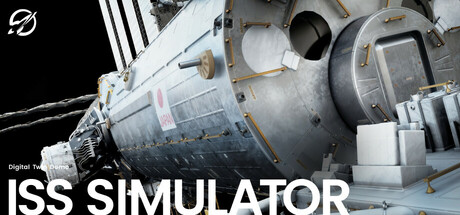
ISS Simulator is a space simulation experience built almost entirely around realism, immersion, and scientific authenticity. Rather than presenting space exploration as a cinematic action adventure filled with explosions and dramatic storytelling, the game focuses on recreating everyday life aboard the International Space Station with remarkable attention to detail. Developed with guidance connected to real aerospace research, the simulator prioritizes physical accuracy and environmental authenticity, creating an experience that feels more like stepping into a functioning orbital laboratory than playing a traditional game. For players fascinated by space travel and astronaut life, the result is surprisingly immersive and educational.
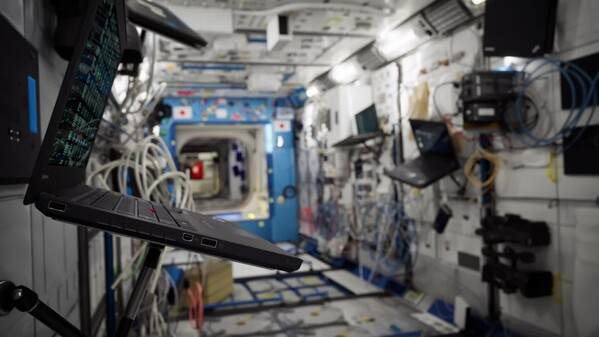
The strongest aspect of ISS Simulator is its commitment to accurately recreating the International Space Station itself. The interior of the station is packed with scientific equipment, control panels, cables, storage compartments, and cramped modular environments modeled after the real ISS. Every section feels carefully designed to reflect the practical and technical nature of life in orbit. The station does not resemble a clean science-fiction fantasy but a realistic working environment built for survival and research. This attention to detail gives the simulation a level of authenticity that immediately stands out.
Zero-gravity movement becomes the central gameplay mechanic and one of the game’s most impressive achievements. Instead of walking normally through corridors, players must push themselves carefully through the station using realistic inertia and momentum systems. Movement requires patience and control because every action affects positioning within the environment. Floating too quickly or pushing in the wrong direction can easily send players drifting into walls or equipment. At first, the controls may feel awkward and unintuitive, but over time mastering movement in zero gravity becomes deeply satisfying because of how believable the physics feel.
The physics simulation deserves significant praise because it fully commits to realism rather than simplifying movement for accessibility. Momentum behaves naturally, forcing players to think carefully about orientation and navigation at all times. The absence of gravity changes the way players interact with even the simplest tasks, making exploration feel genuinely different from traditional first-person games. Learning how to stabilize movement and navigate efficiently through narrow station corridors creates a unique kind of progression rarely seen in other space-themed experiences.
Visually, ISS Simulator succeeds through environmental realism rather than cinematic spectacle. The station interiors feel technical, cramped, and believable, filled with machinery and scientific tools that reinforce the sense of authenticity. Lighting inside the station creates a cold and functional atmosphere that matches the realism of the setting. Some of the most memorable moments occur while simply looking through station windows and watching Earth rotate below. Those quiet scenes successfully capture both the beauty and isolation associated with life in orbit.
The atmosphere throughout the game is one of solitude and precision. Space feels dangerous not because of enemies or disasters, but because of how fragile and isolated everything appears. The station itself becomes both a home and a survival system where every object and piece of equipment serves an important purpose. The slower pacing gives players time to absorb the reality of existing far above Earth in a confined mechanical structure surrounded by endless emptiness.
The sound design also contributes heavily to immersion. Mechanical hums, ventilation systems, electronic noises, and subtle ambient sounds create the feeling of inhabiting a real orbital habitat. The game avoids exaggerated sound effects or dramatic music during most sequences, allowing the station itself to become the focus. This restrained audio design works remarkably well because it reinforces the realism and meditative tone of the experience.
Unlike many modern space games, ISS Simulator is not focused on combat, survival horror, or scripted action. Instead, the experience revolves around observation, movement, and interacting with the environment itself. Players can explore modules, experiment with realistic movement mechanics, and learn about life aboard the station through direct interaction. This slower and more contemplative structure gives the game a distinct identity compared to more entertainment-focused space simulations.
The educational value is another major strength. The game provides genuine insight into the physical challenges of living in orbit and the complexity of maintaining a functioning space station. Players gradually develop an appreciation for the technical sophistication and discipline required for real astronaut missions. In many ways, the simulator feels closer to an interactive educational exhibit or training experience than a traditional commercial game.
However, the heavy emphasis on realism can also limit the game’s appeal. Players expecting a strong narrative, structured objectives, or action-oriented gameplay may find the experience lacking in variety over longer sessions. The simulation is primarily driven by immersion rather than traditional progression systems, which means the gameplay can occasionally feel repetitive for players seeking more dynamic content.
The realistic movement system also creates a steep learning curve during the opening hours. Navigating efficiently in zero gravity takes time and patience, and some players may initially find the controls frustrating or disorienting. While this awkwardness contributes directly to the authenticity of the simulation, it may discourage players unfamiliar with slower simulation-focused experiences.
Technical performance may also vary depending on hardware. The detailed station environments and realistic physics systems can place noticeable demands on performance, especially at higher graphical settings. While the visuals themselves focus more on realism than flashy effects, the complexity of the environment still requires solid optimization.
Despite these limitations, ISS Simulator succeeds remarkably well at delivering a believable and immersive recreation of life aboard the International Space Station. The game’s dedication to authenticity gives it a unique identity that separates it from most modern space-themed titles. Rather than using space merely as a backdrop for action, the simulator focuses entirely on the experience of existing in orbit and adapting to the strange realities of zero gravity.
For players interested in realistic space exploration, astronaut simulation, and scientifically grounded experiences, ISS Simulator offers something genuinely special. Its slower pacing and simulation-heavy design may not appeal to everyone, but the realism, atmosphere, and educational value make it one of the more distinctive space experiences available.
Rating: 7/10