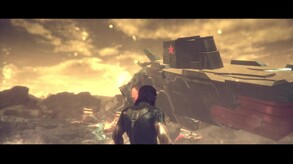
HUNDRED FIRES: The Rising of Red Star – Episode 3 serves as the final chapter in the stealth-action trilogy created by David Amado Fernández and published by Naili Studio. Built around infiltration mechanics, military tension, and narrative-driven progression, the game closes its story with a mission that feels more personal and emotionally charged than what came before. Instead of focusing entirely on explosive combat encounters, the experience leans heavily into calculated movement, observation, and tactical survival. The result is a game that values patience and planning above raw aggression.
At the center of the story is Valero Montenegro, returning for one final assignment that carries consequences far beyond military objectives. His mission revolves around rescuing his daughter while confronting the larger forces responsible for the events that have unfolded throughout the trilogy. The narrative attempts to combine espionage themes with personal stakes, creating a storyline where emotional motivation becomes just as important as completing objectives. The game treats Montenegro less as an unstoppable soldier and more as an experienced operative forced into increasingly dangerous circumstances.
Stealth remains the core foundation of gameplay. Players spend much of their time carefully studying enemy behavior, moving through dangerous areas with caution, and identifying opportunities to progress without drawing attention. Charging directly into hostile situations rarely feels like the intended approach. Instead, success comes from discipline and awareness. Enemy patrol patterns, environmental positioning, and timing become essential tools for survival. This design philosophy gives the game a slower pace compared to action-heavy shooters while rewarding thoughtful play.
The infiltration systems encourage players to treat every encounter carefully. Hostile environments are designed to create tension rather than spectacle. Advancing through enemy territory requires observation and patience, often forcing players to think several steps ahead before making decisions. Small mistakes can quickly create difficult situations, reinforcing the importance of maintaining control and adapting to changing circumstances. This commitment to tactical gameplay helps strengthen immersion.
Combat exists within the experience, but it operates more as a secondary option rather than the primary focus. Weapons and offensive capabilities are available when situations escalate, but direct confrontation frequently introduces greater risk. The balance between stealth and action works reasonably well because the game consistently reinforces its identity. Montenegro survives difficult situations through intelligence and preparation rather than overwhelming strength.
Environmental design supports the gameplay effectively. Military locations create an atmosphere of danger and uncertainty that complements the stealth mechanics. Moving through guarded areas generates pressure because threats often feel immediate and unavoidable. The environments are built with functionality in mind, offering opportunities for concealment while encouraging careful navigation. Exploration and tactical movement become naturally connected.
One noticeable strength comes from the game’s attempt to deliver cinematic storytelling despite its smaller production scale. Story moments are framed with enough ambition to create emotional investment in Montenegro’s journey. The mystery surrounding larger conflicts continues pushing the narrative forward while personal motivations give the mission greater emotional weight. Episode 3 feels designed as a conclusion rather than another isolated operation, providing payoff for players who followed the previous installments.
The audio presentation contributes positively to overall immersion. Sound cues carry practical importance during infiltration sequences, helping players recognize enemy activity and dangerous situations before problems escalate. Combined with environmental atmosphere, audio design strengthens tension throughout stealth sections. These details may appear minor individually, but together they help create a stronger sense of vulnerability.
Visually, the game prioritizes functionality over technical complexity. Character models and environments reflect the realities of a smaller independent production, but readability remains strong during gameplay. Enemy visibility, environmental layouts, and movement clarity support stealth systems effectively. While players expecting large-budget visual quality may notice limitations, the presentation remains focused on supporting gameplay rather than distracting from it.
The game is not without shortcomings. Some mechanics feel more straightforward than players accustomed to major stealth franchises may expect. Certain systems could benefit from additional depth, and overall production values occasionally reveal budget limitations. New players entering directly with Episode 3 may also struggle to fully connect with narrative developments without prior familiarity with earlier entries.
Even with these limitations, the game succeeds because it stays committed to its vision. Rather than attempting to imitate larger tactical franchises directly, HUNDRED FIRES builds an experience centered on tension, stealth fundamentals, and narrative closure. The slower pacing and emphasis on careful planning create an experience that feels distinct from action games built primarily around spectacle.
David Amado Fernández and Naili Studio deliver a conclusion that respects the series’ identity while providing meaningful closure for Montenegro’s story. The combination of tactical gameplay, personal storytelling, and military atmosphere creates an experience that rewards patience and careful decision-making. It may not redefine stealth design, but it understands what it wants to accomplish and remains focused throughout.
Players who appreciate infiltration-heavy gameplay, slower tactical progression, and narrative-driven stealth experiences will likely find value in this final chapter. HUNDRED FIRES: The Rising of Red Star – Episode 3 delivers a focused conclusion built around survival, strategy, and determination rather than overwhelming firepower.
Rating: 7/10