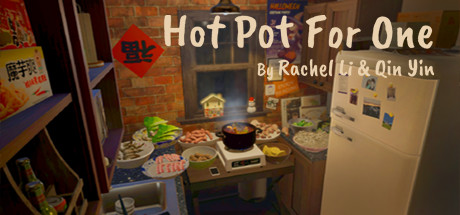
You are alone on a cold, Christmas night, stuck at home, in a foreign country. You get through it by cooking a hot dish intended for six people. A short experience about the bittersweet feeling of making hot pot alone.
Modeled estimate, not a reported figure. How we estimate →
Media

About
Genres
Stats
All-time low is the lowest price we've recorded for this game since we started tracking it.
Languages: English, Simplified Chinese
Engagement
Hours played at review time, across 40 reviews with recorded playtime.
Reviews
Themes across 40 recent reviews and how positive each mention is. A keyword signal, not full sentiment analysis.
positive critical· bar length = how often the theme comes up
Reviews
Hot Pot For One is a short narrative-driven interactive experience developed and published by Rachel Li and Qin Yin. Rather than focusing on complex gameplay mechanics or traditional objectives, the game presents a quiet and introspective moment centered around a simple act: preparing and eating hot pot alone. Through minimal interaction and atmospheric storytelling, the game explores themes of loneliness, memory, and comfort, offering a reflective experience that resonates particularly with players who understand the emotional weight of spending holidays away from loved ones. The story places players in the role of a student living abroad who plans to celebrate Christmas Eve with friends by preparing a hot pot meal. At the beginning of the evening, everything appears ready for a small gathering, with ingredients prepared and the cooking pot simmering on the table. However, as messages begin arriving on the protagonist’s phone, it becomes clear that each friend has canceled their plans for various reasons. What was meant to be a festive group dinner slowly turns into a quiet evening spent alone. Instead of abandoning the meal entirely, the protagonist decides to continue preparing the hot pot, turning the moment into a personal ritual rather than a disappointment. Gameplay takes place entirely within a small apartment kitchen presented from a first-person perspective. The player can interact with the hot pot and various ingredients placed nearby, such as slices of meat, vegetables, tofu, and mushrooms. These ingredients can be placed into the bubbling broth, cooked, and then eaten. The interaction system is intentionally simple, with no time limits, scores, or complex mechanics. The focus is instead placed on the small details of the cooking process and the quiet atmosphere surrounding it. While cooking and eating, players gradually unlock illustrated memories connected to the protagonist’s past experiences with hot pot. Each ingredient triggers a small recollection in the form of hand-drawn artwork, representing moments shared with friends, family members, or previous gatherings. These memories slowly build a picture of the protagonist’s life and the people who usually share these meals. The illustrations act as fragments of a larger emotional narrative, reminding players that the simple act of cooking can carry powerful associations with home and companionship. The storytelling in Hot Pot For One relies heavily on subtlety rather than direct explanation. Instead of lengthy dialogue or cutscenes, the game communicates its themes through environmental cues, text messages, and visual memories. This understated approach allows players to interpret the experience in their own way. Some may see the evening as a moment of sadness, while others may view it as an opportunity for quiet self-reflection and appreciation of simple comforts. The visual presentation reinforces the emotional tone of the experience. The apartment environment is small and intimate, filled with warm lighting that contrasts with the cold winter weather visible through the window. Snow falls quietly outside, creating a visual reminder of the holiday season while emphasizing the isolation of the protagonist inside the apartment. The glowing hot pot becomes the central focus of the room, symbolizing warmth and familiarity even in the absence of company. Sound design plays an important role in maintaining the atmosphere. The gentle bubbling of the broth, the soft clinking of utensils, and the faint ambient sounds of the apartment create a calm and realistic environment. The background music remains subtle and reflective, never overpowering the quiet mood of the scene. These small audio details help immerse players in the experience and reinforce the sense of solitude that defines the evening. Despite its emotional depth, Hot Pot For One is a very brief experience. Most players will reach the end of the story in roughly twenty to thirty minutes. While the game includes multiple illustrations that can be discovered by experimenting with different ingredients, the overall structure remains simple and focused on a single moment in time. Because of this, some players may wish the experience offered additional locations, characters, or interactive elements to extend the narrative. Another limitation lies in the simplicity of the gameplay mechanics. Since the primary interaction involves placing ingredients into the pot and eating them, the game lacks the complexity that players might expect from a cooking simulation or management title. However, this simplicity appears to be a deliberate design choice intended to keep the player’s attention on the emotional and atmospheric aspects of the experience rather than mechanical challenges. What ultimately makes Hot Pot For One stand out is its sincerity. The developers drew inspiration from their own experiences as international students spending holidays away from home, and that authenticity is reflected in the game’s emotional tone. The experience captures the quiet reality of loneliness while also emphasizing the comfort that familiar food and personal memories can provide during difficult moments. Rather than presenting a dramatic story, the game focuses on a small and relatable situation that many people have experienced at some point in their lives. By highlighting the contrast between expectation and reality during the holiday season, the game invites players to reflect on their own experiences of solitude and connection. Overall, Hot Pot For One is less a traditional video game and more a short interactive vignette about loneliness, memory, and the warmth that simple rituals can provide. Its minimalist gameplay and brief length may not appeal to players seeking complex mechanics or long narratives, but those who appreciate thoughtful storytelling and atmospheric design will likely find the experience touching and memorable. Through its quiet setting and personal themes, the game succeeds in transforming a small everyday moment into a meaningful emotional story. Rating: 7/10
short game. glitchy.
I've only played through once, I do plan on playing through again. The game is almost exactly as described in the store page. Great food, good music, bittersweet punch in the face that leaves you trying not to let tears come to your eyes when describing the story to your spouse later. I wasn't expecting the sadness, granted I played it after having a pretty crappy day, so maybe don't do that. I wish I could as optimistic as the character at the end saying it was a good day, which I suppose any day you have hotpot is good. I do hotpot ever year on the holiday with my spouse. I wish you could pack the food better. I think I could have fit more in the container if I could finesse it. Though there is def more space in the fridge to save ingredients. We always have left over hotpot ingredients which leads to more soup the next day :) Will be playing through again to try to get more memories. Though some of them were very abstract I think, felt more like feelings. I didn't know for sure. I thought maybe I undercooked a meatball and poisoned myself at first lol
在其他地方刷到推荐感觉看着不错就来玩了。但是游戏流程太短了,那么多的菜两下就吃饱了,然后强制进入结束流程。最关键的是最后居然全给倒掉了,,,,不能接受。
在游戏研发故事下被幸运抽中,因为玩之前已经了解过故事了,所以在玩的过程中想要更深入的去感受这个氛围。食材绽裂的口感,与朋友的回忆,孤单的音乐,吃完后将所有的不开心与食材全部丢掉,这一切都非常的鲜活. 不过……我是真的看饿了,不要的剩菜能不能留给我,我第二天还能接着吃
The story is bittersweet and extremely short. The ambience/sound design is very calming, only problem for me is the graphics and the clipping of the food.
I played this game years ago in an exhibition. Today I played again by installing the Steam app. You need to complete the basic mode first then unlock the newly added endless mode. I love the endless mode a lot, because it is totally my dream: enjoying hot pot as long as i can without worrying about spending money or stomach getting full. However, today I just realized that the basic mode's food-wasting part actually completes the narratives and perfectly conveys the main character's melancholy... I had that emotional stomach pain when I played to there... (>_<,)
🎮 Finished? Yep! This is a short & lovely little game about being alone one night & enjoying Chinese hot pot. You make the hot pot you want - each ingredient gives you poignant hand-drawn memories of your childhood hot pot with family. This game was made with love & it shows 🥰
This game should be free. for about 10 min of playtime, $3 is insane. You also have restrictions on how long / how much you can eat. The menu only has 8 things on it and I find the drawings annoying because all I wanted to do was play the game. Overall, I was expecting more from a game like this. A positive thing is the graphics are great!
依托答辩
Related
Related
Trends
Modeled estimate over time, reconstructed from Steam's monthly review histogram.
Momentum
Pace estimated from the game's recent review growth (our daily snapshots) at its own sales-per-review ratio — a momentum signal, not booked sales.
Audience
Estimated from the language of this game's reviews — a proxy for where players are, not official Steam demographics.
Related
| Dead Second | $15.9K | 51 | 88% | $14.99 |
| Super Space Club | $15.9K | 51 | 82% | $14.99 |
| Joe Danger 2: The Movie | $15.9K | 448 | 62% | $1.49 |
| Werewolves: Haven Rising | $15.9K | 101 | 88% | $6.99 |
| Bunny Hurling | $15.8K | 664 | 74% | $2.99 |
| Cat Leather Jackets | $15.8K | 102 | 97% | $9.99 |