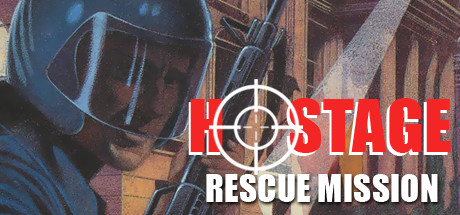
Hostage: Rescue Mission is a classic tactical action game developed by Infogrames and later published by Atari on modern platforms such as Steam. Originally released in the late 1980s under the title Hostages, the game emerged during a time when computer games were beginning to experiment with more complex mission structures and realistic military scenarios. Rather than presenting a straightforward arcade shooter, the game places players in command of a specialized counter-terrorist unit assigned to resolve a high-risk hostage crisis. The central scenario revolves around a group of armed terrorists who have taken control of an embassy building and captured several civilians. The player’s mission is to coordinate a rescue operation, eliminate the hostile forces, and ensure the safe extraction of the hostages.
The structure of the game is built around several distinct phases that represent different parts of a coordinated tactical assault. Instead of a single continuous level, the mission unfolds through multiple gameplay segments that each focus on a different aspect of the operation. This design was particularly ambitious for its time because it attempted to simulate the complexity of a real counter-terrorist response rather than simply placing the player into an action sequence. Each stage requires different skills and careful decision-making, and mistakes in one phase can make later stages more dangerous or difficult.
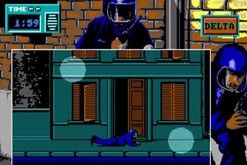
The opening phase focuses on stealth and infiltration as players guide several members of their rescue team through the streets surrounding the embassy. These operatives must reach strategic vantage points while avoiding detection by terrorist patrols and sweeping searchlights. Movement must be carefully timed, as stepping into the beam of a searchlight or rushing forward recklessly can alert enemies and result in the operative being shot. The gameplay in this section emphasizes patience and careful observation. Players must slowly move their characters across rooftops and alleyways, using cover and timing to avoid being seen while reaching their assigned positions around the building.
Once these operatives reach their positions, they become snipers tasked with providing overwatch for the assault team. The gameplay perspective shifts to a scoped view where players observe the windows of the embassy. Silhouettes appear behind the glass, and the player must determine whether they represent terrorists or hostages. Pulling the trigger at the wrong moment can have serious consequences, as accidentally shooting a hostage counts as a mission failure. This mechanic introduces a level of tension and responsibility rarely seen in games of that era, forcing players to hesitate and carefully evaluate each target before firing.
The final stage of the operation moves inside the embassy itself. After the initial preparation phases, the assault team enters the building to confront the terrorists directly and rescue the hostages. This portion of the game shifts to close-quarters combat where players explore rooms, corridors, and multiple floors of the embassy while searching for both enemies and civilians. Terrorists may hide in different rooms or stand near hostages, creating situations where players must act quickly but cautiously. Eliminating enemies while ensuring the safety of hostages becomes the primary challenge of this stage.
One of the most interesting elements of the game is how the different mission phases are connected. Actions taken during the sniper phase can directly affect the difficulty of the final assault. Successfully eliminating terrorists from outside the building reduces the number of enemies encountered inside, making the rescue operation smoother. On the other hand, failing to neutralize threats beforehand can leave the assault team facing a much more dangerous situation once they enter the embassy. This interconnection between stages creates a strong sense of strategy and reinforces the idea that the mission is a coordinated operation rather than a collection of unrelated levels.
For a game developed in the late 1980s, the visual presentation was surprisingly detailed. The embassy interior contains various environmental elements such as desks, chairs, equipment, and decorative items that help make the building feel like a believable location. Although the graphics are limited by the technology of the time, the developers made effective use of pixel art to convey the layout of rooms and the presence of characters within them. The game also uses different visual perspectives depending on the stage of the mission, shifting between side-scrolling movement, sniper scopes, and interior exploration. These changes in viewpoint add variety to the experience and help differentiate each phase of the operation.
The audio design is relatively simple but still contributes to the overall tension. Gunshots, alarms, and the occasional ambient sound emphasize the dangerous atmosphere of the mission. Because sound effects are used sparingly, each one feels important and draws attention to key moments such as enemy detection or combat encounters. The quiet periods between these sounds often heighten the suspense, especially during stealth segments where the player must remain unseen.
At the end of each mission, the game provides a summary of the operation in the form of a fictional newspaper report. This report describes how the rescue unfolded, evaluating the player’s performance based on factors such as how many hostages were saved and how many team members survived. A successful mission results in praise for the rescue team, while mistakes such as civilian casualties or excessive losses lead to a more critical report. This system adds an extra layer of immersion by framing the mission as a real event being reported to the public.
From a historical perspective, Hostage: Rescue Mission is notable for introducing ideas that would later become common in tactical shooters. The emphasis on planning, stealth, coordinated team actions, and the consequences of player decisions anticipated mechanics that would eventually appear in more modern military franchises. In many ways, the game can be seen as an early attempt to portray the complexity of special forces operations within a video game.
However, some aspects of the game feel dated when viewed through a modern lens. The controls can be stiff and unforgiving, especially during the stealth sections where precise timing is required. The mission structure is also relatively limited, focusing on a single hostage scenario rather than a full campaign of different operations. While the strategic depth adds replay value, some players may wish for a greater variety of missions or environments.
Despite these limitations, Hostage: Rescue Mission remains an intriguing example of early tactical game design. Its attempt to simulate a multi-phase counter-terrorism operation was highly ambitious for its time and demonstrated how video games could combine action with strategic planning. Even decades after its original release, the game still stands as an interesting piece of gaming history and an early step toward the tactical shooters that would emerge in later years.
Overall, Hostage: Rescue Mission offers a unique blend of stealth, strategy, and action that distinguishes it from many other games of its era. While its mechanics and visuals clearly reflect its age, the core idea of coordinating a careful hostage rescue operation remains engaging. For players interested in retro gaming or the origins of tactical military gameplay, it provides a fascinating glimpse into the early experimentation that helped shape the genre.
Rating: 7/10