Google Earth VR is one of the most unique and memorable virtual reality experiences available on Steam because it transforms the simple act of exploring maps into something immersive, emotional, and surprisingly powerful. Developed and published by Google, the application allows players to freely travel across a virtual recreation of Earth using VR technology, creating the sensation of flying above cities, mountains, oceans, and famous landmarks from a first-person perspective. What could have easily been treated as a small technical experiment instead becomes a breathtaking showcase of scale, immersion, and human curiosity.
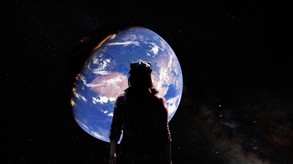
The software immediately stands out because of how naturally it communicates the immense size of the planet. In traditional map applications, locations are viewed through flat screens and distant perspectives, but Google Earth VR changes the experience entirely by placing the player directly within the environment. Entire countries can be shrunk down to miniature models resting in front of the player, only for the user to instantly zoom into individual neighborhoods and streets moments later. This ability to seamlessly shift between massive global views and intimate local exploration gives the software an incredible sense of freedom.
One of the most impressive aspects of the experience is how intuitive the controls feel in virtual reality. Players use motion controls to glide through the air, rotate landscapes, and adjust scale with simple gestures. Flying across the world feels smooth and satisfying, allowing users to move effortlessly from one continent to another in seconds. The interaction design succeeds because it avoids unnecessary complexity and instead focuses on making exploration feel natural and relaxing. Even users unfamiliar with VR can quickly understand how to navigate the world.
The visual presentation is surprisingly effective considering the enormous scale of the project. Large cities and recognizable landmarks look especially impressive when viewed from above. Skyscrapers, coastlines, mountain ranges, rivers, and forests combine to create an experience that often feels almost surreal inside a VR headset. The lighting and atmospheric effects also contribute heavily to immersion. Floating above a city during sunset or soaring through mountain valleys creates moments that genuinely capture a sense of wonder. While the software is built from mapping and satellite data rather than handcrafted environments, the illusion of traveling across a living planet remains incredibly convincing.
Perhaps the most emotionally engaging aspect of Google Earth VR is the personal connection players develop while exploring familiar places. Many users immediately search for their hometowns, former schools, vacation spots, or childhood neighborhoods. Seeing meaningful locations from a completely different perspective in VR can create a surprisingly emotional experience. Even though the environments are not perfectly realistic at ground level, simply hovering above places connected to personal memories gives the software a unique emotional quality that many VR applications fail to achieve.
The educational potential is equally impressive. Google Earth VR transforms geography into an interactive experience instead of a passive learning tool. Exploring famous landmarks, historical locations, and natural wonders becomes significantly more engaging when players can physically move around them in immersive space. The software naturally encourages curiosity because every destination leads to countless additional places worth exploring. It is easy to begin searching for a single landmark and then spend hours drifting across nearby cities, coastlines, or mountain regions.
Another major strength is the relaxing nature of the experience. Unlike many VR titles built around fast action, competitive gameplay, or stressful mechanics, Google Earth VR is calm and meditative. There are no objectives, enemies, or fail conditions. Players are free to move at their own pace and simply enjoy the sensation of exploration. This accessibility makes the software appealing to a wide audience, including people who may not normally play games but are interested in travel, geography, or virtual reality technology.
However, the experience is not completely flawless. The quality of environmental detail varies heavily depending on location. Major cities and famous landmarks tend to receive impressive photogrammetry and detailed reconstruction, while smaller towns and rural areas can appear blurry or distorted. Buildings occasionally melt into rough shapes when viewed too closely, breaking immersion during low-altitude exploration. These limitations are understandable given the impossible task of recreating the entire planet in consistent detail, but they can still feel disappointing in certain regions.
Technical issues have also affected some users depending on their VR hardware configuration. Community discussions have referenced occasional startup problems, compatibility issues, controller recognition errors, and performance inconsistencies on specific systems. Although many players report smooth performance, others have encountered crashes or setup frustrations that can interrupt the experience. Since the software depends heavily on VR platform compatibility, the overall stability may vary from one user setup to another.
Despite these issues, the application remains one of the strongest demonstrations of what VR technology can accomplish. Google Earth VR succeeds because it focuses on immersion and perspective rather than traditional gameplay systems. The ability to freely fly across Earth in full scale creates a feeling that remains difficult to replicate even in more technically advanced VR titles. It taps into the basic human fascination with exploration and transforms it into something interactive and deeply immersive.
The ambient soundtrack also deserves praise for enhancing the atmosphere. Soft music and calming environmental audio complement the peaceful tone of exploration perfectly. Combined with the sensation of floating above the planet, the audio helps create an experience that often feels dreamlike and reflective rather than purely technological.
What ultimately makes Google Earth VR special is its ability to inspire awe. Few applications make players stop and simply appreciate the scale and beauty of the world around them. Whether exploring famous cities, revisiting meaningful personal locations, or drifting across massive landscapes, the software consistently delivers moments that feel immersive and unforgettable. Even years after release, it remains one of the defining experiences in virtual reality and one of the clearest examples of how VR can completely transform familiar concepts into something extraordinary.
For VR enthusiasts, travelers, students, or anyone curious about immersive technology, Google Earth VR remains an essential experience. Its occasional technical limitations and inconsistent environmental detail do little to diminish the incredible sense of scale, freedom, and discovery it provides.
Rating: 9/10