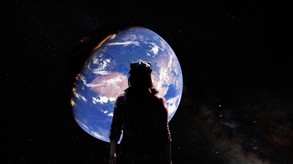
Google Earth VR lets you explore the world from totally new perspectives in virtual reality. Stroll the streets of Tokyo, soar over the Grand Canyon, or walk around the Eiffel Tower.
Revenue comes from in-game items and microtransactions, which our price-based model doesn't estimate. Copies below reflect the player base, not paid sales.
Media

About
Genres
Stats
Languages: English**languages with full audio support
Engagement
Reviews
Themes across 42 recent reviews and how positive each mention is. A keyword signal, not full sentiment analysis.
Reviews
My name is Howie. I'm sixty years old. I don't have many people left to talk to, so I figured I'd finally write this review. Maybe somebody out there has had the same experience. Maybe not. Most people don't stay with Google Earth VR long enough. Five stars. I've been asked why I always give it five stars. How do you rate the horizon? How do you rate gravity? You don't. You simply acknowledge they exist. I grew up as one of Jehovah's Witnesses. My parents taught me that there was an order to everything, that humility mattered, and that people spent too much time worrying about themselves instead of something greater. I carried that mindset through my entire life. I worked honestly. I tried to be kind. I raised a family. I paid my bills. I kept my lawn cut. I thought that was life. Then I put on the headset. The first week I smiled. The first month I cried. By the first year I realized something horrifying. I had never actually seen the world before. People think they've seen Earth because they've driven across a few states or flown somewhere once every couple years. No. They've seen parking lots. Google Earth VR lets you stand over the entire machine. It lets you understand proportions. That's when normal life starts feeling... strangely small. I quit watching television. Then I stopped reading novels. Eventually music became distracting. Silence lets you hear continents. My wife thought I was depressed. I wasn't. Depressed people lose interest. I had found the only thing worth being interested in. She said we never went out anymore. I asked where she wanted to go. She said a restaurant. I laughed so hard I accidentally took the headset off. A restaurant. We possess the entire planet. She wanted mozzarella sticks. That was one of our last conversations. People tell me I should have fought harder to save my marriage. People say a lot of things after they're gone. Sometimes my daughter calls. She still leaves voicemails. I don't answer while I'm exploring. The headset deserves uninterrupted attention. She says she misses me. I don't think she understands. I'm never missing. She simply isn't looking in the right hemisphere. I've developed routines. The headset sits on a folded towel every night. Dust is removed with a fresh microfiber cloth. The batteries are rotated according to a schedule I designed myself. The room stays exactly sixty-eight degrees. People think that's excessive. They've clearly never respected something important. I've noticed the globe seems calmer when the lenses are perfectly clean. Coincidence? Maybe. I stopped believing in coincidences around year four. There are places I return to every morning. Not because they're beautiful. Because they're expecting me. I know how ridiculous that sounds. I used to think it sounded ridiculous too. Until one morning I skipped them. The entire day felt... wrong. I can't explain it. Roads looked unfamiliar. Cities felt impatient. Mountain ranges seemed disappointed. So I apologized. Everything settled down after that. My therapist told me the Earth wasn't communicating with me. I thanked him for his opinion. Then I never scheduled another appointment. What exactly qualifies someone to speak on behalf of the planet? Certainly not a man who vacations twice a year and thinks he's "well traveled." I have stood above every continent. Thousands of cities. Hundreds of islands. I have watched shadows crawl across mountain ranges until sunrise. I've spent entire afternoons following one river from its source to the ocean because leaving halfway felt rude. People ask how many hours I have. I don't answer anymore. Hours are for clocks. Google Earth VR exists outside clocks. The headset comes off. The Earth doesn't. Neighbors have knocked on my door before. I didn't answer. One of them later asked if I was home. I said no. He pointed out that he saw me through the window. I told him that wasn't me. That was merely my physical location. He didn't understand. Most people don't separate the two. Sometimes I zoom into my own neighborhood. I can see the roof. The driveway. The trees. The mailbox. It all feels strangely artificial. Like someone built it to keep me occupied between sessions. I occasionally wave at my own house. Just in case. I've stopped celebrating birthdays. Why celebrate orbiting the sun one more time when I can watch the entire orbit from above? Christmas decorations appeared on neighboring houses last year. I only noticed because they showed up in satellite imagery months later. That made more sense. Reality feels delayed now. Google Earth VR feels immediate. People have accused me of living in fantasy. That's interesting. Fantasy is believing your tiny routine is the center of existence. Fantasy is believing your commute matters. Fantasy is believing your favorite grocery store is significant. Stand five thousand miles above yourself. Tell me how important your shopping list feels. Exactly. I sold my dining room table. Nobody visited anyway. I converted the room into what my daughter called "the shrine." That hurt. Shrine is such a dramatic word. It's simply the Exploration Room. The curtains remain closed. The walls are painted a neutral gray. There are backup batteries labeled by date. Three backup head straps. Two replacement face cushions. A notebook containing every location that ever made me stop talking. Another notebook for locations that made me cry. Another for places I still don't understand. My daughter saw the notebooks. She asked if I needed help. I told her I already had it. She hasn't visited since. Sometimes I wonder if Google Earth VR is actually software. Software gets old. Software becomes obsolete. But the Earth keeps waiting. Patient. Silent. Perfectly still until someone worthy decides to look. People think I'm lonely. I'm standing over the Andes before breakfast. I've watched storms move across oceans that most people couldn't point to on a map. I've stood above deserts where no human voice could reach me. Tell me again who's lonely. Last Tuesday the power went out. For forty-seven minutes. I don't remember much after the screen went black. The silence was unbearable. Not because it was quiet. Because I couldn't see. I sat on the floor holding the headset until electricity returned. The utility company later apologized for the outage. I accepted. They couldn't have known what they interrupted. Every morning now I whisper the same sentence before I put the headset on. "Show me where I belong today." Sometimes it's Alaska. Sometimes it's Namibia. Sometimes it's a single anonymous road in eastern Mongolia. I never question it. Questioning implies I know better. I don't. I haven't for years. Five stars. I would give it more, but five is the highest number they let ordinary people use.
Related
Related
Trends
Concurrent players on Steam, sampled daily since tracking started.
Hours played at review time, across 42 reviews with recorded playtime.
positive critical· bar length = how often the theme comes up
i found my home
I love this program!! This is probably the single most amazing thing available on Steam. I could spend countless hours exploring the world with this. Please give us more!
"Hey! I can see my house from here!"
absolutely amazing and breathtaking, hands down. experienced a light version of the overview effect many times. exploring the world has never been easier if you're broke!
Google Earth VR is one of the most unique and memorable virtual reality experiences available on Steam because it transforms the simple act of exploring maps into something immersive, emotional, and surprisingly powerful. Developed and published by Google, the application allows players to freely travel across a virtual recreation of Earth using VR technology, creating the sensation of flying above cities, mountains, oceans, and famous landmarks from a first-person perspective. What could have easily been treated as a small technical experiment instead becomes a breathtaking showcase of scale, immersion, and human curiosity. The software immediately stands out because of how naturally it communicates the immense size of the planet. In traditional map applications, locations are viewed through flat screens and distant perspectives, but Google Earth VR changes the experience entirely by placing the player directly within the environment. Entire countries can be shrunk down to miniature models resting in front of the player, only for the user to instantly zoom into individual neighborhoods and streets moments later. This ability to seamlessly shift between massive global views and intimate local exploration gives the software an incredible sense of freedom. One of the most impressive aspects of the experience is how intuitive the controls feel in virtual reality. Players use motion controls to glide through the air, rotate landscapes, and adjust scale with simple gestures. Flying across the world feels smooth and satisfying, allowing users to move effortlessly from one continent to another in seconds. The interaction design succeeds because it avoids unnecessary complexity and instead focuses on making exploration feel natural and relaxing. Even users unfamiliar with VR can quickly understand how to navigate the world. The visual presentation is surprisingly effective considering the enormous scale of the project. Large cities and recognizable landmarks look especially impressive when viewed from above. Skyscrapers, coastlines, mountain ranges, rivers, and forests combine to create an experience that often feels almost surreal inside a VR headset. The lighting and atmospheric effects also contribute heavily to immersion. Floating above a city during sunset or soaring through mountain valleys creates moments that genuinely capture a sense of wonder. While the software is built from mapping and satellite data rather than handcrafted environments, the illusion of traveling across a living planet remains incredibly convincing. Perhaps the most emotionally engaging aspect of Google Earth VR is the personal connection players develop while exploring familiar places. Many users immediately search for their hometowns, former schools, vacation spots, or childhood neighborhoods. Seeing meaningful locations from a completely different perspective in VR can create a surprisingly emotional experience. Even though the environments are not perfectly realistic at ground level, simply hovering above places connected to personal memories gives the software a unique emotional quality that many VR applications fail to achieve. The educational potential is equally impressive. Google Earth VR transforms geography into an interactive experience instead of a passive learning tool. Exploring famous landmarks, historical locations, and natural wonders becomes significantly more engaging when players can physically move around them in immersive space. The software naturally encourages curiosity because every destination leads to countless additional places worth exploring. It is easy to begin searching for a single landmark and then spend hours drifting across nearby cities, coastlines, or mountain regions. Another major strength is the relaxing nature of the experience. Unlike many VR titles built around fast action, competitive gameplay, or stressful mechanics, Google Earth VR is calm and meditative. There are no objectives, enemies, or fail conditions. Players are free to move at their own pace and simply enjoy the sensation of exploration. This accessibility makes the software appealing to a wide audience, including people who may not normally play games but are interested in travel, geography, or virtual reality technology. However, the experience is not completely flawless. The quality of environmental detail varies heavily depending on location. Major cities and famous landmarks tend to receive impressive photogrammetry and detailed reconstruction, while smaller towns and rural areas can appear blurry or distorted. Buildings occasionally melt into rough shapes when viewed too closely, breaking immersion during low-altitude exploration. These limitations are understandable given the impossible task of recreating the entire planet in consistent detail, but they can still feel disappointing in certain regions. Technical issues have also affected some users depending on their VR hardware configuration. Community discussions have referenced occasional startup problems, compatibility issues, controller recognition errors, and performance inconsistencies on specific systems. Although many players report smooth performance, others have encountered crashes or setup frustrations that can interrupt the experience. Since the software depends heavily on VR platform compatibility, the overall stability may vary from one user setup to another. Despite these issues, the application remains one of the strongest demonstrations of what VR technology can accomplish. Google Earth VR succeeds because it focuses on immersion and perspective rather than traditional gameplay systems. The ability to freely fly across Earth in full scale creates a feeling that remains difficult to replicate even in more technically advanced VR titles. It taps into the basic human fascination with exploration and transforms it into something interactive and deeply immersive. The ambient soundtrack also deserves praise for enhancing the atmosphere. Soft music and calming environmental audio complement the peaceful tone of exploration perfectly. Combined with the sensation of floating above the planet, the audio helps create an experience that often feels dreamlike and reflective rather than purely technological. What ultimately makes Google Earth VR special is its ability to inspire awe. Few applications make players stop and simply appreciate the scale and beauty of the world around them. Whether exploring famous cities, revisiting meaningful personal locations, or drifting across massive landscapes, the software consistently delivers moments that feel immersive and unforgettable. Even years after release, it remains one of the defining experiences in virtual reality and one of the clearest examples of how VR can completely transform familiar concepts into something extraordinary. For VR enthusiasts, travelers, students, or anyone curious about immersive technology, Google Earth VR remains an essential experience. Its occasional technical limitations and inconsistent environmental detail do little to diminish the incredible sense of scale, freedom, and discovery it provides. Rating: 9/10
Great game ifyou like exploring the world and see the great wonders of the world. Able to run.
участвовал в специальной военной операции в африке от первого лица
They forgot they made this fr
Best ever way to view google earth.
Momentum
Pace estimated from the game's recent review growth (our daily snapshots) at its own sales-per-review ratio — a momentum signal, not booked sales.
Audience
Estimated from the language of this game's reviews — a proxy for where players are, not official Steam demographics.