Modeled estimate, not a reported figure. How we estimate →
Stats
All-time low is the lowest price we've recorded for this game since we started tracking it.
Languages: English
Engagement
Hours played at review time, across 35 reviews with recorded playtime.
Reviews
[h1][b]🎮 Reseña de God Simulator[/b][/h1] [h2]Resumen del Juego[/h2] God Simulator es uno de esos experimentos indie donde te sueltan en un sandbox isométrico/3D con vibra “relajante” para que juegues a ser deidad: moldeas naturaleza, empujas crecimiento, administras fe y montas tu mini “constructor de ciudades” con clics y decisiones ligeras. Suena épico… hasta que recuerdas que ser dios en videojuegos casi siempre significa: “haz clic para que pasen cosas” y luego mira cómo el mundo obedece como si tuviera miedo de tu mouse. La mezcla de Aventura + Casual + Indie se siente clara: no viene a romperte la cabeza, viene a darte una caja de arena estilizada para experimentar. Lo de “Carreras” está ahí como el primo raro en la reunión familiar: aparece en la ficha, pero en la práctica se percibe más como ritmo/avance y gestión del progreso que como correr en una pista (porque, bueno, tu automóvil aquí es la providencia). Primera impresión: adorable, atmosférico, y con potencial de “una partida más”… siempre y cuando aceptes que tu reino será gobernado por un sistema simple y por el hecho de que literalmente no hay logros. Sí: ni un triste “Creé una nube”. [h2]Milagros y Herejías (Lo bueno y lo no tan bueno)[/h2] Lo Bueno: ✅ Sandbox relajante y “de arriba a abajo” que invita a experimentar sin presión 😌 ✅ Estilo 3D/isométrico con enfoque en naturaleza y construcción, fácil de leer y agradable 🌿 ✅ Concepto de simulación de dios + fe + agricultura: raro, pero curioso (y da para caos controlado) 🙏 ✅ Ideal para sesiones casuales: clics, progreso y “mirar cómo crece” sin pedirte un doctorado 🖱️ Lo No Tan Bueno: ❌ 0 jugadores actuales: el Olimpo está vacío y el culto se te murió antes de empezar 🪦 ❌ 0 logros: Steam te mira y te dice “¿y yo qué gano con esto?” 🏆🚫 ❌ Recomendaciones totales: N/A… o sea, ni para pelearse en reseñas hay gente 🫥 ❌ La etiqueta de “Carreras” se siente discutible: si esperas velocidad, aquí corres… pero en círculos mentales 🏁 [h2]Tabla de Evaluación[/h2] [table] [tr][th]Aspecto[/th][th]Puntuación (0-10)[/th][th]Comentario[/th][/tr] [tr][td]Jugabilidad[/td][td]6[/td][td]Clics + sandbox: cumple, pero no sorprende.[/td][/tr] [tr][td]Dificultad / IA[/td][td]5[/td][td]Más relajación que reto; la “IA” no busca ganarte.[/td][/tr] [tr][td]Contenido[/td][td]5[/td][td]La idea es buena, pero se siente limitado sin metas claras.[/td][/tr] [tr][td]Gráficos / Video[/td][td]6[/td][td]Estilizado y agradable; no apunta a realismo.[/td][/tr] [tr][td]Historia[/td][td]4[/td][td]Más “haz tu historia” que narrativa real.[/td][/tr] [tr][td]Ambientación[/td][td]6[/td][td]Atmosférico y tierno; fácil de entrar en modo zen.[/td][/tr] [tr][td]Efectos (VFX)[/td][td]5[/td][td]Correctos, sin momentos de “milagro visual”.[/td][/tr] [tr][td]Música[/td][td]5[/td][td]Funcional para acompañar la gestión relajada.[/td][/tr] [tr][td]Voces[/td][td]4[/td][td]No se perciben como un pilar; presencia mínima o nula.[/td][/tr] [tr][td]Diversidad[/td][td]5[/td][td]Variedad temática (fe/naturaleza/construcción), pero no destaca.[/td][/tr] [tr][td]Rendimiento[/td][td]6[/td][td]Al ser casual/indie, debería ir estable en general.[/td][/tr] [tr][td]Rejugabilidad[/td][td]5[/td][td]Depende de tu paciencia para el sandbox sin objetivos fuertes.[/td][/tr] [tr][td][b]Total Puntuaciones (Aceptable)[/b][/td][td][b]5.1[/b][/td][td]Buena idea, ejecución correcta, comunidad fantasma.[/td][/tr] [/table] [h2]Conclusión (Aceptable)[/h2] God Simulator es un simulador de dios que se siente como un terrario digital: lo alimentas con clics, lo miras crecer y, si te gusta la vibra de naturaleza/fe/construcción, puede ser un pasatiempo decente. No es el tipo de aventura que te cambia la vida; es más bien la que te acompaña mientras apagas el cerebro un rato. El problema controversial: si esto pretende ser “simulación de dios”, le falta un poquito de… poder, consecuencias o metas memorables. Y el dato duro mata el chiste: 0 jugadores actuales y recomendaciones N/A. No es que esté “incomprendido”: es que está solo. Como deidad, eso duele en el ego. Si lo tuyo es el sandbox relajado y estilizado, puede funcionar. Si buscas desafío, comunidad activa o algo que Steam celebre (logros), aquí no hay milagros: hay rutina bonita. [h3]Recomendación de Compra (Solo si te gusta el género)[/h3] Puntuación Total: 5.1/10 Número de jugadores activos al momento de hacer esta review: 0 Descuento máximo registrado: -85% Veredicto: [i]Aceptable, pero te vas a sentir el único feligrés del servidor.[/i] Si quieres un simulador casual para experimentar con construcción/naturaleza en un sandbox tranquilo, entra. Si esperas algo grande, con metas potentes y comunidad viva, mejor guarda tu fe para otro altar.
Увидел цену. Потом всё как в тумане. Очнулся, а она уже куплена. Сижу. Фармлю карточки.
У меня чувак застрял в капусте .. Можно как нить сделать кнопочку, чтоб человечек освободился или взять его за шкирку и перетащить от забагованого места подальше. Коротко об игре Остров на нем ставишь камушки деревья цветочки человечка Дальше игру пройти не могу Человечек багуется в растении
una mi3rd4 el juego no lo compren ni por eneba. Por suerte lo pagué dos mangos pero que ni lo valen
Where did I spend 80 rubles? Well, nowhere, because there are no animations, and the gameplay here is not gameplay. It's a very boring game that doesn't deserve any attention. Give me my money back
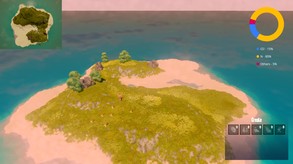
God Simulator is a small-scale indie sandbox simulation developed and published by Mateusz Kulis that sets out to explore one of gaming’s most enduring fantasies: shaping a world as an all-powerful deity. Rather than framing this power through structured objectives or narrative arcs, the game adopts a minimalist, open-ended approach, placing experimentation and observation at the center of the experience. From the start, it is clear that God Simulator is less concerned with guiding the player through a designed journey and more interested in offering a set of basic tools with which to tinker, observe, and reflect on cause and effect. Gameplay takes place from a top-down perspective over a modest island environment inhabited by small populations and influenced by environmental factors. Players are given control over terrain and basic world parameters, allowing them to raise or lower land, influence the environment, and shape the island’s physical layout. These actions are meant to ripple outward, subtly affecting how the world behaves and how its inhabitants exist within it. The interface is straightforward, and the learning curve is gentle, making it easy to begin experimenting almost immediately. There is no tutorial-heavy onboarding or layered progression system; instead, players are encouraged to explore the tools organically and discover their effects through trial and observation. The core issue — and defining characteristic — of God Simulator is its simplicity. While the idea of manipulating a living world is compelling, the simulation itself remains shallow. Environmental changes largely produce visual or surface-level effects rather than complex systemic responses. Population behavior, while present, lacks the depth and unpredictability that give stronger god games their sense of life and emergent storytelling. As a result, the world often feels static, responding to player input in predictable ways without evolving meaningfully over time. This limits the sense of long-term impact that many players expect when stepping into a godlike role. There is also no overarching progression or victory condition to anchor the experience. Players are not working toward technological eras, divine milestones, or narrative endpoints. Instead, the game functions more like a digital sandbox or interactive toy, where satisfaction is derived from momentary experimentation rather than cumulative achievement. This design can feel freeing for players who enjoy meditative tinkering, but it also means that motivation relies almost entirely on personal curiosity. Once the novelty of shaping terrain and observing limited reactions wears off, the game offers little incentive to continue. Visually, God Simulator is functional but unremarkable. The graphics clearly communicate terrain and objects, which supports usability, but the aesthetic lacks personality or atmospheric depth. Updates over time have attempted to improve lighting and presentation, yet these changes do little to disguise the fundamental simplicity of the world itself. The sound design follows a similar pattern, providing ambient feedback without contributing significantly to immersion or emotional tone. Together, the audiovisual elements serve their purpose but do not elevate the experience beyond its mechanical foundation. Pacing is slow and contemplative, whether by design or limitation. Changes unfold gradually, and there are few dramatic moments or sudden shifts to keep players engaged. This makes the game suitable for brief, low-pressure sessions where the goal is simply to relax and experiment. However, for players seeking dynamic systems, escalating challenges, or emergent narratives driven by complex interactions, this pace can feel stagnant rather than soothing. Community reception reflects these contrasts sharply. Many players express disappointment, citing expectations of a deeper, more reactive simulation that the game does not deliver. Criticism often focuses on the lack of meaningful mechanics, limited world behavior, and the feeling that the game resembles an unfinished prototype more than a fully realized god simulation. At the same time, a smaller subset of players appreciate its simplicity, viewing it as a lightweight sandbox that allows for casual experimentation without cognitive overload. Ultimately, God Simulator stands as an earnest but limited indie project. Its ambition — granting players godlike control over a living world — is clear, but the execution does not fully support that fantasy. It functions best as a short-lived sandbox curiosity, offering a glimpse into environmental manipulation without the depth required for sustained engagement. For players curious about minimalist simulation experiments or those looking for a quiet, no-pressure sandbox to explore briefly, it can provide mild entertainment. For fans of rich god games filled with emergent systems, meaningful feedback, and long-term progression, God Simulator is likely to feel shallow and incomplete. Rating: 5/10
solo dire que sirve pa fondo de pantalla 9/10 para que se hagan una referencia solo se puede hacer los que esta en el video
Ты — бог. У тебя есть остров, последователи и… всё. Больше ничего. Ты кликаешь, они тупят. Интерфейс — как будто его рисовали в Paint с закрытыми глазами. Графика? Пиксели, которые вызывают ностальгию по временам, когда игры запускались с дискеты. Геймплей: Ты пытаешься управлять своим народом, но они ведут себя, как стадо безмозглых овец. Каждое действие — это борьба с интерфейсом и логикой игры. Чувствуешь себя не богом, а нянькой для цифровых идиотов. Звук: Щелчки, писки и редкие стоны. Саундтрек отсутствует, как и желание продолжать играть. Сюжет: Его нет. Ты просто существуешь, наблюдая за тем, как твои последователи медленно деградируют. Итог: God Simulator — это не игра, а испытание терпения. Если хочешь почувствовать себя бессильным богом, наблюдающим за хаосом, то это для тебя. Оценка: 2 молнии из 10. ⚡⚡
BEZNADZIEJE NIE WIADOMO O CO CHODZI
this game is horrible and overpriced your not god your some island maker that basically just get told what to do. you just place stuff that they give you like 3 stone or 5 trees or 1 human. the human mechanics are broken like he will walk into a tree but tries to keep walking in the direction.
Related
Related
Trends
Concurrent players on Steam, sampled daily since tracking started.
Momentum
Pace estimated from the game's recent review growth (our daily snapshots) at its own sales-per-review ratio — a momentum signal, not booked sales.
Audience
Estimated from the language of this game's reviews — a proxy for where players are, not official Steam demographics.
Related
| Dark Frame | $602.6 | 73 | 52% | $0.49 |
| Backrooms: The Phobolore | $600.4 | 52 | 54% | $0.79 |
| Walking In The Abyss - Definitive Edition | $594.5 | 65 | 95% | $0.99 |
| Furry Woof | $594.3 | 96 | 70% | $0.99 |
| Stickman in the Portal | $594.3 | 80 | 60% | $0.49 |
| My Typing Skill | $614 | 65 | 75% | $0.69 |
Related
| City Car Driving | $29.8M | 35.7K | 83% | $24.99 |
| Drive Beyond Horizons | $15.4M | 19.7K | 78% | $24.99 |
| Tower Unite | $14.5M | 21.8K | 90% | $19.99 |
| Mon Bazou | $10.9M | 20.4K | 97% | $15.99 |
| Clustertruck | $7.6M | 18.4K | 94% | $14.99 |
| s&box | $7.4M | 9K | 59% | $19.99 |