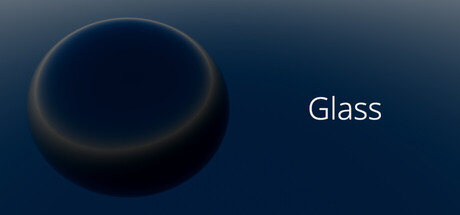
Simple yet mesmerizing, Glass can be both relaxing and considerably challenging. With over 18 quintillion randomly-generated tracks, you can have a new experience each time you play.
Modeled estimate, not a reported figure. How we estimate →
Media

About
In Glass, you control a marble with the goal of getting the marble to the end of a randomly-generated track. There are over 18 quintillion tracks, so you can always play a track you've never played before.
Glass features four different game modes with four difficulty settings. Both mode and difficulty can be changed mid-game; there's no need to restart a track in order for these changed to be applied.
In freeride, there is no challenge whatsoever. You can navigate the track at your leisure. The difficulty settings do not apply to freeride.
Dash is a race against time. The track components disappear soon after you reach them, so you'll need to move fast.
In fragile, you're required to move smoothly down the track. If you collide with a track component too hard, it will break and disappear.
This game mode combines both dash and fragile simultaneously. It provides a considerable level of difficulty when played on the higher difficulty settings.
Whilst you may choose to play a randomly-selected track, you can also manually select the track number in the game menu. This allows you to replay a track you enjoy or challenge a friend to beat a track that you've beaten. A track number is denoted using 1 to 16 digits, where a digit is 0 to 9 or A to F. Note that track selection is not available in the demo version.
Some tracks are more difficult than others. Additionally, a track might be easier on dash than fragile or easier on fragile than dash.
A track begins at a start terminal with an altitude of 1,024 meters and will tend downhill. Once below 64 meters, an end terminal will be generated and the track will finish. Your altitude is shown in the upper-left corner of the screen. If playing in fragile mode, a timer is shown next to the altimeter which displays the time which has elapsed since starting the track.
The controls and settings are shown in the game menu under their respective tabs. Under Settings, you're able to change the camera sensitivity and music volume, and you can choose between ocean and cloud as the theme of the environment.
A controller can be used for all gameplay and UI interaction, with the exception of manual track number selection which requires a keyboard. Use of a controller is recommended for gameplay as it provides more fine-grained control over movement of both the marble and the camera. Note that while wireless controllers are expected to work, only USB controllers have been tested.
Glass does not use AI in any form. The procedural generation is performed using an algorithm we designed which uses the track number as a seed. This idea was inspired by a very popular game which involves mining and crafting. Additionally, aside from audio assets (as we didn't create the audio assets), Glass and its assets were developed using only open-source software.
Stats
All-time low is the lowest price we've recorded for this game since we started tracking it.
Languages: English
Reviews
I came in not expecting much but this game is near PERFECT for when you're listening to audiobooks/youtube videos/having conversations. I hope they implement an infinite mode or implement the audiobooks/podcasts/timer into the game.
very good game loved it alot :)
Related
Related
Trends
Concurrent players on Steam, sampled daily since tracking started.
Momentum
Pace estimated from the game's recent review growth (our daily snapshots) at its own sales-per-review ratio — a momentum signal, not booked sales.
Related
| Food and Girls | $315.6 | 51 | 86% | $0.99 |
| Bongo Quest | $315.6 | 51 | 45% | $0.49 |
| Glasses and Girls | $315.6 | 51 | 82% | $0.99 |
| Dances and Girls | $322 | 52 | 83% | $0.99 |
| Carnival and Girls | $334.4 | 53 | 85% | $0.99 |
| Anime Sunset Ride | $334.4 | 54 | 67% | $0.49 |