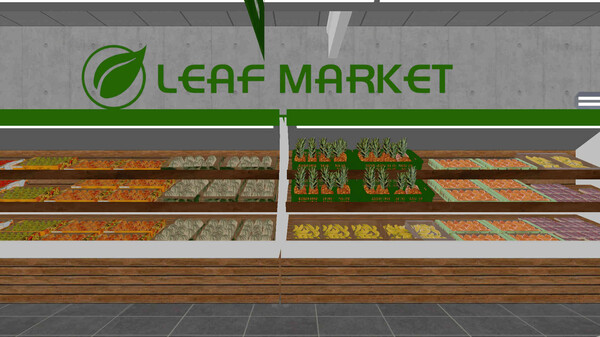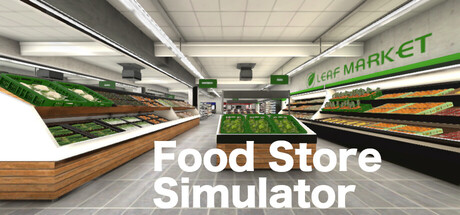
Run your own food store! Buy products, stock shelves, serve customers, and expand your shop into a bigger business.
Modeled estimate, not a reported figure. How we estimate →
Media

About
Run your own food store and grow it into a busy supermarket.
Food Store Simulator is a first-person store management simulation where you buy products, stock shelves, serve customers, and expand your store.
Start with a small shop and turn it into a thriving food store.
Customers enter your store, pick up items, and line up at the register.
Process payments smoothly and keep the line moving during busy hours.
Buy products and refill shelves before they run out.
Keeping your store stocked is essential to maintain sales and customer satisfaction.
Use your profits to improve your store.
• Purchase new shelves and equipment
• Unlock additional products
• Improve store layout and efficiency
• Grow your business and attract more customers
As your store grows, things become busier.
Products sell out, customers keep coming, and managing your inventory becomes more important.
The core gameplay loop:
Buy → Stock → Sell → Upgrade → Expand
Relax and enjoy building your own successful food store.
Perfect for fans of simulation and management games.
Genres
Stats
All-time low is the lowest price we've recorded for this game since we started tracking it.
Languages: English, Japanese, French, Italian, German, Spanish - Spain, Portuguese - Portugal, Polish, Russian, Simplified Chinese, Traditional Chinese, Korean
Reviews
⚠️ Not Ready for Release – Buyer Beware This is honestly disappointing. I played the demo about a week ago, and it was clearly unfinished. You couldn’t place certain shelves, vegetables would fall through racks or sink into the crates, and the store itself felt like a giant empty space with awkward graphics. It very obviously felt like a beginner-stage project still in development. Fast forward to today I saw the demo was removed and the game was now being sold. That immediately raised concerns. There’s no way the game could have been fully completed that quickly right???!!. So I purchased it to see if anything had actually changed. To my surprise… it’s the exact same as the demo. Current issues: Still laggy Still buggy Shelving and item placement issues remain Vegetables fall through or clip into crates Large empty store space with unfinished-feeling graphics No tutorial at all — no guidance on what to do or how systems work No proper quit option (ESC does nothing I had to FORCE close the game) This should not be a paid release in its current state. Please do NOT buy this until the developers actually complete and polish the game. Early Access is one thing but this feels like a demo being sold as a finished product. Requesting refund immediately. Developers is this really the quality you want attached to your name?
Food Store Simulator is a deceptively simple but surprisingly addictive retail management simulator that transforms the ordinary routine of running a small grocery shop into a satisfying cycle of organization, customer service, inventory management, and business expansion. Developed and published by mobaroid, the game embraces the increasingly popular “job simulator” formula built around repetitive everyday tasks and incremental progression, but it succeeds because it understands exactly why these types of games can become so compelling. Instead of overwhelming players with overly complicated business systems or massive open-world mechanics, Food Store Simulator focuses almost entirely on the simple pleasure of building a tiny struggling food shop into a larger and more profitable supermarket through constant manual effort and gradual upgrades. The result is a relaxed but engaging management experience that feels oddly therapeutic even when its mechanics remain relatively basic. The premise itself is intentionally straightforward. Players inherit or establish a small food store with limited stock, minimal shelving, and only a handful of products available for sale. From there, the entire experience revolves around slowly expanding the business by purchasing inventory, stocking shelves, serving customers, handling checkout operations, and reinvesting profits into better equipment and store improvements. Unlike narrative-heavy simulation games that attempt to build dramatic storylines around business ownership, Food Store Simulator keeps its focus entirely on the daily routine of retail management. This simplicity becomes one of the game’s greatest strengths because the experience remains easy to understand and immediately satisfying. Every action directly contributes to visible progress, whether that means fuller shelves, happier customers, or a physically larger store layout. One of the game’s strongest qualities is the structure of its gameplay loop. Buying products, organizing shelves, helping customers, earning revenue, and upgrading the store gradually creates a rhythm that becomes surprisingly difficult to stop playing. The game understands the psychological appeal of incremental progression extremely well. Every small improvement creates a visible difference within the environment, making the store feel increasingly alive and successful over time. Early sessions begin quietly with only a few customers and empty shelves, but after several hours of expansion, the store gradually transforms into a busier and more visually crowded business filled with products, equipment, and customer activity. That constant sense of visible growth keeps even repetitive tasks feeling rewarding. The first-person perspective contributes heavily to immersion and helps the store feel more personal than it might in a traditional top-down management simulator. Players physically walk through the aisles, pick up products manually, organize inventory themselves, and interact with customers directly at the register. This hands-on approach makes even mundane tasks like restocking shelves feel strangely satisfying because the player remains directly connected to the physical space of the business. Rearranging products, optimizing shelf layouts, and seeing customers browse the aisles creates the feeling of actively maintaining a real store rather than simply managing statistics through menus and spreadsheets. The inventory management systems are simple but effective. Early in the game, players only manage a small selection of food items, but as profits increase, new product categories and shelving options gradually become available. Managing stock levels becomes increasingly important because empty shelves directly reduce sales and customer satisfaction. This creates a constant balancing act between purchasing enough inventory to satisfy demand while still maintaining enough cash flow for future upgrades and expansion. The mechanics themselves remain accessible and never become overwhelmingly complex, but there is still enough strategy involved to keep the progression engaging. Customer flow also becomes more interesting as the business expands. Initially, the store feels quiet and manageable, allowing players to comfortably learn the basic mechanics of stocking shelves and operating the register. However, as more products are added and the store gains popularity, customer traffic increases steadily. Larger crowds force players to work more efficiently, restock inventory faster, and maintain smoother checkout operations in order to avoid long lines and customer dissatisfaction. The growing workload creates a satisfying sense of escalation that makes expansion feel meaningful rather than purely cosmetic. Store customization and expansion add another enjoyable layer to the progression system. Players can gradually purchase new shelving units, reorganize layouts, unlock additional product categories, and physically expand the size of the shop itself. Watching the tiny starting business slowly evolve into a larger and more organized supermarket becomes one of the most satisfying aspects of the experience. Even though the customization systems remain relatively simple compared to larger business simulators, they still provide enough flexibility for players to feel ownership over the store’s development. Visually, Food Store Simulator adopts a modest but functional indie aesthetic that prioritizes gameplay readability over graphical realism. The environments are colorful, clean, and easy to navigate, while products remain visually distinct enough to identify quickly during busy management situations. The graphics themselves are not particularly advanced, but the gradual transformation of the store helps compensate for the simplistic presentation. Seeing shelves fill with products, equipment accumulate, and customer traffic increase over time gives the environment a satisfying sense of life and progression. The game understands that visual growth matters enormously within management simulators because players need to physically see the results of their work. The audio design supports the relaxed retail atmosphere effectively. Background music remains subtle and calming throughout most of the experience, helping repetitive tasks feel more soothing than stressful. Customer sounds, checkout interactions, product handling effects, and ambient store noise all contribute to the sensation of managing a functioning retail environment. The sound design may not be especially memorable on its own, but it succeeds at maintaining immersion without becoming distracting during longer play sessions. For players who enjoy management simulators, incremental progression systems, retail-themed gameplay, and relaxing repetitive tasks, Food Store Simulator offers an enjoyable indie experience filled with shelf organization, customer service, and satisfying business growth. Its lack of mechanical depth, rough presentation, and limited long-term variety prevent it from becoming one of the genre’s defining supermarket simulators, but the addictive core gameplay loop and steady sense of progression still make it easy to lose hours inside its simple retail world. The experience ultimately succeeds because it captures something oddly satisfying about turning a tiny struggling shop into a busy and successful food store through constant small improvements and hands-on effort. Rating: 6/10
2026/05/21 全実績解除 動画通りにお店を経営だけども レジを増やしてもお客が増える気配もなく ポスター等は項目はあるけど特に何も買えず 棚も種類はあるけど置けるものは特に限定されず 売れるものは多いけどレベルがホイホイあがるので 特に種類を多めに陳列してないとだめなわけもなく むしろ店内を満載にする前に全実績解除するぐらいに やれるけど別に全部やらなくてもいいよみたいな難易度 メインは品出しでレジうちはNPCは最初からいる 掃除夫は雇えないというか店内は特に汚れないぽい お客がスタックしまくる状況があるが ゲームを再起動で治る セーブはたぶんオートセーブ バグで売れた棚の商品が復活したりする おすすめかおすすめしないかといえば うーーーーーーん 100円ぐらいならアリかなぁ
got refund just a money grab game it feels like no updates or fixes etc
以前のバージョンを配信で3時間程遊び、 ゲーム全体の安定性のアップデートが入ったあと、 改めてプレイして2時間半ほどで実績全解除まで遊べました! いわゆる商品を注文して棚に並べておくとお客さんがやってきて商品を取り、 レジを通ると売上となって収益になります。 レジは自身でやることもできますし、NPCに任せることも可能です。 経営系のSLGは色々とありますが、今作は最初からエリアが広く、 お客さんも最初から次から次へとやってきてくれます。 商品が売り切れていると響くようなこともなさそうなので、 最初から気持ちよくプレイもできます。 お店の商品レイアウトなんかも意識しながらデザイン重視で遊ぶもよし、 営業時間決めてしっかりと補充しながら遊ぶもよし、 利益がデカい商品を意識的に並べていくのもよし。 まさに自由にカジュアルで遊べる点が 本作の特徴に感じました。 お店の全体像などをボーッと考えながら、 ポツポツと補充しつつ、NPCがどんどんレジをしてくれて チャリンチャリンとお金が増えていく感じが 個人的には楽しかったです!
C'est le même développeur du jeu konbini simulator. Tu remplie les rayons et tu vends. Les deux jeux ne sont pas compliqués. Les succès steam tu les débloque assez facilement. Les prix sont petit. Les deux jeux sont funs. Je valide ce petit jeu.
有成就 没中文 食品商店模拟器 经营属于你的食品小店,将它一步步发展成热闹繁忙的大型超市。 《食品商店模拟器》是一款第一人称商店经营模拟游戏。你需要采购商品、整理货架、接待顾客并不断扩建你的店铺。 从一间小小的店铺起步,把它打造为生意红火的食品商超。 在收银台接待顾客 顾客进店挑选商品后,会前往收银台排队结账。 客流高峰时顺畅结算,维持队伍有序通行。 补充货架并管理库存 提前采购货品,在货架售空之前及时补货。 保持货品充足,是稳定营收、留住顾客的关键。 装修扩建你的店铺 利用经营所得收益升级门店。 ・添置全新货架与营业设备 ・解锁更多售卖商品 ・优化店铺布局,提升运营效率 ・壮大经营规模,吸引更多顾客光临 充实完整的经营循环 随着店铺发展,店内客流会愈发繁忙。 商品不断售罄,顾客络绎不绝,库存管理也愈发重要。 核心游玩循环: 采购 → 补货 → 销售 → 升级 → 扩建 放松身心,亲手打造一家蒸蒸日上的食品商店。 非常适合喜爱模拟经营类游戏的玩家体验。
This game contain a lot of bugs, and it lags a lot
Related
Related
Trends
Concurrent players on Steam, sampled daily since tracking started.
Related
| hexurb | $1.2K | 76 | 78% | $0.79 |
| Squeakers | $1.2K | 59 | 93% | $0.99 |
| Drive//Shaft | $1.2K | 59 | 68% | $0.99 |
| ZoneDriver | $1.2K | 59 | 46% | $0.99 |
| Sexy Sniper | $1.2K | 95 | 78% | $0.49 |
| The Wolf's Girl | $1.2K | 94 | 64% | $0.99 |
Related
| 7 Days to Die | $457.9M | 275.4K | 87% | $44.99 |
| Mount & Blade II: Bannerlord | $413.7M | 227.5K | 88% | $49.99 |
| Satisfactory | $314M | 231.8K | 97% | $27.99 |
| Stardew Valley | $243.2M | 1M | 98% | $14.99 |
| No Man's Sky | $230.9M | 412.1K | 85% | $23.99 |
| The Forest | $216.9M | 577.4K | 96% | $19.99 |