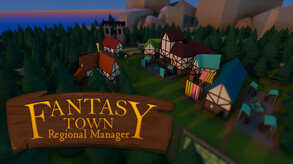
Run a fantasy town for adventurers. Save it from monsters. Save it from itself. Watch it crumble to dust. Do it all again.
Modeled estimate, not a reported figure. How we estimate →
Media
About
Genres
Stats
All-time low is the lowest price we've recorded for this game since we started tracking it.
Languages: English
Engagement
Hours played at review time, across 46 reviews with recorded playtime.
Reviews
Themes across 46 recent reviews and how positive each mention is. A keyword signal, not full sentiment analysis.
positive critical· bar length = how often the theme comes up
Reviews
This game isn't easy to review because it isn't easy to define. So the concept of FTRM is a turn-based, grid-based city builder. But it's not a typical city builder, and there's a roguelite structure on top of it. Let's go through its gameplay layers. [h1]First layer: threat management[/h1] The goal of each "run" is to play as long as possible by keeping your defense amount greater than the threat amount. The threat grows semi-randomly over time. Your defense is made by the number of adventurers in town + bonuses from watch towers. [h1]Second layer: building and recruiting[/h1] This is the core of the game. Every turn you get a new hand of 3 cards, each being a building. Playing a card creates a new card in your hand. Each building (inn, house, shrine, farm, market, blacksmith, watch tower...) uses a set amount of grid space (typically 1 to 3 slots), costs a variable amount of gold (the more inns you've built the more costly will be the next inns) and finally give set benefits to specific adventurer guilds. Space is generated by clearing up woods and ruins around your town. The more you clear, the more costly it gets. Gold is generated every turn by some buildings such as markets. Adventurers are divided between five "guilds" (brawlers, outriders, performers, diviners, arcanists) and attracted by specific buildings. For instance brawlers want blacksmiths and fighting pits, but they're turned off by libraries. In terms of gameplay, the more appeal your town have to a type of adventurers, the more adventurers of this type you can gain per turn. In addition you need to manage housing and food. If you provide more housing and food than needed by your current population of adventurers, then it increases your % to get new adventurers. If you provide less than required, it can decrease it. In short, the goal here is to invest your money on what will get the most bang for your bucks. Every turn the town newspaper informs you of the amount of new adventurers you've attracted, the amount of new threat generated and some random events. [h1]Third layer: permanent progression[/h1] Each guild can propose one challenge at a time, such as "build three blacksmiths", "attract seven brawlers" or "clear up ten woods". Completing these challenges will reward you with tokens. Tokens are spent on permanent upgrades, for instance higher starting appeal to brawlers, higher starting revenues, or some sort of synergy between two building types. The later adds some much-needed depth to the city building gameplay. Every run starts with the same basic cards / buildings, but you can discover more while playing. From the second run on, you can easily get access to previously discovered cards by clearing up the ruins of your previous town. [h1]Fourth layer: quests[/h1] Random quests are generated from time to time. They cost gold and keep some adventurers busy, so they won't contribute to the town defense until the quests is complete. Quests are always successfully completed. But their completion time depends on the amounts of gold and adventurers you're willing to invest in them. [edited] Completing quests lowers the threat level and clears some woods for you to build. And I think that's it. [h1]Is it fun? [/h1] Well the initial discovery/learning phase feels exciting, as this game concept is unique and promising. But the execution feels rather underwhelming. Every town will fall to seemingly random spikes of threat. The UI of the challenges and upgrades screens is terrible. Quests feel uninteresting. The visuals are simple, which is OK, but also lifeless (though the seasonal variations add some welcome eye candy). So how do I stand? I'm going to drop the game after three hours since I feel like I've seen everything. Unlocking all upgrades would probably take another three hours but won't feel very rewarding. The last update happened five months ago. The devs intend to push another update, but it's no clear if it'll fix the design issues which caused FTRM not to click with me. If you enjoy turn-based games, visit the Steam group [i]Turn-Based Tactics[/i] to discover similar titles and discuss with like-minded gamers: https://steamcommunity.com/groups/tbtactics
Ignore the bad reviews. This is not a citybuilder where you develop your town indefinitely. It is a roguelite where you are not meant to win, but last as long as possible and earn perks. At the moment the perks themselves and the speed of earning them could be worked on to improve replayability. It might be simple to learn but there is a depth of strategy that you can miss if you don't try a couple of playthroughs. Even though you can play up to two hours and get a refund, I feel like it would benefit from a demo as the game is difficult to describe and really needs to be played to get a feel for what it is.
I don't always leave reviews, but when I do, I prefer Dos Equ... errr, wait... Seriously though, This game is fantastic. Took me a few "game overs" to finally figure out what I'm supposed to be doing and how to manage the threat meter. But everytime I did get a "game over," I tried again... and believe me, you'll want to keep trying. It's such an easy, relaxing, and different game! I've noticed there are some parts in the game that say stuff like "coming soon," which is awesome because adding more to this game can only make it more fun. I really think this game is a gem and could outdo those other similar city builder types (won't name any); it definitely has the potential. Great job Devs at Caps Collective, please keep up the good work! If I could give a suggestion, it would possibly be to explain how to manage the threat meter better. There isn't much of a "tutorial" for this game, which is both good and bad. Some folks like being thrown straight into the lion's den without having their hand's held, some don't. You all REALLY need to try this game. And again, when you get a game over, keep trying. Learn how to manage the individual guilds and gain points for each to unlock upgrades and new buildings. PS. To all the other reviews: The threat meter does go up fast. But it can also be stabilized easily. Pay attention to your guild quests, some are easy and some are tough. The more you complete the more points you get for each individual guild to unlock new Perks. Read those perks carefully, manage your building placements, ,and your town stability will stay 100/100 for a long time. As i said before. Take the time and keep trying after you get game overs. Read all the tool tips when you hover the mouse over certain things. It's a much more intricate game than some people are making it out to be. :) PSS. Thanks for taking the time to make such a great game. Don't stop updating Devs... you've got a winner!!!!!
This game was not what I was expecting. I thought it would be something like SimCity where you endlessly expand your town. But this game isn't meant for you to build a long term town right out of the gate. You are expected to create a town, accomplish some small goals and quests, earn upgrade points and then - when your town crashes and burns - unlock some upgrades and start over again. I've played for 16 hours and have yet to fully unlock all of the upgrades. I have unlocked all of the buildings and it is starting to get a little repetitive but I can see this as a fun game to come back to after a break and play a few rounds to pass the time. It was definitely worth the price. I highly recommend.
Long term strategy is non-existent. Graphics, sound, etc. are all nice. However the threat system is unbalanced. Nothing will ever be accomplished in this game. Solitaire is more satisfactory.
It's a simple, nice looking game with good music. Unfortunately the game lacks depth and gets pretty boring after about 30 minutes. You can't do enough to offset the inevitable defeat by the enemy AI. At only $8, it's worth checking out if you think it's your cup of tea. I though it was a cute game but nothing I'd want to play longer than the 1 hour I put into it.
Humorous, logical, puzzling, and fun. Only a mouse is needed to play. This is a surprisingly awesome game!
games a cool concept but the rng is way to high had threat level jump over 20 twice in the same match.
The "urban" music pissed me off within minutes. The humor falls flat. The writing is mediocre at best and riddled with grammatical errors. The whimsical news articles already started repeating after only 20 minutes of playtime. I don't like RNG in building options. It's just not fun.
I actually enjoy the game but it becomes very repetitive and it needs a) some greater meta layer to contextualize what we're doing and/or b) more than one level
Related
Related
Trends
Concurrent players on Steam, sampled daily since tracking started.
Momentum
Pace estimated from the game's recent review growth (our daily snapshots) at its own sales-per-review ratio — a momentum signal, not booked sales.
Audience
Estimated from the language of this game's reviews — a proxy for where players are, not official Steam demographics.
Related
| Cricket Captain 2019 | $25.5K | 88 | 66% | $9.99 |
| SKYSAVIOR Helicopter Services | $25.5K | 55 | 100% | $12.99 |
| 2MD: VR Football Evolution | $25.5K | 70 | 87% | $12.99 |
| Office After Hours | $25.5K | 159 | 95% | $4.99 |
| Dark Quest | $25.5K | 205 | 77% | $4.99 |
| Galaxy Reavers | $25.5K | 205 | 69% | $4.99 |