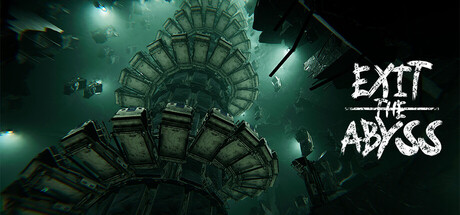
Exit the Abyss is a psychological horror game where you are trapped in an abandoned, haunted hospital. The game focuses on an oppressive atmosphere, exploration, and mysteries, with minimalist puzzle elements. Immerse yourself in a distorted reality, confront your fears, and find the way out!
Revenue comes from in-game items and microtransactions, which our price-based model doesn't estimate. The player count below is how many people own it, not what they spent.
About
Check out my next project — Little Astronaut, a top-down sci-fi puzzle game where a mysterious fungus infects a base.
Add it to your Steam wishlist!

Exit the Abyss is a psychological horror game set in an abandoned, haunted hospital. The player controls a young man who, after his death, becomes trapped in an alternate hospital. To return to the world of the living, he must solve mysterious tasks and endure mentally exhausting trials.
The game is a slow-paced, atmospheric horror experience that focuses on psychological tension, oppressive ambiance, and environmental storytelling. There are no dialogues or human voices—the story unfolds solely through the eerie environment, unsettling events, and hidden details.
(Exit The Abyss is a short, roughly 30–35 minute walk with a few puzzles — nothing more, nothing less.)
🔹 Atmospheric psychological horror – Pulls you into a dark and oppressive world, creating a constant sense of uncertainty.
🔹 Walking simulator with minimalist puzzles – No complex riddles; the game focuses on exploration and visual storytelling.
🔹 Minimalist yet haunting visuals – Enhances the feeling of isolation and fear.
🔹 Environmental storytelling – Hidden messages, ominous details, and disturbing events lead you toward the final resolution.
🔹 Single-player, first-person horror – Combines liminal space aesthetics with psychological horror elements.
If you enjoy psychological horror and liminal space games like Layers of Fear, SOMA, The Stanley Parable, The Exit 8, Paratopic, Anemoiapolis, or Lost in Vivo, then Exit the Abyss will be a perfect choice for you!
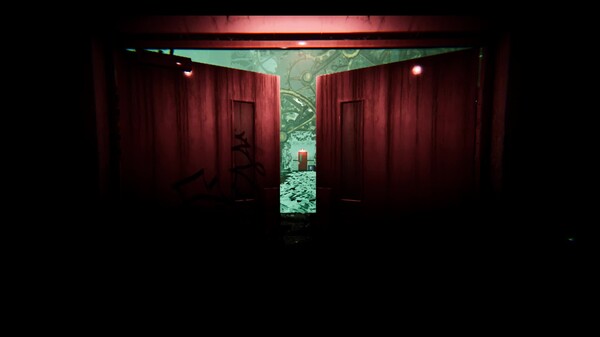
Genres
Stats
Languages: English, French, German, Spanish - Spain, Simplified Chinese, Hungarian, Russian
Engagement
Reviews
Themes across 77 recent reviews and how positive each mention is. A keyword signal, not full sentiment analysis.
Reviews
First part: I fell through the map. I had to restart. Fourth part: stuck in a loop, elevator doors don't close and it doesn't move. I had to restart. From the fricking beginning since there's no save or checkpoint system. Nice enough graphics, sounds and atmosphere for a free game by a solo indie dev, but the numerous game breaking bugs exacerbated by the absence of checkpoints kill the game.
Вроде как сначала было интересно, но забаговано, постоянные вылеты под карту, застревания в ключевых местах. Притом нет никаких сейвов, если что-то пойдет не так, начинай сначала. Пустая трата времени. Так и не смогла пройти загадку с клетками, потому что на пути тупо стоит невидимая стена и не выпускает тебя, даже если идешь правильно. Увы, она непроходима и не стоит даже 42р.
Media

Related
Related
Price dynamics, follower growth, revenue and sales trajectories with interactive tooltips
This and every other Pro feature is free until October 20, 2026. A free account is all it takes.
Hours played at review time, across 77 reviews with recorded playtime.
positive critical· bar length = how often the theme comes up
[h1]Exit the Abyss is a straightforward, short, barebones Walking Simulator / First Person Horror game. [/h1] [h3] Although the initial concept of this game sounds interesting, its actual execution is very simplistic. [/h3] Exit the Abyss will only take you about an hour to finish, and has no replay value. Nothing to collect, no branching choices, and some very linear sequences despite a couple brief puzzles. There are a couple of cool-looking scenes (one with a bunch of arms / heads sticking out of blood-like walls, another with a bunch of clocks hanging about, and a spiral staircase made out of hospital beds) however the game also comes off as cliche and predictable as well. This very much feels like it was a student project and the developer's first foray into creating a full game. Not to dog on it too much, I still was immersed in the brief settings and was curious enough to play through it all to see what was next. Exit the Abyss relies on a handful of jumpscares (ie loud sound with a scary figure appearing right in your face out of nowhere) and has some decent visuals but nothing that will blow you away. The level / world design can feel like it consists of little more than some ready-made assets pasted repeatedly through the environment. As-is, for the price of admission being only one dollar there are much worse offerings out there for a similar pricepoint. Unfortunately for Exit the Abyss, there are also much better offerings for the same price point. Inoffensive but forgettable, given more time on a project and a bigger budget the developer could probably churn out something better in the future.
Может быть Я ценитель психушек Эту оценю на 3 лоботомии из 10 Короткая, очень простая, скэри не было
Buggy enough that the game can't readily be completed. Having to restart the game after each random crash or progress-halting bug/glitch five or six times, as the game lacks a checkpoint or save system, I lost interest. Levels only partially loading so they can't be completed, randomly falling through the world with no hope for respawn, etc. No voice acting, only subtitles. At best it seems to be a macabre jogging simulator with trivial puzzles and a sprinkle of jump scares.
Exit The Abyss is a short psychological horror game developed and published by Veloneer Games. It approaches horror through isolation, uncertainty, and oppressive atmosphere rather than complicated combat mechanics or prolonged encounters with enemies. The premise follows a young man who has died and awakens in a disturbing alternate version of a hospital. Trapped somewhere between death and the possibility of returning to life, he must navigate this strange environment, complete the challenges placed in his path, and search for a way out. It is a simple setup, but one that suits the game's deliberately limited scope and gives its hospital setting a surreal quality beyond that of a conventional abandoned building. The experience is primarily constructed as a first-person walking simulator with psychological horror elements. Exploration forms the backbone of the gameplay, with the player moving through dark hospital interiors and examining surroundings for information that might explain the situation. Instead of providing an expansive environment with numerous branching paths, the game follows a mostly linear structure. This allows the developer to control when unsettling sights, environmental changes, and frightening moments occur. Players who enjoy carefully paced horror may appreciate this approach, although anyone expecting a large location filled with optional areas and extensive exploration will find the experience considerably more restricted. One of the more distinctive aspects of Exit The Abyss is its lack of spoken dialogue. Human voices are absent, leaving the player alone with environmental sounds, visual information, and the oppressive silence of the hospital. Storytelling therefore relies heavily on details scattered throughout the surroundings. Hidden messages and environmental clues encourage observation, while unexplained events gradually reinforce the impression that the protagonist is somewhere outside normal reality. The technique fits the theme of being trapped between life and death because it prevents the story from becoming overly explanatory. The player is encouraged to interpret what is happening rather than simply receiving every answer through dialogue. Puzzles provide occasional breaks from straightforward exploration. These challenges are intentionally minimalist and function more as components of the journey than as the game's primary attraction. They encourage players to pay attention to their surroundings and interact with the environment without turning the adventure into a demanding puzzle game. This design helps preserve momentum, particularly because the entire experience is brief. The downside is that players looking for elaborate riddles, complicated inventories, or substantial problem-solving mechanics will probably consider the puzzles too simple. Exit The Abyss is much more interested in maintaining psychological tension than testing the player's ability to solve intricate challenges. Atmosphere is where the game makes its strongest impression. Hospitals already possess an inherently clinical and uncomfortable character when presented as empty, abandoned spaces, and Exit The Abyss takes advantage of that association. Dark corridors, isolated rooms, confined spaces, and surreal imagery transform the location into something that feels detached from the ordinary world. Liminal-space influences further strengthen the sensation that the protagonist has entered a place that should be familiar but somehow feels fundamentally wrong. The first-person perspective contributes to this uncertainty because players can only see what is immediately in front of them, making every unexplored corner a possible source of danger. Audio is equally important because the absence of dialogue places greater emphasis on environmental sounds and silence. Unsettling noises and sudden audio cues are used to generate anxiety, while quieter stretches allow anticipation to build naturally. Jump scares are present, but the horror is not centered on extreme violence or graphic imagery. Instead, the game relies on psychological discomfort, unsettling situations, disturbing atmosphere, and stress-inducing sounds. Its mature material is comparatively restrained, with no emphasis on extreme gore, sexual content, or self-harm. This makes the experience more dependent on mood and suspense than explicit shock value. A significant consideration is the game's extremely short duration. Exit The Abyss is designed to last roughly half an hour, depending on how quickly the player explores and completes its small selection of puzzles. This duration limits how deeply the story, protagonist, and supernatural concepts can develop. There simply is not enough time for elaborate character arcs or major mechanical progression. At the same time, brevity works in the game's favor by preventing its relatively simple gameplay from becoming repetitive. It can maintain its central atmosphere for the entirety of the experience and conclude before its limited mechanics become exhausted. The free-to-play format also makes the small scale easier to accept. Rather than presenting itself as an extensive survival-horror production, Exit The Abyss feels closer to an interactive horror short story that can be completed in one sitting. It includes several achievements for players interested in exploring everything the game offers, while support for multiple interface and subtitle languages makes the experience accessible to a broader audience. Its hardware requirements are somewhat notable for such a brief game, suggesting that players with older computers should pay attention to the listed specifications before expecting consistently smooth performance. Exit The Abyss ultimately works best for players who appreciate compact horror experiences where atmosphere takes priority over mechanical complexity. Its strengths come from the eerie hospital setting, lonely presentation, surreal imagery, environmental storytelling, and deliberate absence of human voices. Its weaknesses are closely connected to the same minimalist philosophy: the puzzles are basic, exploration is constrained, and the short running time prevents the narrative from developing into something particularly elaborate. Those expecting combat, deep progression, extensive lore, or hours of content are unlikely to find what they want here. Taken for what it is intended to be, however, Exit The Abyss provides a focused and accessible psychological horror experience. Veloneer Games uses a straightforward concept effectively, turning a journey through an alternate hospital into a brief examination of isolation and uncertainty. It does not reinvent first-person horror, nor does it have enough scope to explore all of its ideas deeply, but its concise structure ensures that very little time is wasted. For players interested in surreal walking simulators, liminal environments, environmental clues, simple puzzles, and horror that can be experienced completely in a single session, it is a worthwhile small-scale excursion into an unsettling space between death and escape. Rating: 6/10
Bu oyun kısa ama harika bir ambiyansa, hoş görünümlü grafiklere ve bazı basit bulmaca unsurlarına sahip çok atmosferik bir psikolojik korku oyunudur. Onunla geçirdiğim zamandan keyif aldım!
Cheap jumpscares, and probably everything stolen from the asset store. not worth wasting your time.
Man This game was good asf. You have potential man if you can create a game like this just by yourself imagine what you'll be able to make with a proper team. Keep Working man. W creativity. W level designs. W game. W creator.
when i got to the level with the shapes and numbers, i was tryingggggg to walk on the last square, but alas, it wouldnt let me MOVE. I was stuck on the last one unable to continue the game. please fix this. asap.
Players by region
Where this game's players are, estimated from review languages.
Players also reviewed
The games this title's players most often review too — audience affinity.
Related
| Game | Estimated lifetime revenue | Reviews | Review score | Price |
|---|---|---|---|---|
| $355.8K | 2.9K | 87% | $2.79 | |
| $197.3K | 1.5K | 95% | $6.99 | |
| $6.4K | 39 | 79% | $4.99 | |
| $5.4K | 26 | 62% | $9.99 | |
| $2.7K | 26 | 62% | $2.99 | |
| $1.7K | 17 | 65% | $2.99 |