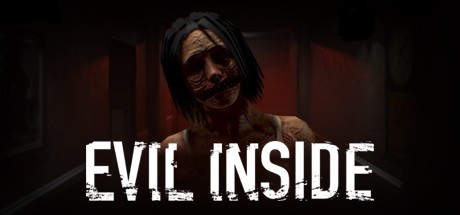
Evil Inside, developed and published by JanduSoft, is a first-person psychological horror experience built around grief, isolation, and the fragility of memory. The game places players in the role of Mark, a teenager grappling with the aftermath of his mother’s death and his father’s imprisonment, leaving him alone to care for his younger brother. In an attempt to reconnect with his deceased parent, Mark experiments with a spirit board ritual that spirals out of control, triggering a series of supernatural events that trap him inside a distorted version of his own home. From this premise, the game frames its horror not merely as an external haunting, but as a manifestation of internal trauma.
The gameplay structure centers almost entirely on exploration within a single domestic setting that subtly and sometimes dramatically transforms as the narrative progresses. Players navigate dimly lit hallways, familiar rooms that shift layout unexpectedly, and looping corridors designed to disorient and unsettle. The primary objective revolves around locating fragments of the broken spirit board scattered throughout the house, each piece advancing the story while intensifying paranormal disturbances. Rather than focusing on combat or elaborate survival mechanics, the experience leans into environmental storytelling and scripted sequences. The tension emerges from anticipation—opening doors, rounding corners, and walking through narrow spaces where the game carefully controls visibility and sound to heighten unease.
Visually, the game adopts a grounded, realistic aesthetic, emphasizing everyday household details to create a believable baseline before introducing distortions. Furniture placement, lighting changes, and subtle environmental alterations serve as tools to suggest that something is deeply wrong beneath the surface. While the graphical fidelity is consistent with indie production values and does not rival larger-budget horror titles, it succeeds in creating moments of claustrophobic tension. The use of darkness is deliberate, forcing players to rely on minimal light sources and amplifying the fear of unseen movement. Sound design is equally important, employing sudden audio spikes, distant knocks, and environmental hums to maintain suspense even during quieter exploration segments.
Narratively, the game attempts to blend supernatural horror with emotional storytelling. Themes of guilt, loss, and psychological unraveling underpin the unfolding events, suggesting that the haunting may be intertwined with Mark’s mental state. However, the storytelling is sparse, conveyed through environmental cues and brief scripted moments rather than extensive dialogue or exposition. This approach invites interpretation but can also leave players wishing for deeper character development or clearer narrative payoff. The emotional core of the story—Mark’s struggle to cope with tragedy—has potential resonance, yet its execution occasionally feels underexplored, with horror tropes sometimes taking precedence over character-driven insight.
Pacing plays a significant role in shaping the experience. The game is relatively short and can be completed in a single sitting, which keeps the atmosphere concentrated and prevents repetition from dulling its impact. At the same time, the brevity limits the opportunity for extended character arcs or mechanical variety. Jump scares are used throughout, some effective and others predictable, contributing to a fluctuating sense of fear. When the game relies on subtle environmental shifts and psychological buildup, it feels more immersive; when it leans heavily on scripted shocks, the tension can feel momentarily forced rather than organically sustained.
Reception has reflected this duality. Some players appreciate the focused, contained horror design and the emotionally driven premise, viewing it as a compact exploration of grief wrapped in supernatural imagery. Others critique its reliance on familiar genre conventions and limited interactivity, noting that once the structure becomes clear, surprises diminish. Movement speed, linear progression, and the lack of branching paths or alternative endings further contribute to a sense that the experience is tightly controlled rather than expansive.
Ultimately, the game stands as a modest but earnest psychological horror project. It does not attempt to redefine the genre, nor does it introduce groundbreaking mechanics. Instead, it offers a brief, atmosphere-driven journey through a haunted home that symbolizes emotional turmoil as much as paranormal intrusion. For players who appreciate slow-burn exploration, intimate settings, and narrative themes rooted in personal tragedy, it delivers moments of genuine tension. Those seeking deeper gameplay systems or innovative horror design may find it limited, but within its compact framework, it presents a focused meditation on fear born from both the supernatural and the human psyche.
Rating: 6/10