Eschalon: Book III brings the trilogy to a climactic end as you seek to uncover the mystery of your past, the secrets of the Crux stones, and who the Orakur really are. You’ll traverse miles of virtual wilderness and dungeons, filled with secrets and danger, in an unparalleled role-playing experience designed to feel like a true...
Modeled estimate, not a reported figure. How we estimate →
About
Stats
All-time low is the lowest price we've recorded for this game since we started tracking it.
Languages: English**languages with full audio support
Engagement
Hours played at review time, across 40 reviews with recorded playtime.
Reviews
Themes across 40 recent reviews and how positive each mention is. A keyword signal, not full sentiment analysis.
positive critical· bar length = how often the theme comes up
Reviews
Ok, this will be hard... In summary, I played Book I and II. I fell in love with the first one, and hated with all my soul the second one. So, what I think of this game? I f****** hate both endings. I promise there will be no spoilers, the only thing that I want to say is that, whatever ending you choose, it will not tell you what happend. I promise, you will finish the game not knowing what will happen. So, to finish this review, I'll divide into 3 sections. About gameplay, it's has better balance in combat than Book II, lots of secondary quests and it's not too cryptic like the second game. Aside from that, if you are reading this, that means you already finish at least the first game, so you know what you will enconunter. Same gameplay as Book II, nothing new added. Storywise... this game doesn't have a story. You start with a summary of what happend in Book II and... that's all. You don't learn anything new that is relevant. You get to know secondary characters and thats it. You won't even get an appropiated ending to close the story. Lastly, the engine. I really hate to talk about this. This game was released in 2014, and you can only play in 800x600. The first one was released in 2007, so I won't criticise that. The second one was released in 2010, and it was the same engine limited to 800x600. Ok, I understand, low budget. But in 2014? Where the lowest resolution for a monitor was 1080p? I repeat myself, I HATE talking about engine limitations in a game like this, because it obvious they make their own game engine, but if you have the knowledge of making one, you surely have it to improve the resolution. I honestly don't have much to say about this game, cuz you already play the previous ones, so yo know what you'll encounter. Basilisk Games from time to time post on their website that they are working on a new game, but this is the end of the road for me. I 95% sure I will not buy anything they release. In conclusion... meh. It's better than the second game, but not than the first one. If you enjoy the gameplay of the series, buy it. If you are invested in the story, don't.
A wonderful conclusion to the Trilogy in my opinion. It's kind of hard to review this game itself because it's clearly the final part of a Trilogy and you really should play the first two prior to this and if you like the other two well enough, I don't see why you wouldn't enjoy this one (it's my personal favorite of the three). The first game is free (I think) and gives a good idea what the games are like (though 2 and 3 have some balance changes and are more fleshed out) so you would really know by now if you would like this game or not.
If you're a fan of the series you'll probably enjoy the final installment. However, it's definitely the least of the trilogy with less interesting everything. Less interesting dungeons, quests, environments, etc. That said, everything that made the first two games good is still here and I'd recommend this game if you're a fan. Just... try to lower your expectations.
I played the rest of the series when I was a kid and wanted to revisit it. Compared to Book II, this doesn't really feel fully finished. It's a notably smaller game with some really intense balance issues that make it very difficult to play comfortably without using magic. The beginning areas' difficulty is a bit high around the start of the game, then becomes much easier when you start to grapple with the rapid durability and hunger meters and the game becomes survival with very limited resources. I don't think I've actually done a complete playthrough on any difficulty of this game simply because of how clunky the mechanics work out in the world and how little it feels there is to explore. Loved the previous games but this is an easy miss.
Most will say it was not as good as Book 2, they are right That it was too short, that the story was rushed, the map was smaller than book 2 , etc. However I want to focus on the aspect that game mechanics wise this was very refined, loot was plentiful and varried, a lot more store clerks to trade with, while we didn't get a lot of varriation in biomes it was a fun Island adventure. Only gripe with Book 3 is how ramped up the difficulty was and how it was never really a sure way to know where you were supposed to go and what to do. But nonetheless I am happy to have finished something that started with a demo in 2008 Thank you Basilisk Games. ----------------------------------------------------------------------------------------------------- Perfection Goblin soldier attacks [99% chance to hit] You attack [20% chance to hit] Perfection in pain
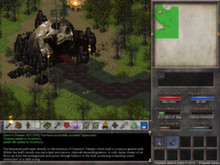
(Follow [url=https://store.steampowered.com/curator/42150626-Jarl's-Game-Treasury/]my curator[/url] for more reviews like this) This is the third and final game of the Eschalon trilogy. I reviewed Book I [url=https://steamcommunity.com/id/jarlfrank/recommended/25600?snr=1_5_9__402]here[/url] and Book II [url=https://steamcommunity.com/id/jarlfrank/recommended/25620?snr=1_5_9__402]here[/url]. Book III is very similar to Book II when it comes to technical and gameplay aspects, so I won't repeat myself too much here. Considering this is the final part of a trilogy and wraps up the overarching story, I'd recommend to play the previous games first, especially Book II as it ends with a cliffhanger and directly leads into the beginning of Book III. When it comes to the character system and combat, not much has changed compared to Book II. It's still the same relatively simple combat system, and the exact same character system with the same attributes and skills. The only difference I noticed is that there's a couple new spells, otherwise everything is as you know it from Book II. For example there's now a light spell in the divine magic school, where previously it was only in elemental magic. This is good in theory, because divine magic has more utility spells so if you want that kind of thing it's the better school to choose, but I tried it out and it's far dimmer than the equivalent elemental magic spell. Why even add it when it's useless? Ultimately I just resorted to torches boosted with the Cat's Eyes spell, which remains the best way of lighting up dark dungeons. Another issue with spellcasting that's either new or I just haven't noticed before is that you can't cast spells in combat when your weapon, gauntlets & shield all together have too much weight. I bought a very expensive magic sword, equipped it, went into battle - and suddenly got the message that with my strength (which was very high, above 30) I could only wield a weight of 14 or so in my hands, any more interferes with spellcasting. And that sword had a weight of 18! No weapon in the previous games was this heavy. This essentially made the most expensive sword in the game useless as I couldn't cast spells while wielding it, and its damage output wasn't even worth the tradeoff. For comparison: Maledge, a unique sword I found in a dungeon, deals 8 damage, has +3 bonus damage, +3 freeze damage, and increases your sword skill by +2 (which further increases damage AND hit chance). It only has a weight of 5. The expensive sword I bought off a merchant had a base damage of 11, and was enchanted with +4 fire damage. It has a weight of 18, which makes it pretty much impossible to cast spells while wielding it even when you raise strength to be your highest attribute. This weight applies to all swords of this type (Mithril Conqueror's Sword) regardless of enchantment. So for a base damage of 11 you essentially give up spellcasting. Meanwhile the unique sword Maledge has 8 base damage and +3 bonus damage, which adds up to 11 on its own, not even counting its other enchantments, and it only has a weight of 5. Balance in general seems to be a bit wacky here. None of the Eschalon games are particularly balanced, but this one struck me as the least well thought-out in that regard. The game is much shorter but most enemies seem much harder than before, forcing you to focus on specializing your character into only a handful of skills as a jack of all trades is going to struggle against enemies that outclass him. I focused on sword + divine magic, which is a solid combo, but combat felt definitely harder than in the previous games, without being any more complex. Enemies just have bigger HP pools on average, which means you need to land more hits to kill them and suffer more hits in return. To make up for it, magic items seem like they're generally a little more powerful than in the previous games, but not enough to make a real difference. A positive change, however, can be found in the game's exploration. You now earn experience for discovering secret areas, and there's plenty to find. Some are obvious, some not so much. There was one that required me to cast a Reveal Map spell. There are now far more places where you can blow up wall sections with explosive barrels. Plenty of secret areas are hidden behind fences or walls you can blow up this way, so carrying a few explosive barrels with you is always a good idea (as long as your strength is high enough to allow for it - those barrels are heavy). There are also several (optional) puzzles that require you to shoot a lever through a window. Environmental interactivity and puzzle solving feels a lot more emphasized in this game. So overall, the level design shows some noticeable improvements. Visually there are also some nice additions. There's one dungeon entrance that's a giant skull, there's a beached ship whose wreck you can enter, etc. You can see those places in the screenshots here on the store page. The previous games didn't have anything this fancy. I liked how some special locations get some extra visual flair this way, and how these larger assets break away from the strict tile-based nature of the visuals. One thing some players might be disappointed with is the length. It's the shortest game in the series by far. I completed Book I in 10 hours, Book II in 14 hours. Book III only took me 7 hours. The world is quite a bit smaller, but the wilderness areas tend to be better designed and have more to discover, so quantity made way for quality in that regard. Some of the maps here are much denser than any featured in Book I or II, and there's much less empty space - no more narrow linear forest paths like in some areas of Book I for example. And since movement speed is just as slow as in Book II, the smaller size of the game felt like a good thing to me. There's much less tedious backtracking compared to the previous games. My only disappointment is in the game's structure. You ended Book II with one of the magic Crux gemstones in your possession, and your enemy possessing another. Now you have to find the two missing stones (there are 4 in total) before your enemy gets his hand on them. After you found the first, you are tasked with finding the second and expect to be at the halfway point, but the areas that follow are pretty much just a funnel to the final area and then the game ends. The second half feels a little rushed in comparison. I didn't have much of an issue with it - better an abrupt end than overstaying its welcome. The real issue is the ending. Oh boy. It throws [i]yet another[/i] plot twist at you out of nowhere, tells you that everything you thought up to this point is wrong, and actually whatever you do the outcome will be a great cataclysm and trying to prevent it will cause an even worse one. The final showdown between your organization and the alien antagonist consists of a pretty cool mass battle where you fight against an enemy army with allies on your side. You can choose which side to support: Erubor, the man who has been guiding you for the previous games, or Malkur, the antagonist who claims his plan is actually the better one for Eschalon. Whichever side you choose, you're not going to get any real answers. Regardless of who wins, the game ends with you giving all Crux stones to the winning side and then retiring from adventuring. The winners use the stones to enact their plans, but you won't find out whether they succeed or not. There's a big cataclysm coming that may or may not be prevented based on your decision, but the game simply ends with a "Well, you'll just have to wait and see what comes of it." There is no real resolution. You don't get any confirmation about which side was right or wrong. It's a huge letdown if you cared about the story at all. I can still recommend it for the first half, but the ending is a weak conclusion to the trilogy, almost to the point of ruining it (at least story-wise).
I was excited for the finale after playing books I and II, but the ending is rushed and unsatisfactory, solving the tension of three games in five minutes with a poorly designed Inception ending.
"Premium gruel is marginally better than standard gruel but still tastes like fungus and bugs." Ah, Eschalon, I see your denizens have grown wise to my formerly lucrative paladin schemes of "turning mana into cold hard cash" in Book II by creating stacks of delicious food and selling it all. Not to say that my mercantile skills went to waste this time. Or that surviving primarily on what I envision as cricket oatmeal was a bad idea. In fact, trivializing finding food and water via spellcasting made everything run smoother and I preferred it to relying on foraging. (Which also wasn't nearly "the-camp-in-the-rain-for-4-days-collect-weeds-overcharge-the-innkeeper-rinse-repeat" cashgrab it was in II.) Foiled again! Looks like I can only rake in gold now by being a genuinely on the level paladin this time and do what I was born to do — risk life and limb (and possibly contracting diseases and curses) as I dive into dark catecombs and bash skeletons into dust. On more "serious" topics like saving the world, I didn't find the open ended nature of the conclusion disappointing like some other players did. I thought it was sad in both branches but made sense. As far as the content goes, I will say Book II is the highest point but I still enjoyed III a lot and am glad I played the whole trilogy. I will say I added some player created extra content for III (Rockhammer mini dungeons, Mirkland expanded and the Alchemist's Tower) and I'm sure that made for a more well rounded experience. I'd recommend hunting those down if you play. It probably would have felt a bit short without them.
Slightly disappointing ending of the trilogy. The first game has its charm, the second one was ok, the third one can be better. Still ok if you finished the first two.
可以一玩,但剧情仿佛在搞笑。时常有人拿 eschalon 三部曲和 spiderweb software 的游戏们相比,只可惜剧本差了后者十万八千里。 可玩性是不低的,但是这种老派rpg剧情这么烂的话,魅力没掉一大半了。
Related
Related
Trends
Modeled estimate over time, reconstructed from Steam's monthly review histogram.
Momentum
Pace estimated from the game's recent review growth (our daily snapshots) at its own sales-per-review ratio — a momentum signal, not booked sales.
Audience
Estimated from the language of this game's reviews — a proxy for where players are, not official Steam demographics.
Related
| Assault on Arnhem | $18.3K | 66 | 50% | $9.99 |
| Alchemy Quest | $18.3K | 64 | 83% | $11.99 |
| ATV Drift & Tricks | $18.3K | 85 | 54% | $9.99 |
| Kill the Brickman | $18.3K | 183 | 78% | $3.99 |
| Dairy Princess | $18.3K | 90 | 91% | $6.99 |
| Otoko Cross: Pretty Boys Klondike Solitaire | $18.3K | 168 | 87% | $6.99 |