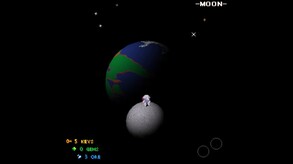
Use and upgrade magic items, collect hidden treasures, and uncover the secrets between two worlds in this cute isometric puzzler! When a certain vacationing Elephant stumbles upon a way into the land of the dead, will she unwittingly let something far more sinister slip through?
Modeled estimate, not a reported figure. How we estimate →
Media

About

Stats
All-time low is the lowest price we've recorded for this game since we started tracking it.
Languages: English
Engagement
Hours played at review time, across 44 reviews with recorded playtime.
Reviews
Themes across 44 recent reviews and how positive each mention is. A keyword signal, not full sentiment analysis.
positive critical· bar length = how often the theme comes up
Reviews
Review is about 8 hours after getting the easiest ending. I want to play more though. The short review of this is if you were a fan of the nonlinear way Fez's world unravels, or the item gimmick of Link Between Worlds, or the idea of "what if 2D Zelda was isometric 3D, you had access to all the items from the start and you can tackle areas of the world nonlinearly" OR if you're a fan of very technical platformers, you should check this out. (Note in the case of the game being a technical platformer, the game does offer access to cheat codes early on which can be toggled on to get through very hard sections). If that sounds interesting I would go play it and stop reading this review! This will spoil some things. - - - - - -The Early Game- You can explore the world in any order you want, eventually gaining the ability to try out one of 8 items. The twist that you can only hold *one*. You're then tasked to find Seven Spirits hidden amongst the world. To do so, you need to poke around, figuring out which area you can explore a bit more of if you have the right item. But it's not as lock-and-key as that - with each area you push a bit more into, and with each time you return to the item-swapping area to try out different combinations of items, you start to get a better sense for what items can work well together. You get better at recognizing situations in the world where you can apply certain items and platforming techniques. Some rooms are solvable with different combinations of items, and by the time you have access to 3 or 4 items, it becomes quite fun navigating the various challenges. As a simple example, the Ring lets you pick up and throw objects. You can use this to climb higher. But you can ALSO throw objects onto other objects. Objects also bounce slightly if you drop them while in the air, and if you can time it you can get a higher jump... You also have the Wand, which levitates objects. Now if you can combine the Ring and the Wand, then suddenly you have access to a lot more jump height than you expected. -Height Economy- The economy of Elephantasy Flipside revolves around (abstractly) exchanging items for jump height. If you design a platformer with jumping you quickly realize that how you offer a player 'height' is kind of a currency system of its own. If access to height is too easy, then everything becomes trivialized. If you hide access to height through moves or entities in the environment, then you can come up with all sorts of situations for players to get higher (or further). Why Elephantasy Flipside ends up not being a sort of so-so Zelda-like is because the items interact with this "Height Economy" in surprising ways. Rather than a Hookshot meaning "now you can traverse chasms IF there's a hookshot block on the other side", we get stuff like the Herb Bag, which lets you hold a few herbs of various types - one for high jumps, one makes you invincible, another freezes time, another duplicates everything. You can see how each of those moves actually is a way of accessing the 'height economy'. A high jump is self-explanatory. Invincibility means that you can step on hazards, and thus jump from new positions. Freezing time allows you to navigate impossible hazards, or do stuff like keep a moving pillar in place, letting you reach a certain height. The Dash Boots at first seem only useful for running faster and getting across wider pits, but you realize there's a tricky wall-jump tech which means that you now have access to more height when near certain kinds of walls. There's a combo of items involving the dash boots that is too good to spoil, but (maddeningly!) the Dash Boots go even deeper, later on. Even the Magnifying Glass, which lets you shrink down, at first seems like a Zelda-y gimmick. But once you realize your movement physics are slightly different when small, well...! The other items are a Book (which lets you read glyphs on stones, except the vowels lol) and a Whistle (calls your fast travel bird, taking you to unlocked checkpoints). The Book is "useless" from a Height Economy standpoint, but it has this interesting feeling to it, where you are trading off possibilities for exploration, with the ability to uncover lore in a far-off area (if you can reach it while losing the inventory slot!). Likewise, the Whistle lets you skip to an area, but of course you lose access to an item slot. I liked this, because it means that if you get from "Grass Land" to "Mountain" and need Item A + B, the game can impose different requirements from "Mountain" to "Sky", because you can now skip to Mountain without needing A and B. I think this lets the levels of the game always stay at a decent complexity. Lastly there's the underwater ability, which... lets you go underwater. I haven't made too much progress in the underwater bits, but it feels sort of similar to the Book or Whistle, in a way, where it imposes a new 'rule' on you (you can now access water and swim) while limiting access to items. Some of the item physics/movement is different underwater. -Difficulty- E:F gets pretty hard near the "easy" end (the others involve more completionism which I'm in the middle of doing). I would say I didn't personally mind the difficulty, but sometimes I would have to grind for herbs to do some of the challenges... at the same time having to do such a thing did add a certain memorability to it. I guess I prefer it this way, rather than if the challenges just dumped a bunch of herbs near the start, conveniently? The game offers a cheat code for infinite jumping, which I used once when I got tired of one of the grinds (The Volcano escape... lol.. may it strike terror into your heart.) Later levels have some pretty technical movement, but it was fun to learn and even got sort of surprisingly easy once I got the hang of it. Likewise, the game is an isometric platformer so perspective messes with where you need to aim a jump. Overall I found it to bean interesting logic challenge, as you can always judge one dimension of a platform's position precisely, and have to 'feel' or remember the other two. I guess there is a little tedium in retrying some challenges and some of the early-game item swapping, but I think it contributes to the game's memorability and texture. And I still feel like with each failure there's a sense of getting a better understanding of the game's mechanics. If you like the feeling of passively remembering the layout and challenges of a game's world then you'll love what you remember after playing E:F! I guess if I have some personal gripes... some of the automatic dialogue progresses too slowly. Also maybe the fast travel animation could go a bit faster as you warp between screens...? Color-coding the world-map might have been nice, too. -CONCLUSION- Well... that's all I can think of for now. I'm going to play more, maybe it'll spark some new thoughts. But I really love how this game got me thinking about the ways of which a simple platformer moveset - single jump - can be extended through the use of smart object and item design.
Incredible Elephant Game!!!!! Update: I've reached 100% completion in this game (after getting a lot of hints from the developer) so I want to write a longer review now! (Note: It took me around ~23 hours to get 100% but I left the game running overnight by accident so that's why my playtime is higher) This game really is incredible, but it's not a game I would recommend to everyone. By contrast, the original Elephantasy is something I'd easily recommend to anyone who likes exploration games and puzzle games. The difference (aside from the perspective) is that Elephantasy Flipside has some very demanding action game elements alongside its puzzles. In the original Elephantasy, there were a few action/timing elements, but you could adjust the game speed to handle them easily. In Flipside, instead of adjustable game speed, there are "cheat codes" that presumably let you trivialize any platforming parts you get stuck on (I actually couldn't figure out how to use the cheats, so I'm not sure what they do....) But action was a pretty minor element of the original Elephantasy. In Flipside, platforming challenges are a huge part of the game. The puzzles aren't just pure item-usage puzzles this time – often part (or all) of the puzzle is understanding your character's movement capabilities and executing a jump sequence correctly. The platforming uses an isometric perspective, which makes it difficult to judge the position and height of platforms. Sometimes the game even leans into this and uses the perspective in deceptive ways. The perspective is a huge part of what makes the game unique, and personally, it's the main reason I was so excited to play this game. Isometric platforming is really interesting because the perspective totally messes with your platforming intuition. It typically involves a fair bit of trial-and-error and guesswork, unless the designer decides to sand off all the edges and align everything in a predictable way. I thought Flipside might take that approach – that maybe it would use the perspective mostly for things like secret-hiding, and keep the platforming simple and beginner-friendly. But no, there is some real tough platforming in this game. That's great for platformer sickos like me, but if you're more interested in the exploration and item puzzles, you might get frustrated and end up cheating through a lot of sections. So, I'd mainly recommend this game to people who are ready for a challenge, and don't mind the confusion and unfairness that sometimes comes with the isometric perspective. People who want a more casual experience can probably have a lot of fun with it, and maybe even reach an ending or two, without using the cheat codes. But if you don't engage with the harder parts of the game, you can only get the "bad endings". So, a player who wants a more relaxed experience basically has to decide between setting the game down without any real closure, or using cheats. If you want that good ending closure without cheating, prepare yourself! You'll have to explore the game's huge map quite thoroughly. I've made a big deal about the platforming being difficult, but for an experienced platformer sicko, I think it's not actually too bad to attain the preconditions for the good endings. However, the boss you need to defeat to reach the good endings is a true nightmare. It's long, demanding, extremely punishing, and very random. After sinking 20+ hours into the game, I didn't want to end it by cheating, but this boss was an incredibly frustrating and grueling grind. But I'm not capable of disliking this game because there's so much heart put into it!!! The world is so full of delightful surprises and layers upon layers of secrets. You'll have to put in a lot of work to uncover everything, but it's so rewarding. As much as Elephantasy Flipside frustrated me at times, a lot of the frustrating aspects are also things I deeply admire. The system of only being able to carry a limited number of items leads to some annoying situations where you have to backtrack because you brought the "wrong" items to an area, but it's the same system that allows the world to gradually unfold in such a fascinating way. The opaqueness of certain mechanics left me occasionally baffled, but it's also the reason discovering new tricks is so exciting. Some of the most awkward and finicky platforming puzzles are also fiendishly clever and creative. If you're capable of meeting this game at its level, it's simply one of the best games.
A cute, exciting game. The world feels big, and the pixel art is adorable. It comes with an elegant manual with a beautiful old-school style feel; I recommend reading it to understand some mechanics (Especially herbs and objects). The map doesn't have your typical QoL features of setting points of interest, but it comes with coordinates! An excellent opportunity to have some pen & paper magic. Also, some important markers appear automatically, so there's that. When you gain access to the item's rooms, the game opens up a lot, giving you much freedom on where to go. At first, it feels kind of overwhelming, but the more you explore and understand what items provide you and what benefits, you can start planning what to do and where to go next—a delightful experience.
[h1] This is one of those games I would like to mark as recommended in the steam review box, but it has some problems that make it hard to recommend [/h1] Elephantasy: Flipside is a sequel that changes a lot from the previous title mechanically, while both games shares some ideas and mechanics, for example, expanding your inventory to carry more items, exploring and solving puzzles; the core challenge of Flipside shifts to be focused on precise platforming making the difficulty in execution just skyrockets in comparison to the OG Elephantasy. I know the game have cheat codes that make the game substantially easier, but I feel the review should reflect how I played the game, what was good and what was bad. Lets starts from the good, the exploration and puzzle solving is top-notch, you can visit most zones from the beginning if you know what you are doing, but a big part of the fun is figuring out how to reach those new areas. Also, the game have a bunch of secrets to uncover. If I rated the game only from these aspects, I would give it a 5/5, and that is why I think this game have so many good reviews from people that didn't finish the game, if you look into the achievements this game have, only 9% of people gets to see 1 of multiple endings, that is low. The bad things of this game just show up like in the last parts of the game, but the 3 big ones are: 1- You can fail some achievements and lock you out until you replay the whole game, that is not short by any means. 2- You at least need to play the whole game twice if you want all the achievements 3- The last boss is BS, it can just randomly kill you, and you need to replay the whole long fight. There are things that can go wrong that are just out of your control, if the enemy is using an attack and the timer makes it change to a new phase, the boss just stops working properly and do some RNG thing that can kill you by accident. You can do some things to mitigate the RNG nature of the boss, but still is bad, the other boss in the game also is an RNG fiesta. Point 3 and the last area where the difficulty just skyrockets is what made me give this game a negative recommendation. The game stops being fun and becomes a gauntlet of torture and RNG. In the end, some people are going to love this game, but most people are just going to abandon it and never finish it. I just finished it because I wanted to see what the game had to offer. The game have an amazing potential, but it was made for a totally different audience if you think about the target audience of the first game on the series. In my opinion, expectations weren't met.
Remember the very first Legend of Zelda, that moment where you traveled to a far off point on the map that you were pretty sure you weren't supposed to be in, heard a rumor to set fire to a seemingly normal plant on a boring random screen, and then did so only to reveal a great secret hidden beneath? This game is that ah ha moment of exploration and discovery, over and over again. Also similar to that first Zelda game, Elephantasy: Flipside is an unguided experience. You have great freedom to go anywhere, but the problem is that like that first Zelda game, there is actually a correct order your should do things in--at least in the beginning. Without spoiling what the designer intended, there's pretty much nowhere to go until you get a certain item and go to a certain screen. Will you happen to do that? I certainly didn't. I spent about an hour and half doing what should have probably been the first twenty minutes. Luckily, the profound sense of discovery and mystery pulled me through, and I'm really glad I powered through that initial bit of feeling lost and frustrated. However, soon after this moment when you start the game properly, it happens all over again; there's not much progress that can be made until you do a specific task (I'll put spoilers all the way at bottom of this review to help other lost souls who get stuck). After this bit, the game really opens up! All those secrets you couldn't access, well now you can! If you can remember them all that is. That's right, this is a game where you really need to take notes. Grab a notepad, and be meticulous-- trust me, you'll be glad you did. Another crucial piece of advice: after you uncover the usable items and have played with them for a bit, remember to check the game guide--it's linked from the store page. The item descriptions in particular might help you figure out how to use some of them... My last piece of non-spoiler advice is to not use the cheat-codes. Most players will stumble upon them within the first few minutes of playing the game. I thought that they were the intended ideal way to play the game. They were not, and they kind of ruined the sense of exploration for me by letting me see too many areas too early on. It also made me feel a bit daunted by the amount of secrets I was unable to solve, which was discouraging. Again, let me say: DO NOT USE THE CHEAT CODES. At least not for the first few hours. Isometric platforming can be tricky, but the hard stuff doesn't open up until you're well on your way in your adventure, and you can always think about using them then on a case by case basis. I know it seems like I have a lot of caveats, but this is a really special game that constantly delighted and surprised me. It's a cozy Zelda-like with some rough edges, but also has some incredible pay offs. I give it a very hearty recommend! Now onto the spoilers regarding the correct way to start your adventure: [SPOILER 1] If you're lost in the starting area: There is s kind of hidden passageway in the cliffs north of the light house (the building up/left from the start. Bring the item there back to the lighthouse. I must have walked past this passageway dozens of times before I realized it was there. Remember: isometric view! You can't always see the screen exits. [SPOILER 2] If you're lost after discovering the flipside area: There's really only one lost soul you can recover first with only one item and limited gems, and it's in the castle to the top/right from the items building. You know, the castle that the NPCs and signs tell you not to go to, and that seems like it's the final level and that you should avoid it. It's not any of that. You should do it first, after exploring a bit and collecting some gems. After this, the game really opens up and you can really start making progress. Good luck, gamers!
While overall I enjoyed equipping larger and larger combinations of items to explore deeper and deeper into Elephantasy: Flipside's world, a few key issues had eroded my motivation to continue by the time I reached the endgame area after about 6 hours of gameplay. There are warp points, but apart from the two central ones- one for each half of the world- you can't use them unless you're carrying the warp whistle. At game start your item limit is 1, and in the first few hours of the game that limit remains low enough that keeping the warp whistle in your inventory significantly hampers how deeply you can explore, yet going without it makes backtracking frustratingly tedious at times. Even when you do have and use the warp whistle to travel, rather than selecting your destination on the map, you have to rotate through a series of arrival animations for each warp location until you reach the stop you want. At the least, I think the warp whistle should have just been a key item that remains with you at all times and doesn't count toward your inventory limit. For that matter, I feel the same about an item that simply translates runic text. Furthermore, you only have two [i]active[/i] item slots for the whole game, and there are rooms / areas in which you want to use more than that, which means repeatedly diving into the inventory screen in a manner not dissimilar to equipping and un-equipping your iron boots in (the original) Ocarina of Time's water temple. Compared to Elephantasy, doubling the item pool and world size seems to have exacerbated inventory management annoyances without any particular counterbalance, and so in my opinion the early game experience particularly suffers, but really the whole game does to varying degrees. Like Knytt Underground, the game boasts a high number of individual rooms, but many of them are devoid of points of interest, and seemingly exist only for traversal. Some areas are literally just labyrinths, and some rooms are one-way unless you have particular items. These points would be less problematic if the map gave you more information. It doesn't show you connection points between adjacent rooms at the same elevation, map markers are sparse, and there's no support for manual map markers, so any minor points of interest or other notes you want to remember will have to be recorded outside of the game, as in The Witness or the Myst series. I know many favor that style, but it's typically not for me. A couple of minor gripes include the possibility of unwittingly locking yourself out of 100% completion, and the inelegance of mashing the jump button to make wall jumps work more consistently, but these I'm more or less willing to overlook. Unexpectedly, it was the simpler and smaller-scale Elephantasy that I wound up enjoying more.
What a special game. It has a fair share of problems and it's definitely not for everyone, but generally I think this is a hidden gem that hasn't been discovered by nearly enough people. I suppose you could call it a "puzzle platformer", but "riddle platformer" would be slightly more apt. Even though there are a good amount of puzzles scattered throughout the world, the bigger problem you are aiming to solve is where to go, what to do, how to get to places. This game is extremely self-driven, with Belle being dropped into a world with almost no direction beyond a few hints, and if that doesn't sound like your thing then this game isn't for you. Personally, I found this "open world-ish" approach very refreshing, and enjoyed finding secrets while exploring both worlds. It would be a lie to say the platforming isn't jank, but the roughness of the whole game feels "jank in the right way" to me. You will likely be immediately repulsed when you walk up the cliffs for the first time and have to brace jumping UP a Z-level, but by the end of my playthrough I was completely used to it. There are a few places where the isometric view made platforming nearly impossible, but you are given tools to skip around it... and it almost feels encouraged. Solutions are relatively open ended, and to get better endings you are asked to do things that most games wouldn't even allow you to do, letalone require it. I was frustrated at a few points, and I think that occasionally the crust the game has stops being interesting and starts being annoying. But I think that doesn't matter, and by the end of discovering the best ending (which required a pen and paper), I was wholly charmed by Elephantasy Flipside. If you like the fact that every screen has a name, the open ended nature of the world, and the manual looking like it was scanned through a cheap HP printer from 1999, then this game probably is for you.
クオータービューの名作てあんまり思い出せない、ランドストーカーとかかな。このエレファントシリーズも他のゲームと違うかんじで面白いのでやったほうがいいとおもいます。このシリーズは今後もでてほしいので、遊んでみてください。 自由に探索できるかんじがたまらない作品です。ネタバレはしないほうが楽しめると思うので内容は控えます。
hidden gem
Elephantasy: Flipside presents you with a huge world to explore. Like its predecessor, you quickly get access to many interesting items, but you can only take one with you at a time at first, severely limiting your options for exploration, the game really opens up as you get the ability to carry more items, learn to use them and test which combinations will help you best. I loved its bouncy physics, combined with its hard platforming, part because of how you control your character, and part because the isometric style of the game is used to make many things not obvious in where they actually are, making jumps often require some planning and thought to pull off. It's a little as if the entire world was a giant puzzle about how you should navigate it and with secrets everywhere making the exploration very interesting. The map is pretty barebones but I think that's a good thing as it forces you to go to pen and paper to scribble notes about the world, keeping important coordinates of places where you still have things to do, which items you should try next ... making the exploration much more personal in my opinion. There are a bunch of clues in the world to help you in your adventure, but nothing is ever obvious, even the very first mandatory find needed to access half of the gameworld is hidden somewhere, I actually found it in like my first 5 minutes of gameplay by sheer luck but I really can see how someone else could get stuck for a while at the very beginning because of it. Also the early game often makes you backtrack to try other items as your item capacity is low, it's not too bad but the whole experience is pretty demanding from start to finish and asks for your full attention. Elephantasy: Flipside is a game with a lot of charm, and as it asks a lot from its players, I don't think it is for everybody (even with the cheatcodes the game provides) but if you're able to immerse yourself in it, you will find it's a very unique and rewarding experience !
Related
Related
Trends
Modeled estimate over time, reconstructed from Steam's monthly review histogram.
Momentum
Pace estimated from the game's recent review growth (our daily snapshots) at its own sales-per-review ratio — a momentum signal, not booked sales.
Audience
Estimated from the language of this game's reviews — a proxy for where players are, not official Steam demographics.
Related
| Black Light Kills | $12K | 88 | 75% | $3.99 |
| LUCKROT | $12K | 104 | 91% | $4.99 |
| Heroes of Myth | $12K | 73 | 79% | $7.99 |
| Desktop Portal | $12K | 82 | 87% | $9.99 |
| Tiny-Tasy Town | $12K | 199 | 58% | $1.99 |
| IT Simulator | $12K | 172 | 91% | $4.99 |
Related
| Human Fall Flat | $109.3M | 225.6K | 95% | $19.99 |
| DAVE THE DIVER | $90.8M | 139.6K | 97% | $19.99 |
| Slime Rancher | $73.8M | 155.4K | 98% | $19.99 |
| House Flipper | $65.8M | 110.8K | 94% | $24.99 |
| Slime Rancher 2 | $45.9M | 49.2K | 95% | $29.99 |
| Castle Crashers® | $41.4M | 139.6K | 96% | $14.99 |