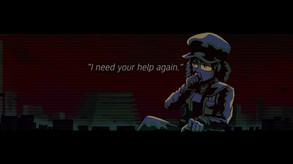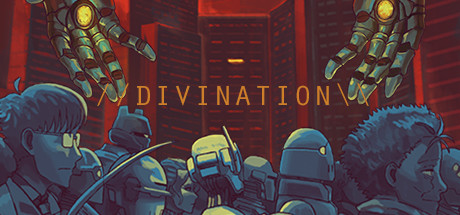
"What if you're born into this world without your permission?" DIVINATION is a very short visual novel where you act as a fortune teller in a futuristic world. Talk and listen to people's stories, then foresee their future using the runes they had drawn.
Modeled estimate, not a reported figure. How we estimate →
Media

About

Stats
All-time low is the lowest price we've recorded for this game since we started tracking it.
Languages: English**languages with full audio support
Engagement
Hours played at review time, across 40 reviews with recorded playtime.
Reviews
Themes across 40 recent reviews and how positive each mention is. A keyword signal, not full sentiment analysis.
positive critical· bar length = how often the theme comes up
Reviews
ИИ слоп до появления ИИ. Это даже не визуальная новелла, даже не кинетическая. Это просто слайды под тревожную музыку. Ну кому это может быть интересно? Нет, бесспорно, кому-то было, но на самом деле не должно было быть. Мб я не дошёл до какого-то особенного твиста? Да и xyй с ним!
C'est ce genre de jeu-concept avec une idée brillante et qui n'a pas la prétention de faire plus. Il applique son concept et il drop-the-mic. Vous incarnez un... être omniscient ? Et vous faites des divinations pour vos trois clients. Je pourrais développer, mais c'est un jeu avec beaucoup de symbolique et des mécaniques très simples que vous avez déjà vues dans le trailer : la seule chose qui vous manque, c'est d'en faire l'expérience vous-même car je pense que ça vaut le détour.
It is pretty short, but idea is interesting. I thnk I play those game time later again.
Life has pain, but it is meaningful, and even its struggles are not a mistake-it is a chance. DIVINATION is a beautifully brief, introspective experience — a little gem that challenges you to consider not just what fate holds for others, but how much choice we really have.
Divination is a short but striking narrative experience that uses minimalist interaction to explore heavy philosophical themes. Developed and published by Mojiken, the game positions itself somewhere between a visual novel and an interactive thought experiment, inviting players to contemplate fate, responsibility, and the emotional weight of decision-making in a bleak, cyberpunk-tinged future. Despite its modest length, Divination leaves a strong impression by focusing less on mechanical complexity and more on atmosphere, symbolism, and moral ambiguity. The player takes on the role of a Diviner, an enigmatic figure whose presence is represented almost entirely through a pair of hands and an array of runes. From a small, isolated room filled with glowing screens, you receive visitors seeking guidance about their futures. The world outside is hinted at through dialogue rather than exposition, gradually revealing a dystopian society shaped by technological collapse, existential despair, and a profound loss of certainty. This indirect storytelling approach gives the setting a haunting quality, making the world feel vast and troubled even though the physical space you occupy never changes. Gameplay revolves around interpreting runes and responding to the questions posed by those who come to you for answers. Each client has their own fears, hopes, and moral dilemmas, and your interpretations influence how their stories unfold. The act of divination itself is simple, but the implications are not. Choices are framed less as right or wrong and more as reflections of belief: whether fate is fixed or flexible, whether hope is a kindness or a lie, and whether knowledge of the future is a gift or a burden. This ambiguity is central to the game’s identity, encouraging players to reflect on their own values rather than chase optimal outcomes. Narratively, Divination is deliberately restrained. There are only a handful of characters and story threads, but each is carefully written to touch on themes of despair, agency, and the struggle to find meaning in an uncaring world. The dialogue often feels intimate and uncomfortable, forcing players to confront the emotional consequences of their words. While the branching paths give the impression of multiple outcomes, the structure subtly guides the experience toward a core thematic conclusion. This can make some choices feel more symbolic than transformative, but it also reinforces the game’s focus on interpretation rather than control. The presentation plays a crucial role in shaping the experience. Visually, the game embraces a stark cyberpunk aesthetic, using dim lighting, muted colors, and abstract interfaces to evoke isolation and unease. The confined setting enhances the sense of being cut off from the world, turning each interaction into a moment of quiet intensity. The soundtrack complements this mood with atmospheric, contemplative music that underscores the emotional weight of each decision without drawing attention to itself. Together, the audio and visuals create a cohesive tone that lingers long after the game ends. One of Divination’s most notable qualities is its willingness to engage with difficult subject matter in a direct but understated way. Themes related to mental health, hopelessness, and self-destruction are present throughout the narrative, handled with a seriousness that may resonate deeply with some players while feeling abrupt or underexplored to others. Because of the game’s brevity, these ideas are often introduced and resolved quickly, which can limit their impact but also prevent the experience from becoming overly didactic or indulgent. Ultimately, Divination is less about providing a wide range of outcomes and more about prompting introspection. It uses its short runtime to deliver a concentrated dose of atmosphere and philosophy, asking players to consider the power and danger of foresight. While it may not satisfy those looking for extensive branching narratives or prolonged gameplay, it succeeds as a focused, emotionally charged experience. For players who appreciate narrative-driven indie games that prioritize mood and meaning over scale, Divination stands as a memorable and thought-provoking journey that proves how much can be said with very little. Rating: 8/10
... Ok, it can be put in just two sentences. 1. The choices are framed not as "good" or "bad", but "wrong" and "right" -- and the "right" ones are "life is meaningless, go kill yourself". 2. Besides that, it's also rather meaningless itself, lacking any semblance of logic in the token order leading to particular outcome, and the outcomes being just binary yes/no despite having 3 or even for the "correct" ending, 4 tokens (and therefore 24 possible combinations for just that last divination).
Short and sweet.
The game is pretty cheap and quite short, but honestly, it’s a great experience from start to finish. Well worth the price. Would recommend.
Gostei muito das músicas do jogo, low bpm pra ir curtindo a vibe. A arte é bonita também. E a história é meio pesada dependendo da percepção, mas é muito boa e criativa.
一类“当我们在讨论机器人伦理时我们在讨论什么”,还有自由意志和宿命论的打架。篇幅很短,如果再长一点就更有趣了
Related
Related
Trends
Modeled estimate over time, reconstructed from Steam's monthly review histogram.
Momentum
Pace estimated from the game's recent review growth (our daily snapshots) at its own sales-per-review ratio — a momentum signal, not booked sales.
Audience
Estimated from the language of this game's reviews — a proxy for where players are, not official Steam demographics.
Related
| Metamorfose S | $2.8K | 303 | 81% | $0.49 |
| STAYHOMER | $2.8K | 56 | 91% | $2.99 |
| Before Nightfall | $2.8K | 94 | 62% | $0.99 |
| My House | $2.8K | 147 | 59% | $0.69 |
| Cursed Pantsu | $2.8K | 62 | 71% | $2.44 |
| Neon Hardcore | $2.8K | 208 | 63% | $3.99 |