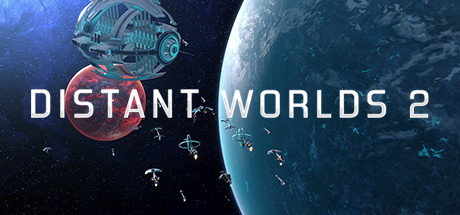
Distant Worlds 2 is a vast, pausable real-time 4X space strategy game.
Modeled estimate, not a reported figure. How we estimate →
Prices
Each in the currency that store quoted — not converted: the gap between two rows is the publisher's pricing, not an exchange rate.
Every market we collect.
Discounts
Every price cut of more than 20% we have observed, in each market that quoted one, with this game's chart position on either side of it. These are episodes, not a model: a sale is one event, and one event cannot tell you what the next one will do.
Reviews, worldwide (the counter carries no country): 0.43/day in the week to Jul 23 → 1.71/day in the week after.
For scale, across Steam · Top Sellers · Brazil over the last 30 days: the 24 chart moves that followed a price cut of more than 20% went a median of 9 places towards #1, and the 2,404 moves with no price cut behind them went 2 away. One store, one chart, one country — it is the only place we have enough observations to say even that.
Prices outside the United States have been collected since 6 August 2026 and chart positions since 19 July 2026, so a cut older than that has no market to compare and a market that joined later has no history yet. Nothing here is converted between currencies.
About


Updates
Build ids and update times come straight from Steam's PICS — the same source SteamDB reads. Patch history grows as we record new builds.
Engagement
Reviews
Themes across 820 recent reviews and how positive each mention is. A keyword signal, not full sentiment analysis.
Reviews
Forced to give the game a negative review. Yes, I can tell that the game is very deep. It offers a fair simulation of a galaxy with thousands of stars. The scale is stunning. As stunning as the inconveniences you will encounter. I'll describe just one problem that got me to the point of leaving a review. But don't make the mistake of thinking that this is the only problem. Something as simple as sending a fleet from point A to point B is absolutely impossible in a coordinated fashion. All ships start flying different routes depending on their jump range and at different speeds. Some ships don't depart at all. Some of the ships are left behind because they suddenly run out of fuel. The tankers (which seem to have to make sure that no one runs out of fuel in the middle of the journey) having the highest speed arrive first and start dying from the danger they were called to fight. In the end, the only thing you're engaging is a horrible micromanagement that kills all the fun of the game. Yes, if you put automate everything and just zoom out the game, it will look okay. Only look normal, because the problems I described will remain, but you just won't see them.
Media

Related
Related
Price dynamics, follower growth, revenue and sales trajectories with interactive tooltips
This and every other Pro feature is free until October 20, 2026. A free account is all it takes.
Genres
Stats
All-time low is the lowest price we've recorded for this game since we started tracking it.
Languages: English**languages with full audio support
Hours played at review time, across 820 reviews with recorded playtime.
positive critical· bar length = how often the theme comes up
Better military (fleet and army) tactical and strategic detailing & control than Stellaris.
This is a good example of a simulation rather than a game. Fuel is required for travel, but the tankers and freighters are NPC ships that can't be attached to fleets; the user is only permitted to follow them around as an escort service. Ships are pre-designed by slots that only accept a specific type and size of component, with additional restrictions on max counts, with research serving mostly to dole out the developer's designs.
I honestly don't know why I addicted so much to this game, even since the first part. Yes, the UI is a clumsy mess, but beyond it lies a living, breathing galaxy full of struggle, plotting and planning, empires rising and falling in front of your eyes. Recommend 100%
Game is a great amount of fun. The options to let the AI take completely over vs you micromanaging everything is what sets it apart from all other games. You can truly tune the game to exactly how much you want to engage with it.
Some of the worst game design I've ever seen A single pirate base is stronger than your entire civilization, can hold off your entire attack waves, and then create a fleet 3x the size of any of yours. At the beginning of the game. I don't think the developers play their own game, and don't even get me started on the UI
I really don't understand why this game has so many positive reviews... It's supposed to let you automate the details, but the AI is awful. It suggests bad decisions (we're in the middle of a massive war - let's build 1 frigate ! Let's give ALL our money to a minor civilization so they'll like us a tiny little bit more !), bad decisions that it cannot even implement properly when you approve them (attack fleets go on suicide attacks; defense fleets don't really defend anything; etc.). Things are often hard to find: For example, many times, you get notified that you can buy information about a star system from another civilization, but there's no way to know where that star system is on the map (there's no button to see where it is...). Even the tiniest galaxy is huge, and you have to zoom out and zoom in all the time and very precisely to find hundreds of tiny things. Finding where combat is taking place is tedious because ships are very small compared to planets. The star system view looks good, but you quickly end up spending most of your time in the galaxy view, which doesn't. Overall, this game is extremely boring. Other space 4X games I've played are way more fun (Stellaris, Endless Space 2, Master of Orion).
I find myself standing once again on the bridge of my flagship, gazing across the infinite expanse of stars that stretch beyond my viewport. It’s a familiar place, one I've returned to countless times in countless galaxies. But this time, it feels different. The blurry nebulae and indistinct worlds of the original have sharpened, gaining clarity. It’s not stunningly beautiful, perhaps, but it finally matches the scale and ambition of the universe it holds. In Distant Worlds 2, the heart of the galaxy beats with a complexity that feels alive. Resources are not magically conjured; they must traverse the dark gulfs between stars to fuel your empire. Some are abundant, others frustratingly rare, igniting silent conflicts over remote systems worlds so precious they demand sacrifice and strategy in equal measure. The tech tree itself is a wonder, a luminous orb spinning gently, revealing technologies with names that veer delightfully into the absurd. You’ll find yourself amused by their eccentricity, yet compelled by their utility. Each technology feels like a step into unknown territory, a gamble on a brighter future for your scattered colonies. Yet, as my domain swells beyond its first hundred planets, something heavy settles upon my empire. Time slows, the machine beneath groans under the weight of ambition, and the smooth dance of fleets and freighters becomes labored. My system, despite its robust cores and ample memory, feels the strain, longing for optimization from its creators. It's not an insurmountable hurdle, but a persistent reminder of mortal limitations within my digital universe. The early runs taught harsh lessons missteps that required fresh beginnings, false starts that turned into genuine mastery. But soon enough, I found comfort within complexity, adjusting difficulty sliders until the universe matched exactly the challenge I desired. No two galaxies felt alike, each unfolding in unique patterns of diplomacy, resource scarcity, and silent warfare. To those considering stepping onto the bridge of their own starship: at least the first DLC is worthwhile, enriching your exploration. The others can wait until curiosity or completion demands more. To the developers, I send encouragement: Keep refining, optimizing, and nurturing this grand creation. It is already impressive, yet its full potential still awaits discovery. Distant Worlds 2 has not only earned its place in my expansive collection. It has reminded me why I keep exploring these distant, digital galaxies. It captures the quiet grandeur and persistent struggles of running an empire across the endless dark, where victories are measured not by immediate glory but by patient, strategic perseverance.
Distant Worlds 2 isn't a game, it’s a performance art piece about the futility of control like a Franz Kafka in space. It’s a metaphor for bureaucratic hell, rendered in stars and broken tool tips.
不推荐,都2024年了,你应该不会喜欢玩一半就突然闪退的游戏了,更别提中后期的卡顿。(14600kf,32GB都扛不住) 依旧依托,制作组好像不知道自己在干什么?
Active players
Estimated daily and monthly active players (DAU/MAU) modeled from peak concurrency.
Players by region
Where this game's players are, estimated from review languages.
Players also reviewed
The games this title's players most often review too — audience affinity.
Related
| Game | Estimated lifetime revenue | Reviews | Review score | Price |
|---|---|---|---|---|
| $9.3K | 18 | 50% | $14.99 | |
| — | 0 | — | — | |
| $242.6K | 832 | 84% | $9.99 | |
| $92.2K | 121 | 49% | $19.99 | |
| $57.6K | 83 | 76% | $17.99 | |
| $18.9K | 34 | 79% | $19.99 |
Related
| Game | Estimated lifetime revenue | Reviews | Review score | Price |
|---|---|---|---|---|
| $5.8M | 83.8K | 94% | $5.99 | |
| $5.8M | 4.8K | 73% | $39.99 | |
| $5.9M | 23.6K | 88% | $11.99 | |
| $5.9M | 13.9K | 79% | $19.99 | |
| $5.9M | 12.2K | 83% | $24.99 | |
| $5.9M | 8.3K | 73% | $39.99 |