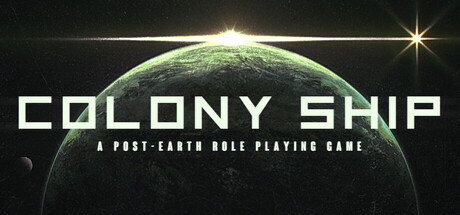
Colony Ship is a turn-based, party-based role-playing game set aboard a generation ship launched to Proxima Centauri. The game features a detailed skill-based character system, multiple ways to handle quests, choices & consequences, and branching dialogue trees.
Modeled estimate, not a reported figure. How we estimate →
Each in the currency that store quoted — not converted: the gap between two rows is the publisher's pricing, not an exchange rate.
Every market we collect.
Discounts
Every price cut of more than 20% we have observed, in each market that quoted one, with this game's chart position on either side of it. These are episodes, not a model: a sale is one event, and one event cannot tell you what the next one will do.
About

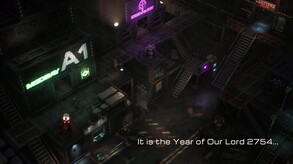
It is the Year of Our Lord 2754…
You will never feel the sun’s warmth under a blue sky, never hear the wind in the branches of a tree, and never swim in the ocean, all because you had the misfortune to be born on the Ship, chained to a fate you didn’t choose. You have never seen Earth and you’ll never see Proxima Centauri either. You’re doomed to live and die on the Ship in the name of the Mission, like your father before you, like his father before him.
The Ship is old. She had already been twenty years in service when she was rechristened Starfarer - a pretty name for a retrofitted interplanetary freighter. No one is certain the Ship will actually reach its destination, and nobody much cares, since no one alive now will live to see it. Might as well get on with your life and try to make the best of it.

Colony Ship is an isometric, party-based RPG inspired by Heinlein’s Orphans of the Sky. Your character's world is a “generation ship,” a massive spacecraft on a centuries long voyage to colonize a distant planet. The Ship's original government has been disbanded following a violent mutiny and you must negotiate a treacherous path among your fellow passengers and the contentious factions striving to dominate the Ship. Your choices will determine who your friends and enemies are.

Your adventure starts in the Pit - a sprawling heap of vacant cargo containers slowly getting filled up with those who couldn't afford to stay in the Habitat or needed to get away from its bosses and factions. Out here, folks live free and die fast...

You open your eyes to a grey hull-metal ceiling, one panel of which flickers yellow, indicating dayshift. You overslept, not that it matters. With a grunt you roll off your stained mattress and open the "window" to let some fresh air in. Like everything else around here, fresh is relative. The Ship does its best to recycle air and water, but cargo holds aren’t high on Her priority list. You breathe in metal and burning oil and look up. Four of the bridge's six projectors are still operational, shining dully down on the container towers of Cargo Hold 3, better known as the Pit, the Free City.
Calling the Pit a city is a bit of a stretch, but so is calling this reddish-brown liquid water. You've read that water is supposed to be clear and cities are supposed to be big, but no ship-born has ever seen either. Maybe in another hundred years water will look and taste like oil and people will be talking about the good old days when it was the color of rust and tasted refreshingly bitter and tangy. That's the kind of optimism that keeps you going.
The elevator crawls up a groove in the cargo hold's wall like a black steel bug that's worn a path traveling to the bridge and back. It’s time to get up there and earn a few credits, but first you need a drink.
Once tasked with adapting Terran plants and grasses to the alien environment of Proxima Centauri, Hydroponics was abandoned during the Mutiny. Quickly overwhelmed by out-of-control mutant vegetation, it more closely resembles deep jungle than a research complex. In addition to the abnormal plants, oversized pest control species –bioengineered to safeguard the colony's farmlands– are also on hand to punish the careless.

Plants were sacred to the Founding Fathers. They represented our connection to Mother Earth, our sustenance, and our future. Picture rippling fields of wheat, rye, and barley to the horizon, mighty oaks and cedars, children eating apples right from the tree. That was the vision for Proxima.
But they didn't anticipate how many seedlings would fail in the Ship's simulated environments. And unless they found a way to make good those losses, it would be catastrophic. Alien fauna and poor soil were deemed the biggest threats, so they matched the most important plant species with customized, symbiont fungi. The latter were meant to act as pest killers. Unfortunately, the fungus did its job a little too well. We’re the pests now.
Before the Mutiny, the rooftops of the Habitat supported a sprawling amusement park. There, the people of the Ship could experience at least a few of the novelties they would never enjoy on Earth or Proxima: walk barefoot on real green grass – courtesy of Hydroponics – or soft, red-tinted 'Proxima' sand; sit under tall, artificial trees; and watch the sunrise on gigantic screens suspended all around. This last was said to be indistinguishable from the real thing, not that anyone aboard had ever seen it.
Nowadays, the three remaining rooftops are heavily fortified platforms, patrolled by armed guards. The sky-screens went dark long ago, a frivolous luxury in a decaying world. The grass underfoot and simulations of golden fields have likewise vanished, replaced by watchtowers and checkpoints. With enemies on all sides, cheap entertainment is a useless distraction from reality and its harsh demands.

The Armory - Among the stars, the children of Earth wish most of all for peace. Nevertheless, the wise prepare for every eventuality – we should not survive long without the means to protect our territory and interests, with violence if every other method is exhausted. To that end, the Ship launched with a wide assortment of peacekeeping weapons and armaments, most of it looted and spent during the Mutiny and the hundred lesser skirmishes that followed.
Mission Control - The century-old wreckage of the Ship Authority government complex that once controlled every aspect of life on the Ship. Now scavengers infest this ancient seat of power, a grim reminder that nothing lasts.
The Shuttle Bay - Noah relied on doves to find a landing place, the Ship carried twelve survey shuttles for that same purpose. Even though the Shuttle Bay survived the Mutiny intact, it was looted in the interim, the life support systems and emergency supplies stripped, and the shuttle interiors used by generations of squatters.
The Factory - An abandoned industrial complex that once worked 'round the clock to produce tools for the Ship and the future colony. Why squander your precious shekels on second-hand Earth machinery, when your captive workforce will have three hundred years to manufacture everything you need?
And many others.

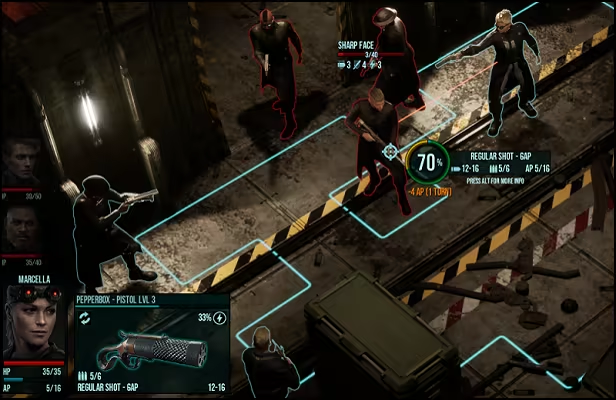
Combat is difficult. You’ll be outnumbered and outgunned, so you’ll have to figure out how to even the odds or avoid fights you can't win. There are 3 main factors determining the difficulty of any combat encounter and your character's life expectancy: Accuracy, Evasion, Damage (both dealt and taken). To succeed in combat, you must learn to control these factors.
Accuracy = 50 + bonuses from (stat + skill + feat + implant + helmet/goggles + weapon). You can easily neglect a couple of items from this list and still be a competent fighter, meaning you don't need to min/max your stats because it's only 1 item out of 6. The attacker's accuracy is further modified by the attack type (different attacks have different pros and cons), the weapon's gun's effective range, and inflicted penalties.
Evasion = bonuses from (stat + skill + feat + implant + armor handling – armor penalty). The defender's evasion is further modifier by cover (the exact bonus depends on the angle), gadget bonus (i.e., using a Disruptor Field), and smoke/spore cloud (smoke grenades and certain critters). More detailed information can be found on the character and inventory screens (which show your accuracy and evasion), and in combat, where you can press ALT when targeting while targeting to learn what is affecting the accuracy of a particular attack.
The damage depends on both the weapon and the target's defense. Incoming damage is reduced by damage resistance (feat + implants + armor) and energy shield (gadget and/or energy armor). Weapons with good penetration and/or aimed attacks can reduce enemy's damage resistance, dealing more damage.
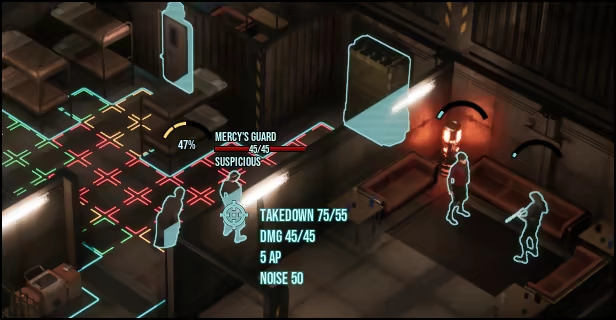

When you enter the stealth mode all tiles are automatically assigned detection values, determined by the distance from the guards, which way they're facing, their Perception, and thermal vision gear, if any. Green - safe (you remain undetected), yellow - risky (if you end your turn there, you'll be spotted), red - instant discovery. High sneaking ability (modified by skill, feats, gear) turns more tiles green and opens up more options, whereas a low level thief might see nothing but yellow and red tiles.
Each step and action (lockpicking, climbing, using computers, killing guards in stealth mode, etc) generates noise. Not a whole lot of noise to instantly alert the guards the moment you do something, but enough to add up over time and raise the guards' suspicions. The higher the guards' Perception, the faster the alert bar is filled. An alerted guard turns towards the last noise generated, meaning a lot of safe tiles will turn red and if you're in the line of vision you'll be instantly discovered.
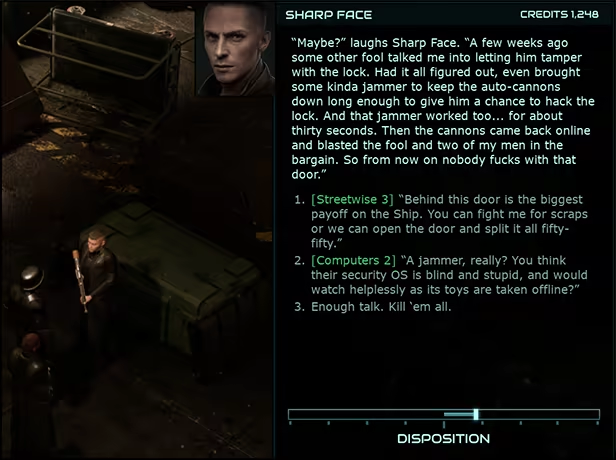

If fighting isn't you thing, you can avoid ALL combat by relying on speech skills: Persuasion, Streetwise, and Impersonate. Not every solution is in your face, but it is there. We check stats, skills, reputation, deeds, and track your choices to deliver appropriate consequences.

Ten party members (max party size is 4) and well over a hundred different characters, some less friendly than others.




Lord's Mercy was her given name. Though he wasn't a priest, her father had called himself a Man of Scripture, and never tired of reminding his only child of God's wrath, His vengeance, His untiring thirst for retribution. If that’s what her name meant, Mercy did her best to live up to it.

"Are you now?" Bartholomew looks at you with interest. "I assume you were on your way to the Habitat, but now you're stuck here... Your odds aren't looking good, my friend,” he gives you a salesman's smile. “Attacking the Black Hand's stronghold is suicide, with or without our help. If Stanton loses...” He makes a pause, letting you work it out on your own.

“You may address me as Harbinger. I no longer have a name." The bitterness in her voice is unmistakable. She must not have been doing this Harbinger thing for long. One of the guards removes his helmet to reveal an oddly leathery face with deep-sunk eyes and a lipless mouth. He grins as he savors your discomfort.
“I wonder if the Neanderthals were as shocked by your outlandish appearance,” the woman says. “I wonder if they foresaw their own doom.”


A generation ship is a perfect ant-farm where different societies can coexist within a limited space, influencing and affecting each others' development while fighting for that limited space, which adds 'the end justifies the means' pressure.

The Protectors' one truth is the Mission, and the sole way to ensure successful completion of the Mission is to follow the Old Ways. The ways of the fathers, forefathers, and Founding Fathers are together the beam upon which the Ship travels to our ultimate destination. The mutiny, which through their steadfast and timely intervention was thankfully aborted, was the ultimate betrayal of the Old Ways, of everyone who had come before, the nullification of every sacrifice and every life dedicated to the Mission.

The Brotherhood was formed to liberate the people from the iron shackles of the Ship Authority. Though their first sally -which the fossils of the old world denigrate with the term "mutiny"- failed to completely achieve this aim, the Brotherhood was successful in establishing themselves as a power to be reckoned with. The Brotherhood's initially pure goal, to free the enslaved wherever they may be, has unfortunately been sullied by the practical concerns of democracy. To bring freedom to the Ship entire must involve war, and no war may be won without sacrifice, nor may battles be managed by committee.

As inevitably happens in dark and challenging times, some citizens turn to God for reassurance, the promise of an end to pain and hunger. Or failing an end, at least a purpose. The Church of the Elect rejected both the Protectors of the Mission and the Brotherhood of Liberty as worldly fools distracted by politics and their own egos. Teaching their adherents that they were chosen by God, the Church frames the journey of the Ship as a centuries-long test of faith. When the Ship arrives at her destination, Judgment Day awaits every citizen. The righteous will be welcomed into the Promised Land of Proxima Centauri, while the unrepentant will be returned to the Hell from which we fled - Earth - to suffer for all eternity.
Plus lesser factions and groups: People of the Covenant (the mutants), the House of Ecclesiastes, formerly known as ECLSS - the Environmental Control and Life Support System, the Pit's Freemen, Thy Brother's Keepers, the Grangers, Jackson's Riflemen, and more!
Sums Steam only; GOG publishes no volume signal, so the true total is higher by an unknown amount.
| Store | Price | Audience | Score | Chart | Est. revenue |
|---|---|---|---|---|---|
SteamYou are here | $15.99−60% | 4.2Kreviews | 88% | — | $1.2M |
| $15.99−60% | 248ratings | 88% | #201 | not modelled |
Matched by title — a reused name can pair the wrong games. * is a critic aggregate. Prices and positions are each store's United States storefront; Epic charts worldwide. Audience and Score too, except Steam's, which is worldwide.
Updates
Build ids and update times come straight from Steam's PICS — the same source SteamDB reads. Patch history grows as we record new builds.
Engagement
Reviews
Themes across 884 recent reviews and how positive each mention is. A keyword signal, not full sentiment analysis.
Reviews
So I'm going to focus my review on combat because it's the reason why I stopped playing, and I think it's bad in interesting ways. There are other elements that I have opinions on, but they're more ambiguous as to whose at fault. For instance, is it the game's poor writing that caused me to start skimming over all the dialogue, or just my shredded attention span? Whose to say? Also, I should say that my play time is inflated, because I bought it a while ago, stopped playing, came back and said "why did I stop playing, that seemed fun", then "Oh, that's why." I got to about the end of chapter 1 both times. But that is enough for the game to signal to me that the stuff I noticed wasn't going to change. Even if it did, I shouldn't have to muddle through the first part to get to the fun. Anyways, before combat, let's talk about the fantasy of charisma. In this game, the rewards of having a high charisma seem to mostly be three things: you get a bigger party size, you can get paid more at jobs and you can skip combat. The first one is an interesting choice on its own, but fails in combination of elements I'll talk about later. The second is nice, but not enough to rest a fantasy on. The third one just feels like you're being rewarded for trying to primarily engage with the game as a story, rather than a vehicle to get to the fighting, by giving you the ability to skip content. Which, incidentally means your skipping loot. There was one time that I got the impression that negotiation was going to be rewarded with something other than an absence, but looking it up, that seems to be incorrect. Now, of course, you might say 'do I need to be rewarded with loot if I'm trying to engage with the game via negotiations rather than violence?' To which I say, part of the benefit of charisma in this game is that it makes you better at fighting by having more people. Anyways (again), on to the actual combat problems. First I should say that I did not find combat too hard. I did have to reload a lot, but this didn't frustrate me. Moreover, I did get the sense that my team was becoming more competent relative to the enemies, making it seem like less of a thing of chance when I won. Also, I did like the base mechanics of the game. What I hated was that the game felt like it was repeatedly hitting you in the face with a brick with the encounter design. I say 'the encounter design', because there's really just the one, repeated with minor variation. Rooms, it's all rooms. You have no control over how you start combat. It's always just go into the room, then pretend that negotiations have broken down, and you start fighting. The only choice you have is that you get to pick between like 10 squares to position your team in. But that doesn't matter, because none of the squares have cover, and only seldom puts you in easy reach of it. You think that the formation you put them in might matter, but that's a lie, because no matter how you position them, the enemy will always just focus fire your squishiest dudes. Which is why I talked about charisma for so long. I thought that the fantasy was that I was going to be a bad at fighting little dude who was able to convince a bunch of big burly dudes to protect me. But I can't even have that, because the enemy always just shoots me first! Ignoring the big scary duded with the big scary gun in front of me to do it! Now, at this point, I did think it was probably my own fault again. That I brought this on myself for playing such a lopsided character. So I decided to go back and start again, so I could look at the premade characters to see how I was supposed to be playing... but no! One of the premades was litterally only one stat point different from me! I even had the same starting feat and tagged skills! Clearly what I was doing was intended to be a valid playstyle. So anyways, back to the room. You're in a tight room that you can't leave with no cover, every single fight. But that's okay, because the enemy always starts surrounding you anyways, and the enemy always starts with some of them in cover anyways. So it's better just to stand and shoot anyways. Now, I did think maybe at first that this was thematically appropriate. After all, the ship is supposed to be cramped. But there are plenty of wide open spaces, you just don't get to fight in them. ...I guess how I should have condensed this thing down to is that there's a real dearth of tactics in this tactical rpg. It's not fun. It's mostly just a sense of mild satisfaction over selecting the right feats so that Evan can hit with 90% acuracy with a five round burst on his first turn, downing an enemy before they can act twice.
Media

Related
Related
Price dynamics, follower growth, revenue and sales trajectories with interactive tooltips
This and every other Pro feature is free until October 20, 2026. A free account is all it takes.
Reviews, worldwide (the counter carries no country): 3.78/day in the week to Aug 4 → 6.29/day in the week after.
For scale, across Steam · Top Sellers · Brazil over the last 30 days: the 25 chart moves that followed a price cut of more than 20% went a median of 10 places towards #1, and the 2,413 moves with no price cut behind them went 2 away. One store, one chart, one country — it is the only place we have enough observations to say even that.
Prices outside the United States have been collected since 6 August 2026 and chart positions since 19 July 2026, so a cut older than that has no market to compare and a market that joined later has no history yet. Nothing here is converted between currencies.
Genres
Stats
All-time low is the lowest price we've recorded for this game since we started tracking it.
Languages: English, Italian, German, Czech, Russian, Simplified Chinese, Ukrainian
Hours played at review time, across 884 reviews with recorded playtime.
positive critical· bar length = how often the theme comes up
The Good: I liked the promise, the story, and the skill system. The combat is challenging but other skills are truly useful. The dark atmosphere and moral ambiguity are right up my valley. The Bad: Graphics and UI from 2 *decades* ago. Level design is very basic. The Ugly: There is no effort at developing any NPCs as characters, which is inexcusable in an RPG. Most frustrating though is the journal. Once you get a quest, your journal records only the most basic info, for example: [Quest Name] Go to Joe. That's it. What was this quest about? Who gave it to me? Who is Joe? Where is Joe? What am I supposed to do with Joe? Can I complete this quest in this chapter? Is this main storyline or a side quest? all there are left to you to remember.
Played it. Liked it. Hated it. Got frustrated. Uninstalled. Reinstalled. Tried again. Still liked it. Still hated it. It's good, it's fun. I enjoyed myself. But it's frustrating and obtuse in that same breath. It took me a few tries to get into it's... flow. But once I did I absolutely wanted to finish it. And did. If I were to offer suggestions to the dev team; Let me click on names in the quest journal so I see who/where I'm supposed to go/talk to cause my memory and that map didn't work well together, at all; The ending(s) were rather dry about what I and my team were doing after those final choices. Even just a single paragraph on some sort of "You're diplomacy helped navigate ties w/..." or "Your veteran combat skill helped tame the...", Jed got that farm, etc. It would have been a nice sense of closure.
A very well made CRPG in the age of very few CRPGS being released. It clearly samples from sci-fi pop-culture, including the glorious Sid Meier's Alpha Centauri, making it a good pick for anyone who's a fan of that genre. Set on a generational colony ship, you deal with less than ideal conditions - You weren't there for the launch, for the age when the ship ran properly, and you weren't there for the mutiny. You were born after society on the ship collapsed, and rely on a marginalised community that salvages what limited supplies were brought on the trip merely to survive on a daily basis. The game features a multitude of factions that you can side with, sabotage, and make use of, each of which stems from past conflicts and successes. The factions tend to represent interpretations of stagnant and hypocritical versions of themselves, which is an interesting take on tropes that otherwise would have been common. Can someone be considered a revolutionary when they no longer revolt against anything? Can they be considered dedicated to a mission they've never contributed to? All of the ideologies are jaded, and matters of faith, even in the church-specific faction, tend to be cynical. This all creates for an interesting narrative dynamic where your usual RPG actions serve a delicate balance between serving yourself, sabotaging the very limited ecosystem you rely upon (it is just a space ship after all, not an entire planet), and protecting that very same ecosystem and the goal it serves. Mechanically, the game's skill system is similar to skyrim's in that you can only level up skills by tutor, or by using the skill itself. This becomes an issue due to how few opportunities there are to do this, because it means that, in order to reach higher levels with the skill, you have to use it every single opportunity you get. If you plan to use the steal skill even once in the later game, you *must* act as a horrific kleptomaniac for the entire game up until that point. This creates an ongoing issue where you really kind of need to pick your style of play through and limit your role-play opportunities, because it extends to combat skills as well. Every time you solve an issue with speech, you've lost out on combat stats and vice versa. There are ways to work around this, but it can become a brutal slippery slope, especially considering that at least one fight in the later game becomes mandatory if you have a team, since the only way to avoid it is to stealth passed it (not feasible for four characters). That said, despite this issue detracting from the role-playing experience, the game still plays very well, and it can be mitigated by deciding on a character type before beginning a play through. If I had any other complaints/nitpicks, it would probably just be that despite Christianity being a central theme of the space station, there isn't really a single instance of faith, making it come across as a purely secular interpretation of the religion - lots of inappropriate out-of-context quotes of scripture, dogmatism, and confident ravings, but no faith - it's as if every character has tongue-in-cheek agreed to quietly not believe in the central religion of the station. It's odd, because the setting is a fantastic opportunity for it - a setting of absolute hardship with little to no material hope offered. Overall, I'd still highly recommend this game if you're a fan of RPGs. It manages to be both fun and engaging, with a great deal to explore, and in my opinion, also manages to be a beautiful game overall.
右击选择测试版,选择loctest那个,有基本完整的汉化了。
[h1] A short memorable experience with an amazing setting, interesting gameplay and a lot of replayability <3 [/h1] The Colony Ship, as well as the other games from Iron Tower, seems to be born of conflict. Every time I play them, I feel like their developers are Disco Elysium-tier writers who are willingly "trapped" making gameplay-first RPGs. Colony Ship has an amazingly imaginative setting the type I've never seen before; gripping and succinct prose; and a fascinatingly cynical "author voice" that colours every political or religious interaction. However, Colony Ship also very much feels like it tries to distance itself from these positives - by focusing on quite hardcore stat-based combat, instead of characters and plot itself. The main 4 party members are very much underwritten and kind of boring (aside from my boy Evans - he's always hilarious in his simplicity). The plot seems to run out of budget at the last 5 % of the game and becomes really dull around that time (while introducing amazingly intriguing factions and "lore"). In addition - [b] I played this game as a talking/no implant character that largely tried to avoid fighting [/b] - and the "talking-jutsu" gameplay looked hilarious, especially closer to the end. And that was the most compelling part for me in this experience - [b] why does this persuasion-style gameplay exists in this form? Or in the game at all? [/b] It seems like the devs clearly want it to be an option (and many advertise it as an "easy mode"), but in-game it looks hilarious. [i] "Hey, I must warn you, I'm not much of a fighter"[/i] - the dialogue option will say, and the important, serious character will answer: [i] "Don't worry - go and do some slightly related errand/small talk while we kill the antagonist we hyped up before"[/i]. Aside from the Black Hand one, [b] all conversation boss fights felt somewhat ridiculous [/b] - like they were put in as a joke. And if persuasion-style gameplay is as viable as the incredible combat, why is it like 1000 times less complex? It is [b] ALWAYS [/b] the same: pick one of the options with the highest possible number in brackets next to it, and then pick it again. It would be fine in a usual RPG, but here - in a game that has multiple achievements like [i] "Didn't fight anyone in this chapter" [/i] - I expected something more. Because the devs of this game like to read feedback, I'll even throw my hat into the ring as a writer and a tabletop game designer with these 3,5 proven solutions if Persuasion gameplay is to stay in the future games: 1.) [i] Wrath of the Righteous and Pillars of Eternity way [/i] of hiding skill checks' names in the dialogue options. Some dialogue options just don't appear if your skill is not high enough, and every dialogue has some weak options that raise the disposition just a bit; 2.) [i] Disco Elysium and Pentiment way [/i] of far, [b] far [/b] more disposition modifiers with some successful skill checks actually [u] lowering [/u] disposition. If it is possible, also have multiple dialogue options for every skill. After all - writing is the cheapest (and for many - the most important) part of gamedev, and writing arguments tends to be pretty easy in my experience; 3.) [i] Make conversations harder to "win" and add partial successes [/i] . The "all or nothing" approach is really unrealistic and frankly - boring/savescum provoking. What about concessions - the meat and potatoes in most arguments? Some dialogues in the first part of the game have opportunities to compromise, but only if you actually fail to raise the disposition and it is far too rare. I know that adding new outcomes puts strain on the budget, but they can be very small. Like the character might not send his forces to support you, but instead give you some supplies. Maybe, instead of giving something, they will sell it to you or just throw some info your way. And this is the only budgetary-conscious way - it can be so much more. 4.) And a bonus option: [i] actually gamify the process of persuasion [/i]. Maybe a deckbuilding minigame, in which your skills determine how many cards of certain persuasion styles your character can use to raise the disposition and counter the opponents' arguments. Maybe a simpler final percentage-based style roll (hidden disposition) that you use at any point of the conversation that depends on how well you argued beforehand and how much time you spent on the argument. Sorry for being vague; I'm sure it can be designed far more in depth. Sorry for this "intermission" that took more than half of the review <3 [b] Overall, I liked the game a lot [/b] and will replay it as a basic SMG-wielding fighter at the first opportunity. It is charming (for anyone from a post-Soviet background), well-written for the most part, and very thought-provoking. I hope that one day Iron Tower's games can break the "cult classic" glass sealing and shine into the CRPG mainstream - Colony Ship is a great step on this journey <3
Out of the two 1.0 Codex darling releases of 2015 [i]Underrail[/i] will always be my favourite (poor as I am at it). But between the two it is the [i]Age of Decadence[/i] that I would set up as the game of the year. Simply because it's proper CRPG with the plot variability of an interactive novel. One has to be mad to make such a game. One doesn't have to be mad in order to make [i]Colony Ship[/i]. I took my time poking around it, levelling, progressing, fighting, sneaking, plotting... Then I just sort of… Shuffled it off like this new coat that you can’t really wear with any degree of self-consciousness because it’s just so... Okayish. [b]Original setting? [/b] Sure, another modern sci-fi/scrap-Western/post-apocalypse. Just in space (we don't see space). [b]Massive choice variability? [/b] Sure, who do I put in charge of this insignificant tiny shitstain of a village there's no reason for me to give two damns about? An uninteresting group of unpleasant armed men #1? Or, perhaps... An uninteresting group of unpleasant armed men #2? Dilemmas, dilemmas... I really have to wonder whether this fixation on factionalism when it comes to 'choices' in RPGs is even valuable. Is it actually a choice? Or a selection - as if from a menu? And how much of it stems from half-dogmatic adherence to the bon-ton traditions of the genre? [b]Writing? [/b] Sure, Vince writes well, in an ascetic lean style. But it feels like he writes slight variations of the same person over and over. The characters are grounded, but there's a basic sort of emptiness to the absolute majority of them. They lack tacky features (which is good in this realistic setting), but they also lack texture. They're just different flavors of tired, pissed, pragmatic and fanatical. Perhaps, it would even work if we interacted with any given character for longer than just a couple encounters. Look, I don't want emotional rides, i just want the game to be about... Something. Literally anything. Perhaps, it's not entirely fair on my part, as the game really dwells on the topic of revolution and the desolation of a post-revolutionary world. It is hard-coded in the game's texture and its omnipresence is perhaps the only thing apart from combat I like about the game unconditionally. [b]Combat? [/b] Sure, can't deny that one. Each victory you’ve got to pay for in blood, sweat, reloads and synapse mileage. Body part targeting is more important than ever with the shift to mostly-ranged arsenal from mostly-melee in [i]AoD[/i]. My only doubt concerns energy shields, I feel like they heavily drop the value of defensive character attributes (and from what I’ve seen, solo builds tend to ignore the latter, relying on shield mostly – but don’t quote me on that). [b]Role-playing system? [/b] Sure, no questions there. Well done – every level-up feels massively impactful. A rather unorthodox amalgamation of skill-based progression and level-oriented progression. Unorthodox not it its structure per se, but in how it connects with the game's rather limited world. There is always a finite number of opportunities to improve a given skill - noticeably finite, mind you, not finite that might as well be infinite. Therefore doing so becomes a kind of routing exercise. Personally, I don't much care for it – smells a bit of [i]AoD[/i] metagaming, but gives the game an interesting dynamic nonetheless, you really dig your fingers into every point of interest, trying to milk it for passable skill checks. Hard skill checks don’t suit this system well, in my opinion though. Regardless, the aforementioned metagaming problem itself has been remedied. I think you can play [i]Colony Ship[/i] fairly safe without prior knowledge of events. I pulled off a beautiful stealth stunt instead of a major battle without having to tailor my skills to pass it. Wouldn’t be possible in [i]AoD[/i] [b]Aesthetics? [/b] Sure, it's mostly ruins and scraptowns - but not of the interesting kind, there's no true reveling in decay here, which detracts heavily from the experience. Not [i]Fallout[/i], not [i]Disco[/i]. [b]Game world? [/b] I sure hated what was effectively an adventure game-like structure of [i]AoD[/i] world, and this one is no different. Locations are not places, they are a set of interactive points of interest. It is very dry, and didn’t change one bit. In the spaces between the interactions it feels like you’re suspended in a vacuum. Applies both to dungeons and town areas. I mean, most RPGs have a degree of that problem, but here it’s way worse. So much so that, like in [i]AoD[/i], you can fast travel between any shops and point of interest, so unnecessary the intermediate space is. I just don’t know. [i]AoD[/i] had a spark of divine madness which is altogether gone from this one. It plain feels like a very well-made, very solid product made by very competent people. And apart from that competence itself I honestly fail to see how that’s much different from the RPG mainstream. I wouldn't mind living in a world where various Vinces, tired and disillusioned but stoic good soldiers of the CRPG genre are heroes of the mainstream. But I don't want to live in the world where they are heroes of the countermainstream. If soild is good enough, then I'll stick with the raw and the weak until the real schizo prophets show up. Because there is plenty of divine madness to go around. Pierre Begue and his combat puzzle sadism of [i]Knights of the Chalice 2[/i]. Mark Lemmert and his feats of Apple II retro software engineering for [i]Nox Archaist[/i]. Styg swapping the tried and tested t/b for a roguelike-like simultaneous turn-based for his second installment of [i]Underrail[/i]. [i]Whalenought[/i], forever ambitious, forever buggy, forever failing, forever trying again. Clevus Procrastinatus the Neanderthal and his rockstar demeanor. I don’t play indie games for a good experience, I’m doing so for a unique one. Why the positive review then? 1. It’s a good game. Big surprise. - The combat is very taxing in a way that appeals to me greatly, forcing you to eek out a victory - tooth and nail, consistently draining your consumables (which is an achievement I don't think I've seen much of anywhere else in a dedicated RPG). Every fight a puzzle. - The economy is therefore functional (another RPG feat - which even AoD generally failed at) - nothing is cheap and everything is needed. - The character development is deep and varied, all choices are meaningful. - The world is solid. - The writing successfully maintains a particular kind of dry sombre tone of exhausted uncaring desperation. - Searching new areas is mechanically (if not aesthetically) exciting. 2. Because while playing, I was immersed. It felt like an ongoing journey. It had meaning, little of it though there may have been. That's exactly what I've been telling people - when you're in it, you’re in it, it works. The hollowness of it all washed over me post-factum. 3. Out of respect for the old Vince. The one who would walk into the young RPS and tell them they're trying to attract morons. The one who would write a balanced review of [i]Fallout 3[/i] which would piss off both the normies and his fellow elitists. 4. I may not want to live in the world where Vince is a hero of the countermainstream, but better Vince than Mr. Wish-You-Luck-In-Game-Development-Unless-You're-Making-RPGs-And-Are-Therefore-My-Competitor-Anyway-Bye-I'm-Off-To-Work-On-My-Yearly-Remake-Of-A-Remake-Of-My-90s-Shareware-Game Jeff Vogel. 5. I want [i]Iron Tower[/i] to evolve, not die off - even if in weird and cheap ways. I'm really curious about what they can do if they create a system where combat is supposed to be the main means of world interaction - which is exactly what they're doing with [i]Heralds of the Third Apocalypse[/i]. [i]Age of Decadence[/i] worked because it didn’t. [i]Colony Ship[/i] doesn’t work because it does.
[h1]Colony Ship: A Post-Earth Meh[/h1] It took me 12 hours to complete and candidly I think this is a very mixed bag. It's pretty novel in it's setting - a dying spaceship - and the narrative of trying to get to a new world was also well-done. There's some decent skill trees and the overall story is original. That was enough to keep me going but I don't have any desire to go through it again. The game systems have been done before and better by other games and the narrative wasn't particularly clear or compelling. Let's start out with one of the bigger issues - the story isn't well presented and I honest to God didn't understand even the basic factions until a number of hours in the game. They're just so generic sounding - Brotherhood, Protectors, Church - that they never really registered as separate factions. I was completing quests without really understanding who/what I was completing them for. This really hurt my enjoyment of the game. I honestly was going from quest to quest in the log to complete them without any real understanding of why I was trying to do those things. I'd get more out of the story the 2nd time around but the game needs a far better summary or a primer to fundamentally understand the player's place in this universe. These factions aren't well written either as they're mostly one-note and boring. They each have an entirely superficial theme but their goal of accumulating power is the exact same. There's very little to separate them when they essentially do the same things and they're just all about faction politics. It makes for a boring choice in deciding who to align with and I ultimately sided with a 4th late-game faction simply because I knew less about them. That's just bad world-building as compared to factions in something like New Vegas, where there were significant differences in the batch of bad choices. Even Fallout 4's factions are miles better than these. Maps can be hard to traverse with doors you have to clock on to enter or crates to click on to hurdle, so you just can't walk across the map. There's no mini-map in the game though thankfully there's an instant-travel to many points. That's also a bit of a problem because sometimes the graphics aren't clear as to what is a "real" path you can take and what is just fluff. On the plus side, each area is distinctly different which adds visual variety. There are difficulty spikes that are very challenging but I'll give major props that there's usually multiple ways to solve a problem. I used lockpicking and electronics a LOT because I didn't find combat satisfying (more on that later). There's a lot of loot but most of it is totally meaningless with few truly substantial upgrades. There's not even really decent descriptions of systems (ex ex. armor goes from 4 to 5 - what does that even mean?). If it sounds a bit janky, that's because it is. Combat is quite difficult at times there's a scarcity of certain ammo types, meaning you're often having to use your backup weapons. I don't find that challenging, I find it annoying. Some quests have vague descriptions and a ran into a couple of quests that I somehow apparently broke. Your companions are 100% faceless - they're there to be bullet sponges. I think I'd like combat better if the systems were better explained and the combat arena environments more varied. As it was, in most situations it seemed the enemy had boxes to hide behind and we started combat in an open area. Like almost every time. I didn't have any characters that used stealth (it was the one skill tree I didn't have someone focusing on) and maybe that would change things up. But I didn't find combat all that inspiring. Visuals are not good. You don't buy this game for the visuals. Textures are muddy and lighting isn't good. I've already mentioned the maps can be confusing as well. Nor do you buy it for the audio as the music is pretty annoying and there aren't voices. Production values aren't the thing here. So when it comes down to it, for me this just wasn't a memorable experience because the unclear start left me guessing for much of it. By the time I got it, I was too far into the game and so my choices felt like they didn't matter. The visuals, combat, systems and environments aren't enough to make up for the unclear narrative. The systems have all been done before and far better by other games. The writing isn't amazing, it's competent. That left the setting, which is interesting enough to be compelling. If you're going to buy this, either you're a massive old-school RPG fan (in which case you already have it) or you're better off waiting for a very steep sale (50% or greater).
Honestly, the combat in this game is infuriating on what is supposed to be the default non-easy "balanced mode" Absurdly low hit rates even with specialized builds, AI can hit and kill through stasis grenades while we are stuck not even being able to target an enemy stasis unit, downed / bleeding cant be revived and combat must end. None of this would be a problem if they didn't require such insanely high stat checks. Even something like the story, you can forget about influencing anything if you don't dump a significant portion of your level up points into non-combat skills like persuasion. So much wasted potential
Colony Ship is a post Earth role playing game from Iron Tower Studios, released in 2023, with its most recent update in April 2025. I played it on Steam, and my first completionist style run took about 60 hours. Across multiple playthroughs and restarts, I now have around 502 hours in the game and 31 out of 70 achievements. Overall, I enjoyed it quite a bit and would rate it around 7.5 out of 10. For the price I paid, which I believe was around $10, Colony Ship has been an excellent value. Getting more than 500 hours out of it is hard to complain about. I played on Hero difficulty and did not try the Underdog mode, so my review is based on that experience. The basic premise is that you are living aboard a massive colony ship traveling toward Alpha Centauri, generations after it first launched and possibly generations before it ever arrives. I do not want to spoil the larger story, but the setting is one of the strongest parts of the game. It captures the feeling of being trapped inside a decaying, divided, desperate society drifting through space. If you enjoyed the atmosphere of movies like Pandorum or Event Horizon, there is a good chance this setting will appeal to you. The writing is fantastic. The game does not have full voice acting, which is unfortunate, but the text is strong enough that I did not mind reading through it. I normally do not enjoy very text heavy games, and I usually prefer fantasy over science fiction, but Colony Ship managed to pull me in. The dialogue, descriptions, setting, and artwork all work together to make the world feel believable and lived in. Character creation and progression are also major strengths. The game gives you core stats, skills, and feats that shape your build from the beginning. Your core stats are mostly fixed after creation, but bionic implants can provide bonuses, and those implants can later be upgraded. This gives the player a lot of room to experiment with different builds. You gain a feat every level, and the combination of stats, skills, feats, gear, and implants gives the game strong replay value. The companion system is solid, though not amazing. In the first act, you can recruit three main companions, and later acts add more faction based and mutant related options. Personally, I mostly stuck with the original companions from the first act. I did not find the later companions as compelling, and even the early companions are somewhat limited in terms of dialogue and personality. Still, they provide useful skills and tactical options, which makes them valuable during combat and exploration. The level design, map layout, and art direction complement each other well. Exploration generally feels rewarding, and the different areas of the ship are interesting to discover. There are secrets, alternate paths, and optional areas that make the world worth investigating. The ship has a strong sense of place, and the environments help reinforce the game’s atmosphere. That said, the quest design can be frustrating, especially on a first playthrough. Some quests are fairly simple, such as fetching an item or speaking to a specific person. Others carry across multiple acts, and the game does not always make it clear when certain objectives need to be completed. Quest descriptions are sometimes vague, giving you only a name or a broad objective without enough direction. On my first run, I spent hours wandering around trying to figure out what I had missed or what I was supposed to do next. This became much less of a problem on later playthroughs, but it was one of the more frustrating parts of my initial experience. Combat and difficulty were mostly manageable on Hero difficulty. I did not have much trouble with most fights, but stealth was a major exception. In my opinion, stealth is one of the weakest parts of the game. Even if you invest in the right skills and feats, stealth sections often feel like they require you to move in the exact order the designers intended. It does not feel flexible or rewarding. It feels restrictive and trial based. Because of that, I do not recommend building heavily around stealth unless you already know the game well and specifically want that kind of challenge. The audio is very well done. The soundtrack, ambient sound, and effects all help build the atmosphere. Each area has a strong mood, and the music supports the feeling of being inside a worn down colony ship full of competing factions, old technology, and social decay. Technically, my experience was mostly stable. I did not encounter any game crashing bugs. I saw some minor glitches, such as Jed falling through a floor, visual item glitches, and graphical issues when transferring between areas. I also had one possible save related issue, but after restarting my computer, it seemed to resolve itself. Nothing was game breaking. I did have a better experience running the game in windowed mode rather than full screen, but I am also using an older machine with dual GTX 1080 graphics cards and an older processor. Given the game’s modest requirements, I do not think most players will have serious performance problems. Replay value is one of Colony Ship’s biggest strengths. Between different builds, faction choices, combat approaches, companions, quest outcomes, and achievements, there is a lot of reason to replay it. The game is not perfect, and some systems are rough around the edges, but it kept me coming back for hundreds of hours. Overall, I recommend Colony Ship to fans of isometric role playing games, especially players who enjoy deep character building, tactical combat, strong writing, and dark science fiction settings. It has some frustrating quest design and weak stealth mechanics, but the world, atmosphere, writing, customization, and replay value make it a worthwhile experience. For me, it is a solid 7.5 out of 10.
Active players
Estimated daily and monthly active players (DAU/MAU) modeled from peak concurrency.
Players by region
Where this game's players are, estimated from review languages.
Players also reviewed
The games this title's players most often review too — audience affinity.
Related
| Game | Estimated lifetime revenue | Reviews | Review score | Price |
|---|---|---|---|---|
| $5K | 14 | 93% | $12.79 | |
| — | 0 | — | — | |
| — | 0 | — | — | |
| — | 0 | — | — | |
| — | 0 | — | — | |
| $18.3K | 48 | 92% | $12.74 |
Related
| Game | Estimated lifetime revenue | Reviews | Review score | Price |
|---|---|---|---|---|
| $1.2M | 1.5K | 83% | $24.99 | |
| $1.2M | 2.1K | 80% | $24.99 | |
| $1.2M |
| 3.5K |
| 90% |
| $9.99 |
| $1.2M | 6.2K | 95% | $9.99 |
| $1.2M | 1.2K | 79% | $29.99 |
| $1.2M | 2K | 96% | $24.99 |