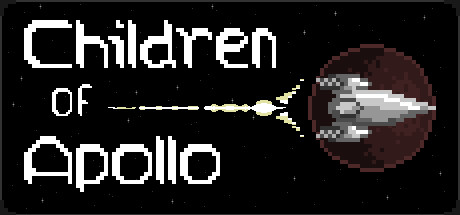
Children of Apollo, developed and published by Cargo Cult Gaming LLC, is a retro-inspired twin-stick shooter that commits fully to the design philosophy of classic arcade games, delivering a focused and challenging experience built around precision, repetition, and mastery. Set against a sci-fi backdrop involving a failed mission to Mars and a desperate attempt to rescue survivors, the narrative provides just enough context to frame the action, but it remains secondary to the game’s primary focus on gameplay. From the beginning, it is clear that this is a title designed to replicate the feel of older arcade experiences rather than expand into modern conventions.
The core gameplay revolves around navigating through a series of handcrafted levels while engaging enemies from all directions using a dual-stick control system. Movement and aiming are handled independently, allowing for fluid combat that requires constant awareness of positioning and incoming threats. The controls are simple and responsive, making it easy to understand the basics, but the challenge quickly escalates as enemy patterns become more demanding. Success depends on maintaining control under pressure, learning how to move efficiently while managing multiple threats at once. This creates a steady rhythm where each encounter tests both reflexes and spatial awareness.
One of the defining characteristics of the game is its adherence to an arcade-style structure. It is designed to be played in a single session, with no traditional save system and a heavy emphasis on completing the experience in one continuous run. This approach adds tension, as mistakes carry lasting consequences, and players must rely on consistency to progress. However, it also limits accessibility, particularly for those who prefer shorter sessions or gradual progression. Each attempt feels like starting from the beginning, and while this reinforces the challenge, it can also make repeated runs feel demanding rather than rewarding.
Level design is built around handcrafted environments that prioritize structure over randomness. This allows for deliberate placement of enemies and obstacles, creating encounters that feel intentional and carefully arranged. At times, this leads to engaging moments where patterns can be learned and mastered, but there are also stretches where the pacing slows down, with less intense sections that feel more like filler between major encounters. Boss fights tend to stand out as the most memorable parts of the experience, offering clearer objectives and more dynamic challenges that break up the overall flow.
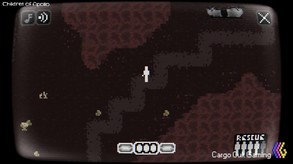
Visually, the game adopts a minimalistic pixel-art style that reflects its retro inspirations. The environments are simple and functional, designed to keep the action readable rather than visually complex. This approach works well for gameplay clarity, especially during hectic combat scenarios, but it does not offer much variety or visual progression. The aesthetic remains consistent throughout, which supports the game’s identity but also contributes to a sense of repetition over time.
The audio design plays a more prominent role in maintaining engagement. The soundtrack evolves alongside the gameplay, adding energy to the experience and helping to sustain momentum during longer runs. It complements the action effectively, reinforcing the intensity of combat and the overall atmosphere, even if it does not completely compensate for the simplicity of the visuals.
Difficulty is a central part of the experience, and the game does not shy away from challenging the player. Encounters require constant movement and careful positioning, and the lack of checkpoints means that errors can be costly. For players who enjoy mastering difficult systems, this can be rewarding, as improvement comes through repeated attempts and growing familiarity with the game’s patterns. For others, the combination of difficulty and limited progression systems may feel discouraging, particularly when progress is lost due to small mistakes.
Replayability is driven primarily by the desire to improve performance and complete the game more efficiently. The relatively small amount of content means that the experience does not change significantly between runs, but the arcade-style design encourages players to refine their skills and aim for better outcomes. This works well for those who appreciate high-score chasing and mastery, but it may not provide enough variety to sustain long-term interest for a wider audience.
In the end, Children of Apollo is a focused and uncompromising twin-stick shooter that captures the essence of classic arcade gameplay. It offers a challenging and skill-driven experience that rewards persistence and precision, but it is limited by its simplicity and lack of modern progression systems. It is best suited for players who enjoy retro-inspired design and are willing to embrace repetition as part of the learning process, even if it comes at the cost of accessibility and variety.
Rating: 6/10