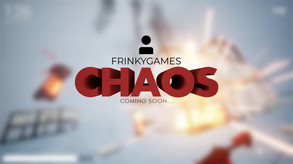
Chaos is an online FPS game. Why should you play it? Destruction, lots of it, plus some explosions, oh yeah, guns! Who doesn't like guns and explosions?
Revenue comes from in-game items and microtransactions, which our price-based model doesn't estimate. Copies below reflect the player base, not paid sales.
Media

About

Genres
Stats
Languages: English**languages with full audio support
Engagement
Reviews
Themes across 40 recent reviews and how positive each mention is. A keyword signal, not full sentiment analysis.
Reviews
Bom
ts was my first ever game i played on steam, back in 2020 or sonethibg, i forgot i still have ts in my libraray
Great game. Awesome with lots of players but still fun with the few who are ususally online. Sword is best weapon.
Related
Related
Trends
Concurrent players on Steam, sampled daily since tracking started.
Hours played at review time, across 40 reviews with recorded playtime.
positive critical· bar length = how often the theme comes up
good game love this game bro
Chaos is a multiplayer first-person shooter that embraces speed, destruction, and nonstop action as its defining pillars. Developed and published by Frinky, the game avoids the realism and military simulation elements that dominate much of the modern shooter market and instead focuses on creating an experience where mobility, explosive weaponry, and dynamic environments drive every encounter. Designed as a free-to-play title, Chaos seeks to deliver accessible competitive gameplay that rewards aggression, creativity, and quick reflexes while maintaining a straightforward approach that allows players to jump directly into the action. From the beginning, the game establishes a fast pace that rarely slows down. Rather than encouraging players to remain behind cover and carefully advance through maps, Chaos pushes them toward constant movement. The mobility system is one of the most important aspects of the gameplay, allowing players to slide, wall jump, and perform powerful ground slams to navigate environments in creative ways. These mechanics create a sense of freedom that encourages experimentation and gives combat encounters a dynamic quality. Players are rarely confined to traditional routes and can often surprise opponents through unexpected movement techniques. The emphasis on movement works particularly well when combined with the game's weapon systems. Combat is built around responsive shooting mechanics that prioritize quick reactions and accurate aim. A variety of weapons are available, ranging from conventional rifles and submachine guns to heavier explosive options capable of dramatically altering the battlefield. Each weapon category supports a different playstyle, ensuring that players can tailor their approach according to personal preference. Whether engaging enemies from a distance with precision weapons or charging directly into combat with explosive firepower, the game provides enough variety to keep firefights feeling fresh. One of the most distinctive features of Chaos is its destructible environments. Many multiplayer shooters rely on static maps where cover and pathways remain unchanged throughout an entire match. Chaos takes a different approach by allowing players to damage sections of the environment and create new openings. Explosives can tear through walls and obstacles, forcing opponents to constantly adapt to changing conditions. This system introduces an additional strategic layer because players must remain aware not only of enemy positions but also of how the environment itself is evolving during the match. The destructibility mechanics also contribute to the game's unpredictability. No two matches unfold in exactly the same way because the battlefield is constantly changing. A safe defensive position can suddenly disappear after a well-placed explosive attack, while a newly created opening can provide opportunities for flanking maneuvers. These dynamic changes help maintain excitement and prevent matches from becoming overly predictable, even on familiar maps. Weapon variety plays a significant role in supporting the game's chaotic nature. Assault rifles provide balanced performance for most situations, while submachine guns excel in close-range confrontations. Sniper rifles offer long-distance precision for players who prefer calculated engagements, and heavier weapons such as rocket launchers and grenade launchers allow for large-scale destruction. The inclusion of melee options further expands the available strategies and encourages players to experiment with different loadouts and approaches. The multiplayer component is supported by several game modes that cater to different styles of competition. Free-for-all matches create unpredictable battles where every player is a potential threat, while team-based modes introduce coordination and cooperation. The variety ensures that players can choose experiences that match their preferences, whether they enjoy individual competition or working together with teammates. These modes help maintain replayability and provide enough variation to keep the gameplay loop engaging over extended periods. Map design also contributes positively to the overall experience. The environments feature unique themes and layouts that complement the movement mechanics and destruction systems. Vertical spaces, alternative pathways, and interactive elements encourage exploration and reward players who learn how to navigate each location efficiently. Because destruction can alter these environments during gameplay, maps often feel more dynamic than those found in traditional arena shooters. The game's visual presentation favors clarity and performance over realism. While it lacks the graphical sophistication of major AAA releases, the stylized aesthetic ensures that action remains easy to follow even during intense firefights. Explosions, weapon effects, and environmental destruction are presented clearly, helping players maintain awareness amid the chaos. This design choice supports the fast-paced gameplay and prevents visual clutter from interfering with combat. Chaos also includes an arena mode featuring AI opponents, offering an alternative to competitive multiplayer. This mode provides a useful training ground for learning weapons and movement mechanics while also serving as an enjoyable option for players who prefer solo gameplay. The inclusion of AI battles broadens the game's appeal and ensures that players have something to do even when multiplayer activity is limited. The game is not without its shortcomings. As an independent project, it naturally lacks the content volume and production values of larger shooters. Players looking for extensive progression systems, elaborate customization options, or cinematic storytelling may find the experience somewhat limited. However, the game's focused design helps it avoid unnecessary distractions and keeps attention centered on its strongest features: movement, destruction, and combat. Ultimately, Chaos succeeds because it understands exactly what kind of experience it wants to provide. Rather than chasing trends or attempting to imitate larger franchises, it concentrates on delivering fast, energetic battles where creativity and aggression are rewarded. The combination of fluid movement, destructible environments, varied weaponry, and accessible multiplayer modes creates an entertaining shooter that remains enjoyable despite its modest scale. For players who appreciate action-focused arena combat and dynamic battlefields, Chaos offers a refreshing and highly engaging experience that lives up to its name. Rating: 8/10
Fun with friends but like mid.
Cool
noice
use are luky this gane aint popyoular cuz id hav all of ye's
yuh
Momentum
Pace estimated from the game's recent review growth (our daily snapshots) at its own sales-per-review ratio — a momentum signal, not booked sales.
Audience
Estimated from the language of this game's reviews — a proxy for where players are, not official Steam demographics.