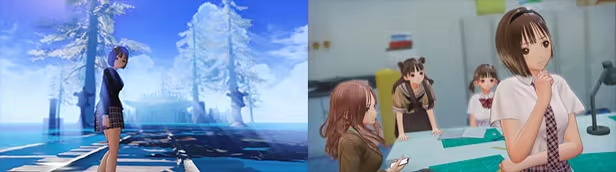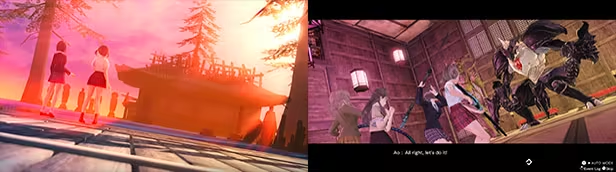
“As the last summer day fades, all is illuminated.” With gorgeous translucent designs by Mel Kishida, as well as a story that depicts the youth of lifelike girls, based on a theme of human identity and bonding, a new title in the BLUE REFLECTION series is here!
Modeled estimate, not a reported figure. How we estimate →
About


Genres
Stats
All-time low is the lowest price we've recorded for this game since we started tracking it.
Languages: English, Simplified Chinese, Traditional Chinese, Japanese**languages with full audio support
Engagement
Hours played at review time, across 40 reviews with recorded playtime.
Reviews
Themes across 40 recent reviews and how positive each mention is. A keyword signal, not full sentiment analysis.
positive critical· bar length = how often the theme comes up
Reviews
岸田梅尔是傻逼
同じことの繰り返し。ストーリーもあまり進展しない。 23時間やって思ったことは、人が少しづつ増えていくだけ。 正直ココで投げたい。最後までやるか悩むレベルで冗長。テンポが悪すぎる。 JKみてほくそ笑むタイプの人にはオススメ。それ以外の何もいい特徴がなかった。 凡作。
감성도 좋고 소재도 좋고 내용도 너무 재밌었던 게임 근데 서브 퀘스트랑 뭔가 할게 정 말 엄청 많아서 점점 귀찮아지는 단점이 있음 그래도 다 하긴 했고 되게 좋았던 게임 근데 콰르텟 나온다고 하는데 소식 못듣고 몰랐어서 4개 합본 6만원인데 1개 7만원에 산 사람 됐음 콰르텟 사세요
5/10 Story was ok. Only one good boss design, which was the final boss. The first game did it better. The story felt like it was missing something. I would have included the corrupted magical girl as a boss, that would feel like a good side-story dlc.
The game is incredible, the emotions, the characters and the music is something else. Every gamer should play it at least once.
能百合贴贴,还能反像者变身,真不错,希望还能有续作!
ウィンドウ設定をフルスクリーンにすると30分でCPUが高温になりました。 ウィンドウ設定をデフォルトにするとファンの爆音がなくなりなりました。なんだこれ
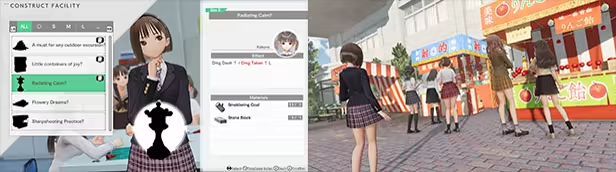
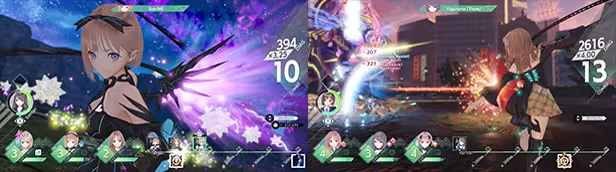
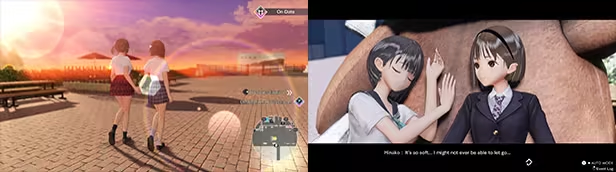
BLUE REFLECTION: Second Light, developed and published by KOEI TECMO GAMES CO., LTD., is a JRPG that stands apart from many of its contemporaries by placing emotional intimacy and character relationships at the very center of its design. The story begins with Ao Hoshizaki awakening in a mysterious, waterbound world where a lone school serves as the only refuge, populated by other girls who, like her, have lost their memories. This premise sets the tone for a narrative that is less about saving the world in a conventional sense and more about rediscovering identity, confronting personal struggles, and rebuilding connections in an unfamiliar environment. What immediately distinguishes the game is its commitment to a slower, more reflective pace. Much of the experience unfolds within the school itself, which acts as both a narrative hub and a symbol of safety and shared growth. Here, players spend time bonding with the cast through conversations, events, and small daily activities that gradually strengthen relationships. These moments are not simply optional side content—they are deeply integrated into the progression system, unlocking new abilities and enhancing combat potential. This creates a satisfying loop where emotional investment directly translates into gameplay benefits, reinforcing the idea that the characters’ connections are the true driving force behind the journey. Exploration takes place within surreal environments known as Heartscapes, each representing fragments of the characters’ lost memories and inner worlds. These areas blend dreamlike visuals with symbolic storytelling, offering insight into each character’s fears, regrets, and desires. Moving through these spaces involves light puzzle-solving, gathering materials, and engaging in battles, but the real reward often comes from the narrative revelations tied to each location. The contrast between the calm, structured life at the school and the abstract, often unsettling nature of the Heartscapes gives the game a unique rhythm that alternates between introspection and discovery. Combat is another area where the game quietly excels. While it is fundamentally turn-based, it incorporates an active-time element that builds momentum as battles progress. Characters gain speed and power over time, allowing for increasingly impactful abilities and encouraging players to think strategically about timing rather than simply selecting commands. The system is approachable yet layered, offering enough depth to remain engaging without becoming overly complex. Each character’s abilities reflect their personality and role within the group, which further ties the gameplay back to the narrative. In addition to exploration and combat, the game includes light crafting and base-building elements centered around the school. Players can create facilities and items that provide practical benefits, adding another layer of progression that complements the relationship system. While these mechanics are relatively simple, they contribute to the feeling that the school is evolving alongside the characters, becoming a shared space shaped by their collective efforts. This sense of gradual development reinforces the game’s overarching themes of rebuilding and moving forward. The visual and audio presentation enhances the experience with a soft, almost ethereal quality. The art direction favors gentle color palettes and fluid character designs, creating an atmosphere that feels both comforting and slightly melancholic. The Heartscapes, in particular, stand out for their imaginative and symbolic designs, each one reflecting the emotional state of the character it represents. The soundtrack complements this aesthetic with a mix of soothing and evocative compositions that underscore both quiet moments and more intense encounters without overwhelming the player. However, the game’s strengths are closely tied to its potential drawbacks. Its deliberate pacing and heavy emphasis on dialogue can feel slow, especially for players expecting a more action-oriented RPG. Certain gameplay elements, such as stealth segments or minor side activities, feel less refined and can interrupt the otherwise cohesive flow. Additionally, while the combat system is enjoyable, it does not drastically reinvent the genre, which may leave some players wanting more innovation. These issues do not detract from the overall experience significantly, but they highlight the game’s clear prioritization of narrative over mechanical complexity. Ultimately, BLUE REFLECTION: Second Light is a deeply character-focused RPG that offers a thoughtful and emotionally resonant experience. It excels in creating a sense of connection between its cast, using its systems and storytelling to reinforce themes of memory, identity, and healing. While it may not appeal to everyone due to its slower pace and understated approach, those who value strong character development and atmospheric storytelling will find it to be a rewarding and memorable journey. Rating: 8/10
Nice
结尾看来还没ending,总的来说中上 作为第一部玩的有gl题材的游戏 很满意了
Related
Related
Trends
Modeled estimate over time, reconstructed from Steam's monthly review histogram.
Momentum
Pace estimated from the game's recent review growth (our daily snapshots) at its own sales-per-review ratio — a momentum signal, not booked sales.
Audience
Estimated from the language of this game's reviews — a proxy for where players are, not official Steam demographics.
Related
| The Silent Age | $1.3M | 7.2K | 93% | $9.99 |
| SpyParty | $1.3M | 1.6K | 77% | $24.99 |
| The Bridge Curse 2: The Extrication | $1.3M | 3.2K | 94% | $24.99 |
| THE LEGEND OF HEROES: HAJIMARI NO KISEKI | $1.3M | 1.1K | 84% | $59.99 |
| Tales of Maj'Eyal | $1.3M | 7.4K | 95% | $6.99 |
| Thomas & Friends™: Wonders of Sodor | $1.3M | 827 | 89% | $27.99 |